

Custom Software in the Era of Spatial Computing: A New Dimension for Business

Custom Software in the Era of Spatial Computing: A New Dimension for Business

The digital landscape is rapidly evolving, and at its forefront lies spatial computing, a transformative paradigm that seamlessly blends digital content with our physical world. With the advent of groundbreaking devices like Apple Vision Pro, the lines between augmented reality (AR) and virtual reality (VR) are blurring, ushering in an era where businesses can interact with data, collaborate, and train in ways previously confined to science fiction. This shift is not just about fancy headsets; it’s a fundamental redefinition of human-computer interaction, and for custom software development, it presents an unprecedented opportunity.

What is Spatial Computing?

At its core, spatial computing allows digital content to be embedded directly into physical space, enabling natural, hands-free interactions through gestures, voice, and real-world tracking. Unlike traditional flat-screen interfaces, it leverages 3D mapping, computer vision, AI, and IoT to understand and interact with the physical environment. This means that a virtual architectural model can be placed and walked around in a real room, or a complex industrial machine can be overlaid with real-time diagnostic data.

The Apple Vision Pro: A Catalyst for Enterprise Innovation

Apple Vision Pro, with its powerful visionOS, eye-tracking, and gesture control, is a significant leap forward in making spatial computing accessible and intuitive. While it’s captured consumer imagination, its true potential lies in the enterprise sector. Businesses are now exploring how this “spatial computer” can revolutionize various aspects of their operations:

  • Immersive Training and Education: Imagine medical students performing virtual surgeries with haptic feedback, or factory workers learning complex assembly procedures with step-by-step 3D overlays directly on the equipment. Custom software can create highly realistic, interactive training simulations that improve knowledge retention and skill development in safe, controlled environments.
  • Enhanced Collaboration and Remote Work: Spatial computing enables distributed teams to collaborate in shared virtual spaces, manipulating 3D models, reviewing designs, and conducting meetings as if they were in the same room. Custom applications can facilitate real-time data visualization, enabling better decision-making and breaking down geographical barriers.
  • Product Design and Prototyping: Designers and engineers can visualize and interact with 3D prototypes in their physical space, making instant modifications and sharing concepts with stakeholders in an incredibly intuitive way. This can significantly reduce development cycles and costs.
  • Sales and Marketing: Virtual showrooms allow customers to explore and interact with products in depth from anywhere, enhancing the shopping experience and driving informed purchase decisions. Custom AR applications can enable virtual try-ons for fashion or furniture, creating engaging and personalized brand interactions.
  • Field Service and Maintenance: Technicians can receive real-time, context-aware instructions and diagrams overlaid onto machinery, guiding them through complex repairs and minimizing downtime. This boosts efficiency and reduces errors.
  • Data Visualization: Transforming complex datasets into immersive 3D visual narratives allows businesses to identify hidden trends and patterns more intuitively, leading to better insights and strategic decisions.

The Rise of Custom Software in a Spatial World

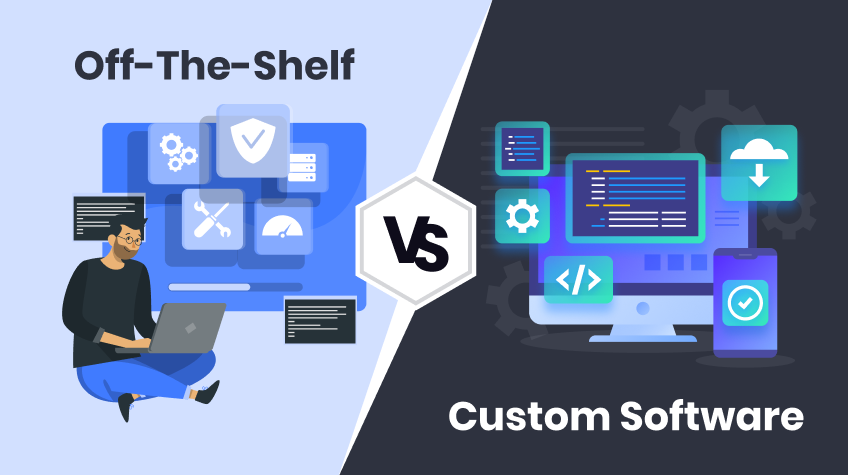
While off-the-shelf applications for spatial computing will emerge, the true power of this technology for businesses lies in custom software development. Here’s why:

  • Tailored to Specific Needs: Every business has unique workflows, data structures, and operational challenges. Custom spatial software can be precisely designed to address these specific requirements, delivering unparalleled efficiency and impact.
  • Integration with Existing Systems: Seamless integration with enterprise resource planning (ERP), customer relationship management (CRM), and other legacy systems is crucial for maximizing the value of spatial computing. Custom development ensures these connections are robust and functional.
  • Competitive Advantage: Early adopters who invest in custom spatial solutions will gain a significant competitive edge, revolutionizing their services, products, and internal processes.
  • Optimized User Experience: Developing bespoke applications allows for a highly optimized user experience (UX) and user interface (UI) that accounts for the unique interaction paradigms of spatial computing (eye-tracking, gestures, voice), ensuring intuitive and productive use for employees and customers alike.
  • Data Security and Compliance: Custom solutions offer greater control over data security and compliance with industry-specific regulations, which is especially critical given the sensitive nature of some spatial data.

Challenges and Opportunities

Developing custom software for spatial computing is not without its challenges. The learning curve for new development paradigms like visionOS and frameworks like RealityKit, the need for specialized hardware and infrastructure, and the evolving nature of the technology itself all present hurdles. Data privacy and security concerns are also paramount, given the vast amounts of personal and environmental data these devices collect.

However, these challenges are dwarfed by the immense opportunities. As the technology matures and becomes more accessible, the demand for skilled spatial computing developers will skyrocket. Businesses that embrace this shift now, partnering with experienced custom software development firms, will be well-positioned to unlock unprecedented levels of innovation, efficiency, and competitive advantage.

The Future is Spatial

The era of spatial computing is here, and it’s poised to redefine how we work, learn, and interact with the digital world. For custom software development, this is more than just a new platform; it’s a canvas for creating truly immersive, intuitive, and impactful solutions that will shape the future of business across every industry. The time to explore and invest in custom spatial software is now, to ensure your business isn’t just watching the future unfold, but actively building it.

The Generative AI Revolution: Reshaping Custom Software Development

The Generative AI Revolution: Reshaping Custom Software Development

The digital landscape is evolving at an unprecedented pace, and at the heart of this transformation lies Generative AI (GenAI). No longer a futuristic concept, GenAI is fundamentally reshaping how custom software is imagined, designed, built, and optimized. This revolution promises to unlock new levels of efficiency, personalization, and innovation, offering immense opportunities for businesses and the custom software development companies in Dubai that serve them.

Beyond Automation: A New Paradigm for Software Creation

Traditionally, custom software development has been a labor-intensive process, reliant on human developers for every line of code, every design decision, and every testing phase. While automation has played a role, GenAI takes this a significant leap further. It’s not just about automating repetitive tasks; it’s about intelligent content generation.

GenAI algorithms, trained on vast datasets, can now:

  • Generate code snippets and entire modules: From basic functions to complex integrations, GenAI can intelligently suggest and write code, dramatically accelerating the development phase. This frees up developers to focus on higher-level problem-solving and architectural design.
  • Automate UI/UX design: GenAI can analyze user data and trends to generate intuitive and engaging user interfaces and experiences, tailored to specific user needs and preferences. This allows for rapid prototyping and quicker iteration based on real-world feedback.
  • Streamline testing and bug identification: GenAI can analyze code for potential vulnerabilities, suggest test cases, and even predict and identify bugs before they occur, leading to higher-quality and more robust software.
  • Assist in documentation and maintenance: GenAI can automatically generate comprehensive documentation and even provide guidance for maintaining and upgrading existing codebases.

The Impact on the Software Development Lifecycle (SDLC)

Generative AI is not just impacting isolated stages of the SDLC; it’s creating a ripple effect across the entire process:

  • Accelerated Prototyping and MVP Development: Ideas can go from concept to a working prototype in a fraction of the time, allowing businesses to test market viability faster and iterate with agility.
  • Enhanced Code Quality and Consistency: With AI-assisted coding tools, developers can produce cleaner, more efficient, and more secure code, reducing technical debt and improving overall software reliability.
  • Unprecedented Personalization: GenAI can analyze user data to create truly tailored experiences, from dynamic interfaces to predictive features, significantly boosting user engagement and satisfaction.
  • Redefined Collaboration: Rather than replacing human expertise, GenAI acts as a powerful co-pilot, augmenting development teams and allowing them to focus on strategic innovation while offloading repetitive tasks to AI.

Why This Matters for Businesses in Dubai

Dubai, a global hub for innovation and business, is witnessing a surge in demand for bespoke software solutions. Businesses across various sectors – from finance and healthcare to logistics and real estate – are seeking custom software to gain a competitive edge and drive digital transformation.

For any software development company in Dubai, embracing Generative AI is no longer an option but a necessity. The top software development companies in Dubai are already integrating GenAI into their workflows to deliver:

  • Faster Time-to-Market: Businesses can launch new products and services more quickly, responding to market demands with agility.
  • Cost-Effectiveness: Automation and increased efficiency lead to reduced development costs, making custom software more accessible.
  • Superior Quality: AI-driven insights and automated testing result in more reliable, secure, and performant applications.
  • Hyper-Personalized Solutions: The ability to craft software that precisely meets unique business requirements and user preferences.

The emergence of Generative AI also presents a unique opportunity for custom software development companies in Dubai to solidify their positions as industry leaders. By leveraging GenAI’s capabilities, they can offer cutting-edge solutions that were previously unimaginable, further cementing Dubai’s reputation as a tech-forward economy.

The Future of Custom Software: An AI-First Approach

As Generative AI continues to advance, we can anticipate an “AI-first” development model where software evolves dynamically based on AI-driven learning. This will lead to even more adaptive and intelligent custom applications. Businesses that embrace this technological revolution will not only accelerate their digital transformation but also position themselves at the forefront of innovation.

The future of custom software development is here, and it’s powered by Generative AI. For businesses in Dubai seeking to unlock new possibilities, partnering with a best software development company in Dubai that is proficient in leveraging GenAI will be key to navigating this exciting new era.

Unlocking the Power of Communication: NLP in Software Development

Unlocking the Power of Communication: NLP in Software Development

In today’s rapidly evolving digital landscape, seamless human-computer interaction is no longer a luxury, but a necessity. We expect our devices and applications to understand us, not just respond to our commands. This is where Natural Language Processing (NLP) steps in, acting as the bridge that allows software to comprehend, interpret, and even generate human language.

NLP, a fascinating subfield of Artificial Intelligence, is revolutionizing how we interact with technology. It’s the engine behind intuitive voice-controlled applications, the analytical tool that extracts invaluable insights from text data, and the key to creating truly human-centric software experiences.

Beyond Clicks and Taps: More Intuitive Human-Computer Interaction

Gone are the days when we were confined to rigid menus and specific commands. NLP is ushering in an era of conversational interfaces, making software feel less like a tool and more like a helpful assistant.

  • Chatbots and Virtual Assistants: From customer service to personal productivity, NLP-powered chatbots and virtual assistants are transforming how businesses engage with users. They can understand complex queries, provide relevant information, and even handle multi-turn conversations, significantly enhancing user satisfaction and operational efficiency. Imagine troubleshooting a software issue simply by describing it to a chatbot, or asking your smart home system to adjust the thermostat using natural speech.
  • Voice-Controlled Applications: The rise of voice assistants like Siri, Alexa, and Google Assistant is a testament to NLP’s power. These applications leverage NLP to convert spoken words into text (Speech-to-Text), understand the intent behind those words (Natural Language Understanding – NLU), and generate appropriate spoken responses (Text-to-Speech). This allows for hands-free operation, making technology more accessible and convenient in various scenarios, from navigating while driving to controlling smart devices.
  • Enhanced Accessibility: NLP significantly improves accessibility for individuals with disabilities. Voice-controlled interfaces allow users with visual impairments or motor disabilities to interact with technology without relying on traditional input methods, opening up new possibilities for inclusive design.

The Goldmine of Text Data: Analyzing for Insights

Beyond direct interaction, NLP is an indispensable tool for extracting valuable insights from the vast amounts of text data generated every day. Businesses are sitting on a goldmine of information in the form of customer reviews, social media posts, emails, and internal documents. NLP helps unlock this potential.

  • Sentiment Analysis: Understanding the emotional tone behind text data is crucial for businesses. NLP-driven sentiment analysis can quickly identify customer satisfaction or dissatisfaction, gauge public opinion about products or services, and even predict market trends. This allows companies to make data-driven decisions, refine their offerings, and improve customer experience.
  • Named Entity Recognition (NER): NER enables software to identify and categorize key entities within text, such as names of people, organizations, locations, dates, and products. This is invaluable for tasks like information extraction, data categorization, and building knowledge graphs. Imagine automatically populating a CRM system with customer details extracted from email conversations.
  • Topic Modeling and Text Summarization: NLP can identify overarching themes and topics within large datasets, helping to make sense of unstructured information. Furthermore, it can automatically generate concise summaries of lengthy documents, saving countless hours of manual effort and enabling quicker information retrieval.

Challenges and the Road Ahead

While NLP offers immense potential, its integration into software development comes with its own set of challenges.

  • Ambiguity and Context: Human language is inherently ambiguous, with words often having multiple meanings depending on context. Developing NLP models that can accurately discern context and resolve ambiguity remains a significant hurdle.
  • Language Diversity and Nuances: The sheer diversity of human languages, dialects, slang, and idiomatic expressions presents a complex challenge for building universal NLP solutions.
  • Data Quality and Bias: The effectiveness of NLP models heavily relies on the quality and quantity of training data. Biases present in training data can lead to unfair or discriminatory outcomes, necessitating careful curation and ethical considerations.
  • Computational Resources: Advanced NLP models, particularly those leveraging deep learning, require substantial computational power, which can be a barrier for smaller organizations.

Despite these challenges, the field of NLP is rapidly advancing. Ongoing research in areas like large language models (LLMs) and explainable AI is continuously pushing the boundaries of what’s possible. As NLP becomes more sophisticated, we can anticipate an even more seamless and intelligent interaction with software, where technology truly understands and anticipates our needs, making our digital lives richer and more intuitive.

The future of software development is conversational, insight-driven, and intrinsically linked with the power of Natural Language Processing.