

Unleashing ServiceNow: More Than ITSM, It’s Business Transformation

The Power of the ServiceNow Platform: Beyond ITSM - Exploring the Breadth of Capabilities

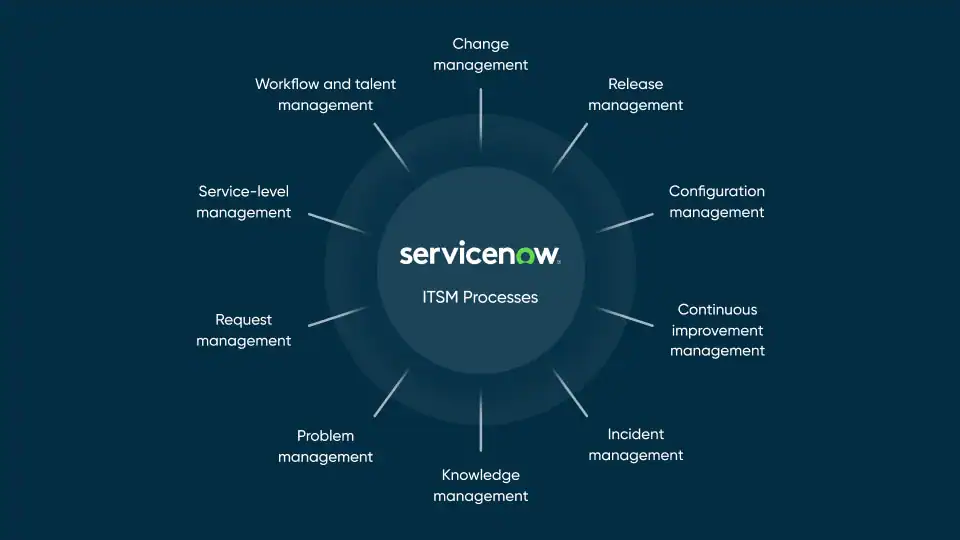
When you hear “ServiceNow,” the first thing that often comes to mind is IT Service Management (ITSM). And for good reason – ServiceNow revolutionized ITSM, streamlining IT operations and enhancing employee experiences. However, to confine ServiceNow to just ITSM would be to miss the forest for the trees. The truth is, the ServiceNow platform is a robust, AI-powered digital workflow engine capable of transforming nearly every facet of an enterprise.

At its core, ServiceNow is about digitizing and automating workflows across an organization. It’s built on a single, cloud-native platform that enables seamless integration, provides real-time visibility, and empowers users with intuitive self-service capabilities. Let’s delve into how ServiceNow extends far beyond IT, unlocking efficiency and innovation across the entire business.

From IT to Enterprise-Wide Transformation

ServiceNow’s true power lies in its ability to connect disparate functions and eliminate data silos, creating a unified experience for employees, customers, and partners. Here’s a glimpse into the diverse capabilities of the Now Platform:

1. IT Operations Management (ITOM): Proactive IT with AIOps

Beyond simply managing IT services, ITOM focuses on the operational health of your IT infrastructure. ServiceNow ITOM provides:

  • Discovery and Service Mapping: Gaining a comprehensive, real-time view of your entire IT infrastructure, including physical and virtual servers, networks, cloud resources, and their relationships to business services.
  • Event Management: Consolidating and correlating events from various IT sources to identify and prioritize critical issues, preventing outages.
  • Operational Intelligence: Leveraging AI and machine learning to analyze IT operational data, predict potential problems, and recommend proactive solutions.
  • Cloud Management: Unifying the management of public, private, and hybrid cloud environments for greater visibility and control.

2. Human Resources Service Delivery (HRSD): A Modern Employee Experience

HRSD transforms the employee experience by digitizing and automating HR processes. Imagine:

  • Employee Center: A personalized, self-service portal where employees can find answers to HR questions, submit requests (like leave applications or expense reports), and track their progress.
  • Onboarding & Lifecycle Events: Streamlining complex HR workflows, from new hire onboarding to promotions and offboarding, with automated tasks and notifications.
  • HR Case Management: Centralizing and managing all employee HR inquiries, ensuring consistent and efficient resolution.
  • Knowledge Management: Providing a comprehensive knowledge base of HR policies, procedures, and FAQs.

3. Customer Service Management (CSM): Elevating Customer Engagement

ServiceNow CSM empowers businesses to deliver exceptional customer service and build lasting relationships:

  • Omni-channel Engagement: Allowing customers to interact through their preferred channels (web portal, chat, phone, email, social media) while maintaining a unified view of their journey.
  • Case Management: Efficiently managing customer inquiries, issues, and requests, with intelligent routing and escalation.
  • Self-Service and Virtual Agents: Empowering customers to find answers independently through knowledge bases and AI-powered chatbots, reducing call volumes.
  • Field Service Management (FSM): Optimizing the scheduling, dispatching, and management of field technicians for on-site service delivery, ensuring faster resolution times and improved customer satisfaction.

4. Governance, Risk, and Compliance (GRC): Building a Resilient Enterprise

In today’s complex regulatory landscape, GRC is crucial. ServiceNow GRC helps organizations:

  • Integrated Risk Management (IRM): Identifying, assessing, and mitigating risks across the enterprise with a unified view of risk posture.
  • Policy and Compliance Management: Centralizing policies, tracking compliance with regulations (like GDPR, HIPAA), and automating audit processes.
  • Business Continuity Management: Developing and managing plans to ensure business operations continue during and after disruptions.
  • Third-Party Risk Management: Assessing and managing risks associated with vendors and external partners.

5. Strategic Portfolio Management (SPM): Aligning Strategy with Execution

Formerly known as IT Business Management (ITBM), SPM helps organizations:

  • Demand Management: Capturing and prioritizing new ideas and requests, ensuring alignment with strategic objectives.
  • Project and Portfolio Management: Planning, executing, and tracking projects and programs across the business, providing visibility into progress and resource allocation.
  • Resource Management: Optimizing resource utilization and ensuring the right people are working on the right initiatives.

6. App Engine: Empowering Citizen Developers and Pro-Coders

The Now Platform is not just a suite of applications; it’s a powerful low-code/no-code development environment. ServiceNow App Engine allows:

  • Citizen Developers: Business users with limited coding experience to build custom applications and automate workflows quickly.
  • Pro-Code Developers: Experienced developers to create more complex and integrated solutions, leveraging the platform’s robust capabilities.
  • Accelerated Digital Transformation: Enabling organizations to rapidly develop solutions for unique business needs and address process inefficiencies.

7. Industry Solutions: Tailored for Specific Sectors

ServiceNow also offers specialized solutions tailored to the unique needs of various industries, including:

  • Healthcare and Life Sciences: Streamlining patient services, managing medical devices, and ensuring compliance.
  • Financial Services: Automating banking operations, managing financial risks, and enhancing customer experiences.
  • Telecommunications: Unifying network operations and delivering proactive customer care.
  • Manufacturing: Driving operational efficiency, managing assets, and optimizing field service.
  • Public Sector: Modernizing government services and improving citizen engagement.

The Undeniable Benefits

The power of the ServiceNow platform, extending far beyond ITSM, delivers a multitude of benefits:

  • Increased Efficiency and Automation: Automating repetitive tasks and streamlining workflows across departments.
  • Improved Employee and Customer Experiences: Providing intuitive self-service options and faster resolution of requests.
  • Enhanced Visibility and Control: Gaining a holistic view of operations, risks, and performance.
  • Faster Innovation: Empowering teams to rapidly build and deploy custom applications.
  • Greater Business Agility: Adapting quickly to changing market demands and business needs.
  • Reduced Costs: Optimizing resource utilization, minimizing manual efforts, and preventing outages.

In essence, ServiceNow is a platform for digital transformation, empowering organizations to connect their people, processes, and systems on a single, intelligent foundation. While its roots are firmly in ITSM, its branches now reach every corner of the modern enterprise, proving that its true power lies in its ability to drive efficiency, innovation, and exceptional experiences across the entire business.
Beyond Tickets: How ServiceNow ITSM Drives Proactive Problem Resolution

Beyond Tickets: How ServiceNow ITSM Drives Proactive Problem Resolution

In the fast-paced world of IT, it’s easy to get caught in a never-ending cycle of “firefighting” – reacting to incidents as they occur, scrambling to restore services, and then moving on to the next crisis. But what if there was a better way? What if you could anticipate issues, address their root causes, and prevent them from impacting your users in the first place? This is where ServiceNow ITSM truly shines, transforming IT from a reactive support function into a proactive force for stability and innovation.

At its core, IT Service Management (ITSM) is about optimizing the delivery and support of IT services. While incident management is crucial for quickly restoring services, it’s problem management that elevates ITSM to a strategic level. And within the ServiceNow platform, problem management isn’t just a feature; it’s a powerful engine for driving proactive resolution.

The Shift from Reactive to Proactive

Imagine a scenario: Your sales application keeps crashing every few days, leading to frustrated users and lost revenue. In a reactive model, your IT team would repeatedly log incidents, troubleshoot the immediate crash, and get the application back up. However, the underlying issue remains, ready to strike again.

This is where proactive problem resolution, powered by ServiceNow ITSM, makes a significant difference. Instead of just fixing symptoms, it focuses on identifying and eliminating the root causes of recurring incidents.

How ServiceNow ITSM Enables Proactive Problem Resolution:

  1. Intelligent Incident Correlation and Trend Analysis: ServiceNow goes beyond individual tickets. It uses advanced analytics and even AI/Machine Learning capabilities (like Now Assist) to analyze incident data, detect patterns, and identify recurring issues. If the sales application keeps crashing, ServiceNow can flag these repeated incidents, prompting a deeper problem investigation. This moves you from “something broke” to “why does this keep breaking?”
  2. Structured Problem Management Workflows: ServiceNow provides a robust framework for problem management, guiding your teams through a systematic process:
    • Problem Identification: Whether from trend analysis, major incidents, or monitoring alerts, potential problems are clearly identified and logged.
    • Investigation and Diagnosis (Root Cause Analysis – RCA): This is the heart of proactive problem resolution. ServiceNow facilitates collaborative RCA, allowing multiple teams to contribute data and expertise to pinpoint the exact underlying cause of the issue (e.g., a software bug, a configuration error, a hardware fault).
    • Workaround Documentation and Known Error Database (KEDB): While working on a permanent fix, ServiceNow allows for the documentation of temporary workarounds in the KEDB. This empowers your service desk to quickly provide solutions to users for known issues, deflecting future incidents and improving user satisfaction.
    • Permanent Resolution and Change Management Integration: Once the root cause is identified, ServiceNow seamlessly integrates with its Change Management module. A change request is initiated to implement the permanent fix, ensuring all changes are controlled, approved, and minimize further risk.
  3. Predictive Intelligence and Event Management: Beyond reactive correlation, ServiceNow’s predictive intelligence can analyze historical data and system behaviors to anticipate potential problems before they even manifest as incidents. Integrated with IT Operations Management (ITOM) and Event Management, it can alert teams to anomalies or performance degradation that indicate an impending issue, allowing for preventive action.
  4. Knowledge Management as a Cornerstone: ServiceNow’s integrated Knowledge Management system is vital for proactive problem resolution. Every problem investigation, root cause analysis, and permanent fix contributes to a growing repository of knowledge. This empowers users with self-service options and equips IT teams with readily available solutions, reducing resolution times and preventing repeat investigations.
  5. Performance Analytics and Continuous Improvement: ServiceNow provides dashboards and reporting tools to track key metrics related to problem management, such as the number of problems identified, time to root cause analysis, and the reduction in recurring incidents. This data is crucial for identifying areas for improvement, optimizing processes, and demonstrating the tangible value of proactive IT.

The Tangible Benefits of Going Beyond Tickets:

  • Reduced Incident Volume: By eliminating root causes, you significantly decrease the number of recurring incidents, freeing up your service desk.
  • Improved Service Stability and Reliability: Proactive problem resolution leads to a more stable IT environment, with fewer unplanned outages and disruptions.
  • Enhanced User and Customer Satisfaction: Users experience fewer issues and faster resolutions for known problems, leading to a much better overall experience.
  • Cost Savings: Less time spent firefighting means reduced operational costs, fewer emergency fixes, and increased productivity.
  • Increased IT Efficiency and Productivity: Your IT teams can shift their focus from reactive crisis management to strategic initiatives, innovation, and continuous service improvement.
  • Better Risk Management: Identifying and addressing potential issues before they become critical strengthens your overall IT risk posture.

In conclusion, ServiceNow ITSM is more than just an incident ticketing system; it’s a comprehensive platform that empowers organizations to move beyond reactive incident management and embrace a truly proactive approach to IT service delivery. By systematically identifying and resolving the root causes of problems, ServiceNow ITSM helps IT teams transform into strategic partners, ensuring greater stability, efficiency, and satisfaction across the entire enterprise.

Optimizing Incident Management with ServiceNow: Best Practices and Automation

Optimizing Incident Management with ServiceNow: Best Practices and Automation

In today’s fast-paced digital world, IT incidents are inevitable. From minor glitches to major outages, their impact on business operations, user productivity, and customer satisfaction can be significant. This is where robust incident management comes in – a critical IT Service Management (ITSM) process focused on restoring normal service operation as quickly as possible. And when it comes to optimizing this crucial function, ServiceNow stands out as a powerful platform.

ServiceNow’s incident management capabilities are designed to streamline the entire incident lifecycle, from identification and logging to resolution and closure. But simply having the tool isn’t enough; true optimization comes from implementing best practices and leveraging automation effectively.

The Core of Efficient Incident Management: Best Practices

Before diving into automation, let’s explore the fundamental best practices that lay the groundwork for effective incident management in ServiceNow:

  1. Clear Roadmap and Objectives: Begin with a well-defined vision for your ServiceNow ITSM initiatives. What problems are you trying to solve? How will incident management fit into your existing workflows? A comprehensive roadmap with clear KPIs and metrics is essential for measuring progress and success.
  2. High-Quality Data is Paramount: “Garbage in, garbage out” applies perfectly here. Ensure your data is accurate, consistent, and up-to-date. Clean data is the backbone for efficient processes, intelligent routing, and meaningful analytics.
  3. Start Small, Scale Smart: Don’t try to implement everything at once. Begin with a manageable project, learn from the challenges, and then gradually scale up for broader impact. This iterative approach allows for fine-tuning and adjustments.
  4. Stakeholder Collaboration: Involve all key stakeholders – end-users, IT staff, and business leaders – throughout the process. Their buy-in and feedback are crucial for successful adoption and continuous improvement.
  5. Leverage Out-of-the-Box Functionality: ServiceNow offers a wealth of pre-built functionalities. Prioritize using these whenever possible to minimize customizations, which can complicate upgrades and maintenance. Only customize when absolutely necessary to meet specific business needs.
  6. Phased Rollout: Consider a phased implementation instead of a big-bang switchover. This allows users to familiarize themselves with the platform and provides time for adjustments before full deployment.
  7. Continuous Monitoring and Optimization: Once ServiceNow is live, constantly monitor its usage, track user adoption, and identify areas for improvement. Be prepared to adjust configurations, add new features, and refine processes based on evolving needs.
  8. Stay Updated: ServiceNow regularly releases updates with new features and functionalities. Staying current ensures you benefit from the latest improvements and maintain platform security.

The Power of Automation in ServiceNow Incident Management

ServiceNow truly shines when you harness its automation capabilities. Automation can significantly reduce manual effort, speed up resolution times, and improve consistency. Here’s how:

  1. Automated Incident Creation from Monitoring Systems: Integrate ServiceNow with your IT Operations Management (ITOM) tools. When a monitoring system detects an anomaly or an issue (e.g., a server goes down, an application crashes), ServiceNow can automatically create a high-priority incident, categorizing it based on business impact. This proactive approach minimizes disruption by identifying problems before users even report them.
  2. Intelligent Routing and Assignment: Gone are the days of manual incident assignment. Leverage ServiceNow’s capabilities to automatically route incidents to the correct support group or individual based on factors like:
    • Categorization: Classify incidents by type, sub-type, and affected service.
    • Prioritization: Automatically assign priority based on impact and urgency, ensuring critical issues are addressed first.
    • Skills and Availability: Route incidents to agents with the necessary expertise and who are currently available. Machine learning can further refine this by learning from past assignments.
  3. Self-Service and Virtual Agents: Empower users to find answers and resolve common issues themselves through a self-service portal and AI-powered virtual agents (chatbots). These agents can:
    • Deflect incidents by providing immediate solutions from a knowledge base.
    • Guide users through troubleshooting steps.
    • Collect necessary information before an incident is escalated to a human agent, reducing resolution time.
  4. Automated Notifications and Communication: Keep all stakeholders informed with automated notifications. This includes:
    • Automatic updates to affected users on the status of their incident.
    • Notifications to relevant teams for critical incidents.
    • Automated escalations when an SLA is about to be breached or has been breached.
  5. Automated Resolution Playbooks: For recurring incidents with well-defined resolution steps, create automated playbooks. These workflows can:
    • Trigger scripts to restart services.
    • Apply patches.
    • Perform automated checks and diagnostics.
    • Guide agents through a task-oriented view of resolution steps, ensuring consistency and reducing human error.
  6. Predictive Intelligence and AIOps: ServiceNow’s AI capabilities (like Predictive Intelligence and AIOps) take automation to the next level:
    • Predictive Analysis: Machine learning models can analyze historical data to predict potential incidents before they occur, enabling proactive prevention.
    • Anomaly Detection: AI can identify subtle deviations from normal system behavior, flagging potential issues that might otherwise go unnoticed.
    • Root Cause Analysis: AI can assist in quickly identifying the underlying cause of incidents, leading to more permanent fixes.
    • Automated Remediation: For certain predictable issues, AI can even initiate autonomous resolution actions, minimizing or eliminating human intervention.

Benefits of Optimized Incident Management with ServiceNow

By combining best practices with strategic automation, organizations can reap significant benefits:

  • Faster Resolution Times (MTTR): Automation and intelligent routing drastically reduce the time it takes to resolve incidents, minimizing business disruption.
  • Reduced Manual Effort and Cost: Automating repetitive tasks frees up IT staff to focus on more complex and strategic initiatives.
  • Improved User Experience: Self-service options and faster resolutions lead to happier and more productive employees.
  • Increased Consistency and Compliance: Automated workflows ensure that incidents are handled consistently and according to defined policies and compliance requirements.
  • Proactive Issue Prevention: Leveraging ITOM and AI allows for the detection and resolution of issues before they impact users, shifting from a reactive to a proactive stance.
  • Enhanced Visibility and Reporting: A single system of record provides comprehensive insights into incident trends, allowing for continuous improvement and better decision-making.

Conclusion

Optimizing incident management with ServiceNow is not a one-time project; it’s an ongoing journey of continuous improvement. By embracing best practices, strategically implementing automation, and leveraging the power of AI, organizations can transform their IT operations from reactive firefighting to proactive, efficient, and highly effective service delivery. This ultimately leads to a more resilient IT infrastructure, increased productivity, and a superior experience for both IT teams and end-users.