

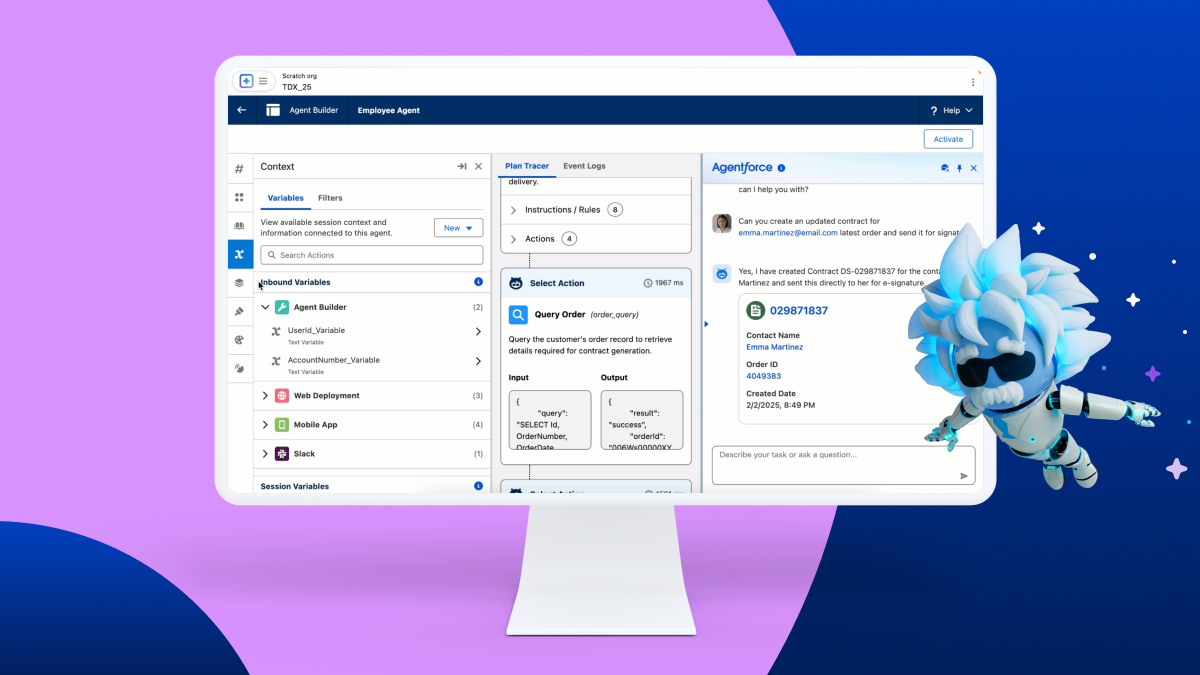
Supercharge Your Service Console: Creating an Agentforce-Enabled Scratch Org

Supercharge Your Service Console: Creating an Agentforce-Enabled Scratch Org

Ready to dive into the powerful world of Salesforce Service Cloud and its agent productivity tools? Want a clean, isolated environment to experiment with features like Omni-Channel, Service Cloud Voice, and more? Then you’ll need an Agentforce-enabled scratch org!

For those unfamiliar, a scratch org is a temporary, disposable Salesforce environment that you can quickly spin up for development, testing, and experimentation. Enabling the “Agentforce” feature within a scratch org unlocks a suite of functionalities designed to empower your service agents.

So, how do you create one of these magical environments? It’s simpler than you might think! Here’s your step-by-step guide:

Prerequisites:

  • Salesforce CLI (Command Line Interface) installed and configured: If you haven’t already, head over to the Salesforce Developer documentation and get the CLI set up. It’s your key to interacting with Salesforce DX.
  • Dev Hub enabled in your production org: Your Dev Hub is the central org you use to create and manage scratch orgs. Make sure it’s enabled.
  • Salesforce DX project: You should have an existing Salesforce DX project. If not, you can easily create one using the CLI command: sfdx force:project:create --projectname MyServiceProject

Steps to Create Your Agentforce-Enabled Scratch Org:

  1. Define Your Scratch Org Configuration File: This file, typically named project-scratch-def.json in your project’s config directory, tells Salesforce what features and settings you want in your scratch org. To enable Agentforce, you need to include the ServiceCloudVoice and Agentforce features.Open your project-scratch-def.json file (or create one if it doesn’t exist) and add the following:

JSON

{
“orgName”: “My Agentforce Scratch Org”,
“edition”: “Enterprise”,
“features”: [“ServiceCloudVoice”, “Agentforce”],
“settings”: {
“lightningExperienceSettings”: {
“enableS1DesktopEnabled”: true
},
“omniChannelSettings”: {
“enableOmniChannel”: true
}
// Add any other settings you need here
}
}

  • orgName: Give your scratch org a descriptive name.
  • edition: Enterprise Edition is generally recommended for Service Cloud features.
  • features: This is the crucial part! Including "ServiceCloudVoice" automatically pulls in the necessary dependencies for Agentforce.
  • settings: Here, we’ve enabled Lightning Experience and Omni-Channel, which are often used in conjunction with Agentforce. You can customize this section further based on your specific needs.

2. Create the Scratch Org Using the CLI: Now that you’ve defined your configuration, it’s time to bring your scratch org to life using the Salesforce CLI. Open your terminal or command prompt, navigate to your Salesforce DX project directory, and run the following command:

Bash :

sfdx force:org:create -f config/project-scratch-def.json -s -d 30

  • sfdx force:org:create: This is the command to create a new scratch org.
  • -f config/project-scratch-def.json: This specifies the configuration file you just created. Adjust the path if your file is located elsewhere.
  • -s: This sets the newly created scratch org as your default org, making it easier to deploy and interact with.
  • -d 30: This sets the duration of the scratch org to 30 days (the maximum). You can adjust this as needed.

3. Authorize Your Dev Hub (If Prompted): If this is your first time creating a scratch org or if your Dev Hub authorization has expired, the CLI will prompt you to authorize it by opening a web browser. Follow the on-screen instructions to log in to your Dev Hub org.

4. Wait for Your Scratch Org to Be Created: Salesforce will now work its magic and provision your new scratch org. This process might take a few minutes. Keep an eye on your terminal for confirmation messages.

5. Open Your New Scratch Org: Once the scratch org is successfully created, you can open it directly from the CLI using the following command:

Bash :

sfdx force:org:open

This will open your new Agentforce-enabled scratch org in your default web browser.

Next Steps:

Congratulations! You now have a fresh scratch org ready for you to explore the power of Agentforce. Here are some things you can do next:

  • Explore Service Cloud Setup: Navigate to Setup and explore the Service Cloud features.
  • Set up Omni-Channel: Configure routing rules, queues, and presence statuses.
  • Investigate Service Cloud Voice: If you have the necessary licenses, start setting up your call center.
  • Deploy Metadata: If you have existing Service Cloud configurations, use the CLI to deploy them to your new scratch org.
  • Develop and Test: Build and test your custom Service Cloud solutions in this isolated environment.

Creating an Salesforce Agentforce-enabled scratch org is a fantastic way to get hands-on experience with Salesforce’s robust service agent tools without impacting your production environment. So go ahead, spin up a new org, and unlock the full potential of your Service Cloud! Happy developing!
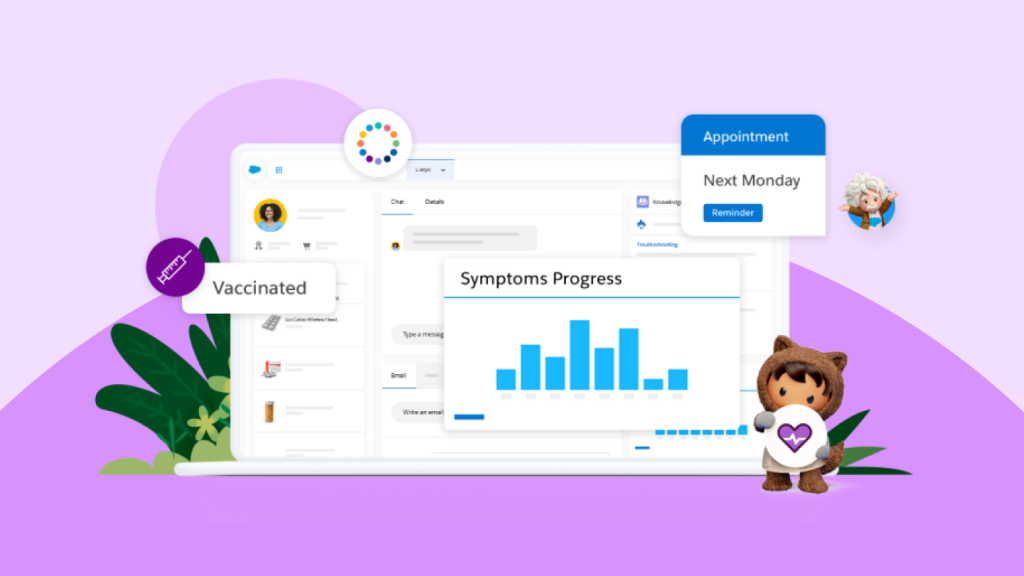

Revolutionizing Care: The Transformative Role of Salesforce AI in Healthcare

Revolutionizing Care: The Transformative Role of Salesforce AI in Healthcare

The healthcare industry stands at a fascinating crossroads. Driven by the imperative to deliver better patient outcomes, enhance efficiency, and personalize care, it’s increasingly embracing the power of artificial intelligence (AI). Among the key players driving this transformation is Salesforce, whose AI-powered solutions are reshaping how healthcare organizations operate and interact with patients.

Salesforce AI, embedded within its robust suite of healthcare-focused platforms, is not just a futuristic concept; it’s a tangible force making significant strides in various aspects of the industry. Let’s delve into the pivotal roles it plays:

1. Personalized Patient Engagement:

Gone are the days of one-size-fits-all healthcare. Patients today expect tailored experiences, and Salesforce AI is enabling this at scale. By analyzing patient data – including medical history, preferences, communication patterns, and even social determinants of health – AI algorithms can:

  • Predict patient needs: Identifying individuals at high risk for certain conditions or those likely to benefit from proactive outreach. For example, AI can analyze past appointment behavior and flag patients who might be due for a follow-up.
  • Personalize communication: Delivering relevant information, appointment reminders, and educational materials through preferred channels like email, SMS, or patient portals. Imagine a patient receiving a personalized reminder for their medication refill along with a short video explaining its proper usage.
  • Optimize care plans: Suggesting tailored treatment pathways and interventions based on individual patient profiles and real-time data. This can lead to more effective treatments and improved adherence.

2. Streamlining Administrative Processes:

The healthcare sector is often burdened by complex administrative tasks. Salesforce AI offers solutions to automate and optimize these processes, freeing up valuable time for healthcare professionals to focus on patient care:

  • Automated scheduling and appointment management: AI-powered chatbots can handle appointment bookings, cancellations, and rescheduling, reducing the workload on administrative staff and improving patient convenience.
  • Intelligent document processing: AI can extract key information from medical records, insurance claims, and other documents, accelerating processes like prior authorizations and billing.
  • Efficient resource allocation: Analyzing data on patient flow and resource availability to optimize staffing, bed management, and equipment utilization. This can lead to reduced wait times and improved operational efficiency.

3. Enhancing Clinical Decision Support:

While AI will never replace the expertise of healthcare professionals, it can serve as a powerful tool to augment their decision-making:

  • Predictive analytics for disease management: AI algorithms can analyze vast datasets to identify patterns and predict disease outbreaks, allowing for proactive public health interventions. For instance, analyzing local health trends could help predict a surge in flu cases.
  • Risk stratification: Identifying patients at higher risk of developing complications or experiencing adverse events, enabling targeted preventive measures.
  • Insights from medical imaging and diagnostics: AI can assist in analyzing medical images (like X-rays and MRIs) to detect anomalies and provide clinicians with valuable insights.

4. Empowering Remote Patient Monitoring and Telehealth:

The rise of remote patient monitoring and telehealth has been accelerated by AI. Salesforce AI can:

  • Analyze data from wearable devices: Processing real-time data on vital signs and activity levels to identify potential health issues early on.
  • Power intelligent virtual assistants: Providing patients with instant access to information, answering frequently asked questions, and guiding them through self-care protocols.
  • Enhance virtual consultations: Providing clinicians with relevant patient history and insights during telehealth appointments, leading to more informed diagnoses and treatment plans.

Looking Ahead:

The integration of Salesforce AI in healthcare is an ongoing evolution. As AI technology continues to advance, we can expect even more sophisticated applications that will further revolutionize patient care, streamline operations, and drive innovation. From more precise diagnostic tools to fully personalized preventative care strategies, the potential of AI to transform the healthcare landscape is immense.

However, it’s crucial to acknowledge the ethical considerations surrounding data privacy, security, and algorithmic bias as AI becomes more deeply integrated into healthcare. Ensuring responsible and equitable implementation will be paramount to realizing the full benefits of this transformative technology.

In conclusion, Salesforce AI is not just a technological advancement; it’s a catalyst for a more patient-centric, efficient, and insightful healthcare future. By leveraging its power, healthcare organizations can embark on a journey towards delivering truly exceptional care in the 21st century and beyond.

Navigating the Salesforce Seas: Common Questions for Consultants

Navigating the Salesforce Seas: Common Questions for Consultants

Salesforce consultants are the navigators of the CRM world, guiding businesses through complex implementations and optimizations. But like any journey, there are always questions. Whether you’re a seasoned consultant or just starting out, understanding the common queries you’ll encounter is crucial for success. Let’s dive into some of the most frequent questions and how to tackle them.

1. “Can Salesforce Solve [Specific Business Problem]?”

This is the bread and butter of consulting. Clients often come with a pain point, and they’re looking to you to translate it into a Salesforce solution.

  • How to Answer:
    • Listen Actively: Understand the core issue and the desired outcome.
    • Ask Probing Questions: Dig deeper to uncover the specifics of their processes and data.
    • Showcase Relevant Features: Demonstrate how Salesforce functionalities, like workflows, automation, or custom objects, can address their needs.
    • Provide Realistic Expectations: Be honest about limitations and potential challenges.
    • Document Everything: Clearly outline the proposed solution and its benefits.

2. “How Much Will This Cost?”

Budget is always a concern. Clients need to understand the financial implications of implementing or customizing Salesforce.

  • How to Answer:
    • Break Down Costs: Provide a detailed breakdown of licensing, implementation, customization, and ongoing maintenance.
    • Offer Different Options: Present various solutions with varying price points.
    • Highlight ROI: Emphasize the long-term value and cost savings that Salesforce can bring.
    • Be Transparent: Avoid hidden fees and clearly communicate any potential additional costs.
    • Consider future scalability: make sure to add costs associated with future growth.

3. “How Long Will This Take?”

Time is money, and clients need to know the timeline for implementation or customization.

  • How to Answer:
    • Develop a Realistic Timeline: Consider the complexity of the project and potential roadblocks.
    • Break Down the Project into Phases: Provide clear milestones and deadlines.
    • Communicate Regularly: Keep clients updated on progress and any potential delays.
    • Manage Expectations: Be upfront about potential challenges that could affect the timeline.
    • Use project managment tools: To keep track of progress, and to provide visuals to customers.

4. “Can We Integrate Salesforce with [Other System]?”

Integration is a common requirement, as businesses often use multiple systems.

  • How to Answer:
    • Assess the Systems: Understand the functionalities and APIs of both Salesforce and the other system.
    • Explore Integration Options: Consider API integrations, middleware, or pre-built connectors.
    • Evaluate Data Mapping: Ensure data is accurately transferred between systems.
    • Address Security Concerns: Ensure data security and compliance.
    • Provide a plan: Document the integration process.

5. “How Do We Train Our Users?”

User adoption is crucial for the success of any Salesforce implementation.

  • How to Answer:
    • Develop a Comprehensive Training Plan: Tailor training to different user roles and needs.
    • Offer Various Training Methods: Consider online tutorials, in-person workshops, and user guides.
    • Provide Ongoing Support: Offer post-implementation support and resources.
    • Create documentation: Well written documentation is key to user adoption.
    • Train the trainer: Train key personel that can then train the rest of the company.

6. “What Are the Best Practices for Salesforce Security?”

Data security is paramount, and clients need to know their data is protected.

  • How to Answer:
    • Explain Salesforce’s Security Features: Discuss role-based access control, encryption, and data backups.
    • Recommend Best Practices: Advise on strong passwords, regular security audits, and data loss prevention.
    • Address Compliance Requirements: Ensure the solution meets industry-specific regulations.
    • Discuss disaster recovery: what happens if there is a data loss event.
    • Always follow the principle of least privilege.

Also read : How To Customise SalesForce Opportunity Stages

7. “How Can We Optimize Our Existing Salesforce Implementation?”

Many clients have existing Salesforce instances that need optimization.

  • How to Answer:
    • Conduct a Thorough Assessment: Analyze current configurations, data quality, and user feedback.
    • Identify Areas for Improvement: Recommend changes to workflows, automation, and reporting.
    • Implement Best Practices: Ensure the system is aligned with Salesforce best practices.
    • Automate manual processes: show the client how automation can save time and money.
    • Clean up data: Bad data can cause many issues.

By mastering these common questions and providing clear, concise, and helpful answers, you can build trust with your clients and become a valuable Salesforce consultant. Remember, communication, expertise, and a client-centric approach are key to navigating the Salesforce seas successfully.