

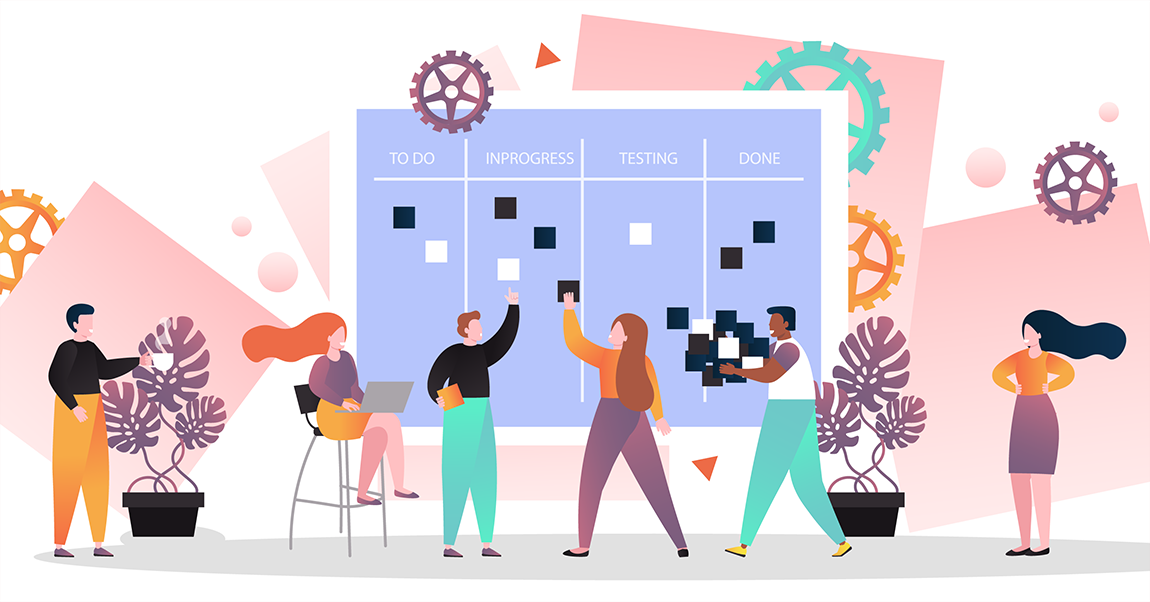
Why is it essential to invest in app maintenance and support ?

Why is it essential to invest in app maintenance and support ?

Several people who own an app business are oblivious to the significance of putting money in mobile app maintenance and support services. In case you wish to develop a new app or have, of late, launched one, you should know about the importance of app maintenance and support for future success. So, let us delve into the significance of app maintenance and support.

Mobile App Maintenance and Support

Mobile app maintenance and support pertains to the whole set of procedures adhered to for ensuring a smooth and hassle-free operation of any live mobile app. It comprises tracking, processing, fixing and upgrading the components it is made of to provide a superior end user experience. Statistics point out that close to 52 per cent of the apps get taken down by several users within the first three months of the launch. This happens due to improper app maintenance to improve the user experience. Despite having advanced features and functionalities there will always be a room for improvement. Hence, the app maintenance and assistance, which aid in pushing the new features to your current app or deal with the bugs.

Mobile Apps Needing Maintenance

In order to gauge the support and maintenance required in any app the understanding of the feature and complexity level of the same become imperative. For example, if you own a complex eCommerce app having millions of daily active users, you need a more proactive maintenance plan. So, based on the kind of your app, the amount of daily active users, and the complexity aspect, go for the pertinent maintenance plan from any efficient mobile app maintenance and support service provider.

Several Types of Mobile App Maintenance

i. Emergency Maintenance

This type of maintenance handles all the imminent problems and mistakes that surround the system and seek quick remedy. If a company gets into an unpredictable but important troublesome situation regarding their mobile app, they must avail emergency maintenance.

ii. Perfective Maintenance

With target users utilizing the app, some new or altered user needs unravel. Perfective maintenance factors in those feedbacks. It entails operational alterations in the source code, in order to offer active app users an incredible user experience,similar to their liking.

iii. Adaptive Maintenance

Over here maintenance is focussed upon updating the system to keep it relevant with the evolving hardware or software surrounding. Environment, in this sphere, pertains to the effects and working conditions, which affect the application’s system.

iv. Preventive Maintenance

This is primarily the intervention based on cutting down or doing away with the development of errors. It basically works on lessening the complications of the application and enhancing the knowledge and maintenance factor.

v. Corrective Maintenance

Finally, corrective maintenance refers to rectifying faults and leftover errors in the daily app operations. Residual errors pertain to mistakes in design, logic or coding. They are generally extracted from the bugs flagged by users.

Significance of App Maintenance Services

More than anything else one should be aware of the significance of mobile app maintenance services. In the current cut-throat scenario it has become essential to optimize the app’s performance, and retain current users, while trying to lure more users.

Mobile app maintenance can be a blessing in such a scenario as it ensures a superlative user experience.

i. Be relevant to changing technologies

With mobile and tablet manufacturers bringing fresh models of the hardware systems, the new devices do not have similar size specifications or features. For example, the advent of a face and fingerprint recognition altered screen sizes. An app that cannot gel with the evolving hardware and OS, turns irrelevant in the current context. A diligent and dedicated maintenance team becomes essential to get along with these changes from time to time and assists in retaining user loyalty.

ii. Enhance the UI

The look and feel of any app are essential in ensuring its growth in the market. The UI has to be appealing and functional, so as to keep the users attached to it. Having an organized maintenance plan, you can easily harness the best UI.

Iii. Gel with changing OS

Each year, it is not unusual to see an update in the iOS and Android platforms. Without updating your current apps they won’t function at all or properly. Such problems should not occur with your app as well. With a maintenance plan inclusive of thorough audits if the beta version of the update released is optimal for doing away with last-minute inconvenience to the users. Maintenance prompts the right intervention at the appropriate time.

iv. Remain in line with software library updates

App developers, as a usual practice, like to utilize the pre-coded software libraries to cut out several inactive coding work. This even implies that they must make sure that your app software is in sync with any updates in the relevant libraries. Maintenance plans have a useful role on this count and make sure continued optimality.

v. Handle downtimes with ease

Downtimes are usual and inevitable in most of the segment of information technology.

Even the big fish such as Amazon, Blackberry etc have suffered downtimes which have negatively impacted their revenue. By putting money in constant and prompt app maintenance aids in spotting such downtimes before it wreaks havoc. Getting organized maintenance plans implies that you’re assured of quick remedy to restore the normal functioning in case of such problems.

vi. Assure constant and strong safety

With hackers and cybercriminals having easy time in exploiting gaps in the digital arena, even the ideal security protocols and encryptions go out of fashion in quick time.

In case your app is having crucial information, it can easily have negative and uncontrollable implications. Regular app maintenance aids in maintaining high security. It ensures that the newest security protocols and measures are implemented to safeguard the app and its users from the threats emanating from cyberspace.

Price tag of App Maintenance and Support Services

It is totally wrong to assume that app maintenance can cost you badly. In fact, the real cost is less severe than the security threats and malfunctioning of apps. Chiefly, it’s the two aspects in conjunction that dictate the price for your app:

Complexity: The more complex the app happens to be the more holistic its maintenance becomes.

Frequency: Then it is the turn of frequency of intervention. Weekly or monthly maintenance can cost more than quarterly or half yearly maintenance.

As such, the expense can be dissected into the following elements –

  • Hosting expenses
  • Monitoring and crash analytics
  • App store optimization
  • Licenses
  • Regularity of including new content
  • Marketing costs
  • Emergency scenarios

Finally

So, it is critical to accept that the cost hinges heavily on how your app got initially built. If it hasn’t been engineered to expand, the maintenance cost can go up considerably as the app increases its user base. Generally, the companies that offer app development services also give the maintenance plans. You have the option to get the same team or go for another seasoned app maintenance service provider.

How Mobile Apps aid in driving Digital Transformation

How Mobile Apps aid in driving Digital Transformation

Introduction

Smartphones have become very critical in our day to day lives. The growing number of smartphone users, 3.5 billion at present, proves this. This has also given birth to a new phenomenon called mobile apps. These gadgets are hollow devoid of mobile apps. There is a reason for the same as well. The apps make life easier for both customers as well as the companies. As far as companies or businesses are concerned, they can easily establish a connection with customers through messaging via apps. However, the message has to be relevant for the customers. This means that the information should pertain to offers, discounts etc. As for customers, apps make it convenient for them to find a product or a service they desire. This is possible only if the app is devised with customer satisfaction in mind. In order to develop such an app it is better to approach an experienced mobile app development company. Hence, the benefits of apps are endless for both the parties if they are properly designed.

Stats are an eye-opener

The statistics provided underneath makes it clear why businesses need mobile applications now more than ever:

  • 21% of Millennial open an app over 50 times daily
  • Mobile apps drive 57% of total digital media usage
  • It is being observed that a user with 80 apps is using up to 40 apps per month
  • Users are expected to download 258.2B mobile apps in 2022

These numbers prove that the popularity of app is soaring and going forward the figures are going to be phenomenal.

What is Digital transformation?

There is a misconception doing the rounds that digital transformation is a process of maximizing the use of technology in a company. The theory is based on the fact that increased use of technology will lead to improved experiences of employees, customers, and other stakeholders. This is nothing but a flawed theory. To be precise, digital transformation is a phenomenon that goes beyond extending the scope of technology. So, what is it? It is a wider cultural transition that aids organizations to adopt an innovative approach that refuses to accept the status quo, and prompts businesses to learn from failure. Digital transformation is not just about incorporating digitalization into diverse areas of your business. It, in fact, changes the way companies function apart from providing genuine value to customers.

How mobile apps are accelerating digital transformation?

A mobile app is very much instrumental in making digital transformation a success story. In the current scenario, apps have become crucial in time spent on mobile phones. From routine surfing to making purchases, everything is facilitated through mobile apps. Even for businesses these apps serve as an ideal platform to establish good relationships with their customers. Hence, mobile applications offer myriad scope to the businesses and bring every aspect of a business on a single platform.

Also Read : How To Develop World Class Android App ?

4 Ways in which apps are transforming business digitally

Providing customers easy access to your business

A mobile app provides your customers with easy and quick access to your team members anytime and anywhere. The app comes with a ‘chat’ feature which companies these days utilize for communication purposes. It has become easier for customers to send their queries to the company. Companies can then respond to these queries in line with the volume of queries and messages received. Businesses can either choose a real-time response at specific hours or 24/7customer service, depending upon what suits them the most. Hence, this is one way in which mobile apps have digitally transformed the business.

Merging AI technology to serve customers

Another way in which mobile app is leading the way in digital transformation of business is through Artificial intelligence (AI) tools. AI is a technology that mimics human traits and then performs functions like humans. The technology enables businesses to interact with their customers in a better way so as to know them really well. Majority of the companies are employing AI technology while creating mobile apps. Some of the AI technologies being used are Natural Language Generation, Natural Language Processing, Speech Recognition Technology, Chat Bots etc. For example, Chatbots communicate with the consumers and register their responses. Hence, it serves the purpose of a virtual assistant for your consumers.

Enhancing functionalities of app through IoT

Internet of Things is basically about taking the power of the internet beyond computers and smartphones to other things or processes. This has increased the functionality of mobile apps as well. Everything pertaining to our lives, be it homes or even toilets, can be accessed via mobile apps on our smartphones. You might have heard of ‘Smart Homes’, where all the home devices are linked to the internet and can be managed easily with an app installed on your phone. So, the apps are no longer just about showing products or providing information. It has become more advanced thanks to IoT. This is another way through which apps are successfully accelerating digital transformation.

Triggering loyalty via real-time app analytics

In the current scenario, businesses thrive on real-time analytics. The real-time analytics has the propensity to make or mar your business. Also these days usage of mobile apps has gone significantly higher. The apps are also enabling businesses to access useful insights pertaining to consumers such as buying pattern, frequency of purchase etc. Thus, the collection of the real-time analytics allows companies to devise appropriate strategies to deal with customers effectively. If utilized properly, the real time app analytics can be beneficial for both companies as well as the customers. For instance, if you are using real-time analytics and a customer happens to be in the vicinity of your outlet, notifications regarding offers or discounts on the products will be instantly dispatched to him or her. This kind of prompt and coordinated technology makes consumers realize their importance to the company and inculcate in them a sense of loyalty towards the business or brand.

Conclusion

So, it would be quite fair to say that mobile applications are critical in accelerating the process of digital transformation in businesses. In order for making a successful transition towards digitalization, companies need to give more importance to mobile app development. Hence, it can be safely concluded that mobile apps drive digital transformation of businesses and help companies gain significant edge over their competitors in a crowded marketplace.

What are the advantages of cross-platform mobile app development?

What are the advantages of cross-platform mobile app development?

Introduction

If you think that your business requires a mobile app, then the immediate and foremost question that pops up in your mind is, “Do I go for a native mobile app or a cross-platform mobile app?” Despite your choice of platform hinging predominantly on the platform your target audience enjoys spending time on, going for cross-platform mobile app development makes the prospect of your app turning successful and well-known in less time than a native mobile app. Dissimilar to native mobile apps, which operates solely on a single operating system, cross-platform apps are very versatile, have a single code base and operate on several operating systems.

Two chief types of cross-platform mobile apps happen to be:

Native’ Platform Mobile Apps

Through the assistance of a third-party vendor, these apps are developed with the API given by the native operating system SDK (Software Development Kit), in other programming languages without the backing of the operating system vendor. The final app utilizes native APIs and has a sole cross-platform codebase, which results in a higher native feel compared to a hybrid app.

Hybrid ‘HTML5’ Cross-Platform Mobile Apps:

These are primarily written as a web application with contemporary web technologies such as HTML5, CSS3, and JavaScript. The final app is attached within a thin native container, which permits it to operate on any device notwithstanding several browser-centric limitations. But, these apps most of the time are unable to get a native look and feel akin to native cross-platform apps. Apart from being quite adaptable and simple to build, cross-platform mobile apps benefit both clients and developers with a lot of worthwhile and tangible benefits.

Benefits of Cross-Platform Mobile App Development

One App Instead of Many:

In case you opt for the option of cross-platform, your developers will not be required to write new code for each platform. Rather, they can opt for the same code on various platforms. Utilizing a single code base on all platforms not only reduces routine activities but also turn the job of maintenance and deployment very convenient for developers. This is a big advantage with a cross-platform mobile app development.

Remain Uniform Throughout:

A pleasurable and seamless user experience (UX) is the recipe for success as far as an app is concerned. A beautifully thrashed out UX of an app needs to perform uniformly on all devices. Keeping similar user interface design on all platforms, cross-platform development provides users with the same incredible app experience irrespective of the device they’re using the app.

Integrate with the Cloud Seamlessly

The other distinct advantage with cross-platform apps is that they can be integrated swiftly and comfortably with cloud environments and enterprise-level plug-ins. To put it simply, cross-platform apps gel with anything and everything and can leverage several plug-ins and extensions for improved app experience, expandability and functionality.

Swift Release:

Cross-platform development offers developers the facility to reutilize the code within the app many times and hugely reduces the time required to introduce the app to the public. Further, instead of building various apps, simply one app would suffice. This can spare developers a lot of precious time, permitting them to offer the project in a short duration.

Zilch Technical Hurdles:

Cross-platform development can be very beneficial for developers as they don’t have to learn new, platform-centric languages such as Objective-C, Swift or Java. Any developer with familiarity in HTML5, CSS3, and JavaScript can easily begin with cross-platform app development. Also, these languages can be learned quickly than a totally new platform specific language.

More reach with less promotional efforts:

Standard rule stipulates that the large number of platforms you develop an app for, larger the audience you can reach out to. Developing the app for various platforms such as iOS, Android, Windows, and BlackBerry also minimizes your promotional initiatives as the majority of people will become familiar with your app. The other significant benefit is that you don’t have to make niche messages to attract a certain segment of audience.

Minimizes Development and Maintenance Expenses:

Clients requiring a cross-platform mobile application for their business will only need a small team of professionals well versed in a particular kind of technologies, which brings down the whole development expenditure regarding the project. As there is only a single app to deal and update, maintenance expenditures come down in comparison to managing and updating various apps for several platforms.

5 highly Desired Cross-Platform Mobile App Development Tools

In the past building a cross-platform mobile app used to be a very tall order fraught with a lot of difficulties and risks. But, with the enormous growth of cross-platform mobile app development tools, the scenario has transformed rapidly. Developers these days are leveraging these tools to churn out app with less hiccups. In this endeavor let us explore some well-known cross-platform mobile app development tools and platforms that can bring down your development time and efforts.

1.  Xamarin

The hugely popular and commonly used tool to develop native cross-platform mobile apps with the potency of C# programming language and.NET framework. It is owned by Microsoft!

2.  React Native

React Native happens to be an open source app development framework from Facebook to create cross-platform native mobile apps with the help of JavaScript and React.js. An ideal foil for Agile Development!

Also Read : React Native Or Xamarin ? Which One Is Best ?

3.  NativeScript

Another effective open source framework to make cross-platform mobile apps having a native look and feel with JavaScript, TypeScript or Angular. It even assists the Vue.js framework!

4.  Appcelerator Titanium

This is a leading open-source framework that permits developers to make native mobile apps for several platforms with a single JavaScript code base. A very good option for developers with knowledge in JS.

5.  PhoneGap

Earlier known as Apache Cordova, PhoneGap is a famous framework to create cross-platform hybrid mobile apps with the efficiencies of HTML5, CSS3, and JavaScript.

Lastly

Going by the afore-mentioned points it can be safely concluded that cross-platform app development is ideal compared to other methods. The chief reason being less expensive and time-consuming. If you are planning a mobile app for your business then consider the cross-platform development process.