

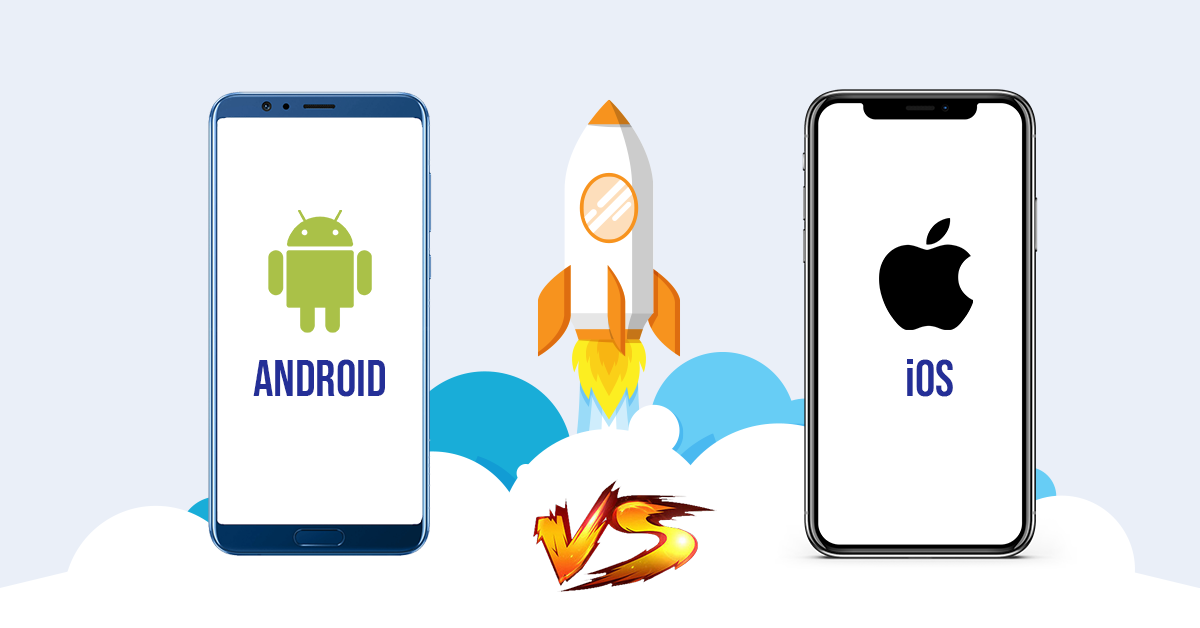
iOS vs. Android: Where Should You Launch Your App First?

iOS vs. Android: Where Should You Launch Your App First?

In the ever-evolving mobile landscape, the “iOS vs. Android” debate is a perennial one for app developers and businesses. With both platforms offering massive user bases and distinct ecosystems, deciding where to launch your mobile app first can be a critical strategic choice. Let’s delve into the key factors to consider in 2025.

Market Share & Global Reach

Globally, Android remains the dominant force. In 2024, Android held a commanding 69.88% of the global mobile OS market share, compared to iOS’s 29.39%. This dominance is particularly pronounced in emerging markets like India (where Android has a staggering 95.16% market share), Brazil, Mexico, and China, where more affordable Android devices are widespread.

However, the picture shifts significantly when looking at specific regions. In the United States, iOS reigns supreme, with a 61.45% market share in the most recent quarter of 2024. iOS also leads in other affluent markets such as Japan, Canada, Australia, and the UK.

Key Takeaway: If your primary goal is to achieve broad global reach and penetrate diverse demographics, Android offers a significantly larger potential user base. If your target audience is primarily in developed Western markets, particularly North America, iOS presents a strong argument.

User Demographics & Monetization Potential

Beyond sheer numbers, the user demographics of each platform differ, impacting monetization strategies.

  • iOS Users: Generally, iOS users tend to have higher disposable incomes. Research indicates that iPhone users have a higher average annual salary ($53,251) compared to Android users ($37,040). This translates into a greater willingness to spend on apps, in-app purchases, and subscriptions. The App Store consistently generates significantly higher revenue than Google Play, with iOS accounting for about 67% of global app revenue despite having fewer users.
  • Android Users: While Android users are more diverse in terms of economic levels, they are often more receptive to ad-based monetization and freemium models. Android’s vast user base can be leveraged for mass adoption, and revenue can be driven through advertising, especially in gaming apps where Google Play sees higher install rates (though iOS still generates more revenue from games).

Key Takeaway: If your app relies heavily on in-app purchases, subscriptions, or premium pricing models, iOS users are historically more likely to convert. If your monetization strategy involves a large user base and ad revenue, Android offers a wider net.

Development Cost & Time

The cost and time associated with app development are crucial considerations.

  • iOS Development: Often, iOS app development can be slightly faster due to fewer device variations and a more streamlined ecosystem. This can lead to shorter testing cycles and potentially reduced debugging expenses. While initial development costs for iOS can be higher on average (e.g., $50,000 for iOS vs. $23,000 for Android for initial versions, though this varies greatly with complexity), the testing and maintenance can be more predictable. Apple also charges an annual developer fee of $99.
  • Android Development: The fragmentation of the Android ecosystem (a vast array of devices, screen sizes, and OS versions) can lead to increased testing time and costs to ensure compatibility across a wider range of devices. While Android developers may charge slightly less per hour, the extensive compatibility testing can sometimes balance out the overall cost. Google Play has a one-time developer registration fee of $25.

Key Takeaway: If a faster time-to-market and more predictable development process are critical, iOS might offer an advantage. However, for initial cost-effectiveness, Android can sometimes be more appealing, provided you account for the increased testing overhead. Cross-platform development frameworks like Flutter or React Native can offer a solution to build for both platforms simultaneously, potentially saving 20-40% on costs.

Developer Community & Resources

Both platforms boast robust and supportive developer communities.

  • iOS: Apple’s ecosystem is known for its strong community, extensive documentation, and numerous tutorials, particularly around Swift (Apple’s programming language) and SwiftUI (its UI framework). The consistency of the platform also contributes to a more focused development environment.
  • Android: The larger and more diverse Android community provides a wealth of open-source resources, libraries, and troubleshooting forums. This open-source nature can foster rapid development and deployment, with plenty of resources to navigate the platform’s fragmentation.

Key Takeaway: Both platforms offer ample support for developers. The choice here often comes down to individual developer preference and familiarity with the respective tech stacks.

Conclusion: A Strategic Decision

Ultimately, the “iOS vs. Android: Where to launch first?” question has no single universal answer. It hinges on your specific app, target audience, business model, and long-term goals.

  • Consider iOS first if:
    • Your app targets affluent users in developed Western markets.
    • Your monetization strategy heavily relies on in-app purchases, subscriptions, or premium features.
    • You prioritize a streamlined development process and a potentially faster time-to-market.
    • A high-quality, consistent user experience is paramount.
  • Consider Android first if:
    • Your primary goal is to achieve maximum global reach and user acquisition, especially in emerging markets.
    • Your monetization strategy includes advertising or a freemium model.
    • You need to cater to a wider range of device capabilities and price points.
    • You are open to a more fragmented testing landscape.

Many successful mobile apps eventually launch on both platforms. However, making an informed decision for your initial launch can significantly impact your app’s early traction and success. Analyze your unique circumstances, conduct thorough market research, and then make the strategic choice that best aligns with your vision.
Flutter for AI-Powered UI: Dynamic Content Generation and Personalization

Flutter for AI-Powered UI: Dynamic Content Generation and Personalization

In today’s digital landscape, static user interfaces are a relic of the past. Users crave experiences that are intuitive, engaging, and, most importantly, personal. This is where the powerful combination of Flutter and Artificial Intelligence (AI) truly shines. Imagine an e-commerce app that doesn’t just display products, but proactively suggests items you’ll love, or a news feed that curates articles based on your evolving interests. This isn’t science fiction; it’s the reality Flutter and AI are making possible.

The Power Duo: Flutter’s UI Prowess Meets AI’s Brains

Flutter, Google’s UI toolkit for building natively compiled applications for mobile, web, and desktop from a single codebase, brings unparalleled speed and flexibility to UI development. Its declarative nature and rich set of customizable widgets make it a dream for creating beautiful and highly responsive interfaces.

But a beautiful UI alone isn’t enough for true personalization. This is where AI steps in. By leveraging AI insights, Flutter UIs can become “smart” – adapting and personalizing content in real-time. This dynamic content generation and personalization can manifest in various ways:

  • Hyper-personalized Product Suggestions (E-commerce): Moving beyond simple “customers who bought this also bought…” AI can analyze a user’s Browse history, purchase patterns, demographics, and even sentiment from reviews to offer highly relevant product recommendations. Imagine an e-commerce app where the homepage layout, product carousels, and even promotional banners are dynamically generated to match each individual user’s preferences, leading to increased conversions and customer satisfaction.
  • Adaptive News Feeds and Content Curation: News apps can go beyond topic-based subscriptions. AI can learn a user’s reading habits, preferred sources, and engagement with different types of content to create a constantly evolving, personalized news feed. This could include prioritizing breaking news from trusted sources, suggesting deeper dives into topics a user has shown interest in, or even filtering out content that consistently receives low engagement.
  • Intelligent Chatbots and Virtual Assistants: Flutter can power the front-end of AI-driven chatbots that offer more than just pre-programmed responses. These chatbots can understand natural language, learn from past interactions, and provide truly personalized assistance, whether it’s helping a user troubleshoot an issue, navigate an app, or even complete a transaction.
  • Dynamic UI Layouts and Theming: Imagine an app that subtly changes its color scheme, font sizes, or even the arrangement of its UI elements based on user preferences, environmental factors (like time of day or location), or even the user’s emotional state detected through AI analysis. While still an emerging area, this level of dynamic UI adaptation could create truly immersive and comfortable user experiences.

How Flutter Integrates with AI: The Technical Side

Flutter’s versatility allows for seamless integration with various AI frameworks and services:

  • On-device AI with TensorFlow Lite: For real-time processing and privacy-sensitive applications, Flutter can integrate with TensorFlow Lite. This allows you to run lightweight machine learning models directly on the user’s device, enabling features like image recognition, text classification, or custom gestures without relying on cloud connectivity.
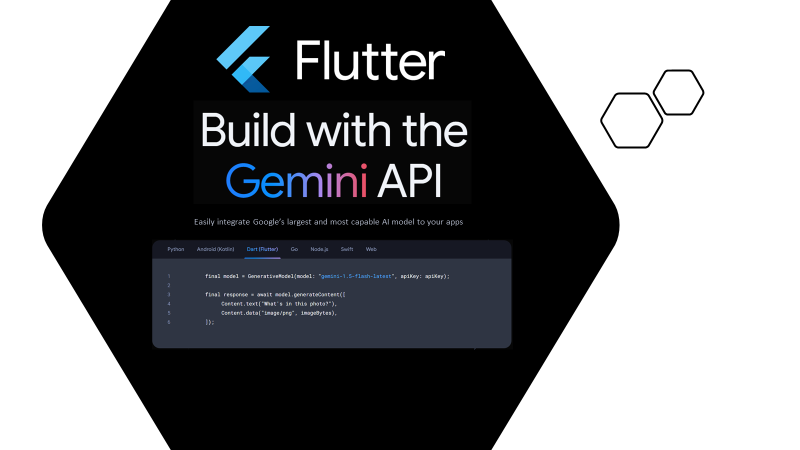
  • Cloud-based AI with Google ML Kit, Firebase, and OpenAI: For more complex AI tasks requiring significant computational power, Flutter apps can leverage cloud-based AI services. Google ML Kit provides a range of ready-to-use APIs for common machine learning tasks, while Firebase AI Logic offers a streamlined way to integrate generative AI models like Google Gemini. Furthermore, community-supported packages allow Flutter developers to connect with powerful AI APIs from providers like OpenAI for advanced natural language processing and content generation.
  • Custom AI Model Integration: For highly specialized use cases, developers can train their own AI models and integrate them into their Flutter applications using various methods, including platform channels for native code integration or RESTful APIs to communicate with custom backend AI services.

Building the Future: Considerations for AI-Powered Flutter UIs

While the possibilities are exciting, a few key considerations are crucial when building AI-powered Flutter UIs:

  • Data Privacy and Security: Handling user data for personalization requires a strong focus on privacy and security. Transparent data policies and robust security measures are paramount to building user trust.
  • Performance Optimization: AI computations can be resource-intensive. Optimizing AI model sizes, leveraging on-device inference where appropriate, and employing efficient data handling strategies are essential for maintaining a smooth and responsive user experience.
  • User Feedback and Iteration: The beauty of AI is its ability to learn and improve. Implementing mechanisms for user feedback (e.g., “was this recommendation helpful?”) and continuously iterating on AI models based on user interactions will lead to increasingly accurate and valuable personalization.
  • Ethical AI Practices: As AI becomes more integrated into user interfaces, developers must consider ethical implications, ensuring fairness, transparency, and avoiding biases in AI-driven decisions.

The Road Ahead

Flutter, with its robust UI capabilities and growing ecosystem for AI integration, is poised to lead the charge in creating the next generation of intelligent, adaptive, and hyper-personalized user experiences. From transforming e-commerce into a truly bespoke shopping journey to making content consumption more relevant and engaging, the fusion of Flutter and AI is not just enhancing UIs; it’s redefining how users interact with technology. The future of mobile applications is smart, dynamic, and intensely personal, and Flutter is a key enabler of this exciting evolution.

Building Agentic Apps with Flutter and Gemini APIs: A New Frontier for Intelligent Applications

Building Agentic Apps with Flutter and Gemini APIs: A New Frontier for Intelligent Applications

The world of mobile and web development is constantly evolving, and at the forefront of this evolution is the integration of Artificial Intelligence. Imagine applications that don’t just react to user input, but proactively observe, interpret, and act on information, anticipating user needs and providing intelligent assistance. This is the promise of “agentic applications,” and with the powerful combination of Flutter, Google’s Gemini, and Vertex AI, this future is becoming a reality.

What are Agentic Applications?

Traditional applications often follow a fixed set of rules or respond to direct user commands. Agentic applications, on the other hand, embody a more sophisticated level of intelligence. They are designed to:

  • Observe: Continuously gather data from various sources – user interactions, device sensors, external APIs, etc.
  • Interpret: Understand the context and meaning of the observed data, often leveraging large language models (LLMs) to derive insights.
  • Act: Take proactive steps or suggest relevant actions based on their interpretation, aiming to achieve a specific goal with minimal human intervention.
  • Learn and Adapt: Improve their performance over time by evaluating outcomes and refining their strategies.

This capability to “think” and “do” makes agentic apps far more dynamic and helpful, moving beyond simple automation to truly intelligent assistance.

Flutter: The Perfect Canvas for Agentic Experiences

Flutter, Google’s UI toolkit for building natively compiled applications for mobile, web, and desktop from a single codebase, offers an ideal platform for developing agentic apps. Its key advantages include:

  • Cross-platform development: Build once, deploy everywhere, reaching a wider audience with your intelligent applications.
  • Expressive UI: Create beautiful and highly responsive user interfaces that can effectively present complex AI-generated insights and actions.
  • Performance: Flutter’s native compilation ensures smooth and fluid animations, crucial for a seamless user experience, especially when dealing with real-time AI interactions.
  • Growing ecosystem: A rich set of libraries and tools simplifies integration with various services, including Google’s AI offerings.

Unleashing Intelligence with Gemini and Vertex AI

The true intelligence in agentic applications comes from powerful AI models. Here’s where Google’s Gemini and Vertex AI shine:

  • Gemini: As Google’s most capable and flexible multimodal AI model, Gemini can understand and process information across various modalities – text, images, audio, and more. This multimodal capability is crucial for agentic apps that need to observe and interpret diverse data streams. From understanding conversational nuances to analyzing visual information, Gemini provides the core intelligence.
  • Vertex AI: This fully-managed, unified AI development platform on Google Cloud provides the infrastructure and tools needed to build, deploy, and scale machine learning models, including Gemini. Key aspects for agentic apps include:
    • Agent Builder: Simplifies the process of creating and deploying enterprise-ready generative AI experiences and multi-agent workflows.
    • Function Calling: Enables Gemini to interact with external tools and APIs, allowing agents to take real-world actions (e.g., booking a flight, sending a message, retrieving data from a database).
    • Model Garden: Offers access to a wide variety of foundation models, including Gemini, and tools for fine-tuning them for specific use cases.
    • MLOps Tools: Provides robust capabilities for managing the entire ML lifecycle, from data preparation to model deployment and monitoring, ensuring the reliability and continuous improvement of your agentic apps.

How Flutter, Gemini, and Vertex AI Come Together

Building agentic apps with this stack typically involves:

  1. Flutter UI: Designing the user interface that interacts with the user and displays AI-generated information and actions.
  2. Dart SDK for Gemini/Vertex AI: Leveraging the google_generative_ai or firebase_vertexai packages in Dart to connect your Flutter app directly to Gemini models.
  3. Prompt Engineering: Crafting effective system prompts that guide the LLM to understand context, reason, and generate appropriate responses or actions.
  4. Function Declarations: Defining “tools” that the Gemini model can call within your Flutter application or external services. This is where the “act” part of an agentic app truly comes alive, enabling the AI to trigger specific functionalities.
  5. State Management: Utilizing Flutter’s state management solutions (like Riverpod or Bloc) to synchronize UI events with LLM interactions and manage the conversational context and history of the agent.
  6. Firebase AI Logic (Optional but Recommended): For serverless integration, Firebase AI Logic provides a seamless way to access Gemini without managing your own backend, simplifying deployment and scaling.

Examples of Agentic Apps

The possibilities for agentic applications are vast:

  • Proactive Personal Assistants: An app that observes your calendar, emails, and location, and proactively suggests relevant actions like ordering coffee before a meeting, reminding you to pick up groceries on your way home, or suggesting a route change due to traffic.
  • Intelligent Customer Support: Chatbots that not only answer questions but can access internal systems to resolve issues, escalate complex cases, and proactively offer solutions based on user behavior.
  • Dynamic Learning Platforms: Educational apps that adapt content and learning paths based on a student’s progress, understanding of concepts, and even emotional state.
  • Smart Home Controllers: Applications that learn your habits and preferences to autonomously adjust lighting, temperature, and security settings.

The Future is Agentic

The combination of Flutter’s versatility and performance with the advanced intelligence of Gemini and the robust capabilities of Vertex AI is opening up a new era of application development. By building agentic mobile apps, developers can create truly intelligent and proactive experiences that anticipate user needs, automate complex tasks, and fundamentally change how we interact with technology. If you’re looking to build the next generation of intelligent applications, diving into Flutter with Gemini and Vertex AI is an exciting and promising path.