


Android Unleashed: Apps for the Post-Smartphone Future

Android Unleashed: Apps for the Post-Smartphone Future

The smartphone, for all its revolutionary impact, is merely a stepping stone in our technological evolution. As we stand in 2025, the whispers of a “post-smartphone era” are growing louder, heralding a future where our digital lives seamlessly blend with our physical reality, powered by devices like smart glasses, augmented reality contact lenses, and even brain-computer interfaces (BCIs). This seismic shift presents both exhilarating opportunities and formidable challenges for Android app developers.

For decades, Android has been synonymous with the smartphone. Its open-source nature, vast developer community, and robust ecosystem have fueled innovation. But how will this powerhouse adapt when the screen is no longer in our hands, but on our faces, or directly connected to our minds?

The Visual Revolution: Smart Glasses and AR Contact Lenses

The immediate successors to the smartphone in our pockets are likely to be on our faces. Smart glasses, like those powered by Android XR (with initial devices expected in 2025), and the more futuristic augmented reality (AR) contact lenses, will transform how we interact with information and the world around us.

How Android Apps Will Evolve:

  • Contextual Computing is King: Apps won’t just display information; they’ll overlay it directly onto our vision, contextually relevant to what we’re seeing. Imagine walking into a store and seeing product reviews hovering over items, or navigating a new city with real-time directions projected onto the street.
  • Voice and Gesture-First Interfaces: The absence of a physical screen means touch-based input will diminish. Voice commands and subtle hand gestures (even eye tracking for AR contact lenses) will become the primary modes of interaction. Android’s robust voice recognition and AI capabilities (like Gemini, already being integrated into smart glasses) will be paramount.
  • Immersive AR Experiences: Android’s ARCore will evolve significantly. Developers will need to think in 3D, creating apps that seamlessly blend digital elements with the physical world, offering experiences like virtual try-ons for clothing, interactive architectural visualizations, or educational overlays for historical sites.
  • Minimalist Design & Glaceable Information: Cluttered interfaces will be a thing of the past. Apps will need to deliver crucial information concisely and unobtrusively, designed for quick glances rather than prolonged staring. Notifications will be subtle, timely, and context-sensitive.
  • Edge Computing & Local AI: To ensure real-time responsiveness and maintain privacy, smart glasses and AR contact lenses will increasingly rely on on-device processing and localized AI models. This means optimizing apps for efficient performance on less powerful hardware.
  • Companion Apps Remain Relevant: While the core experience will be on the head-mounted display, mobile or desktop companion apps will likely remain crucial for managing settings, syncing data, and accessing more detailed dashboards.

Challenges and Opportunities:

  • UI/UX Rethink: The fundamental shift from a handheld screen to an optical display demands a complete re-imagining of user interface and user experience design.
  • Privacy Concerns: Overlaying digital information onto the real world raises significant privacy questions, requiring developers to prioritize secure and ethical data handling.
  • Hardware Constraints: Optimizing apps for limited battery life, processing power, and display capabilities will be a continuous challenge.
  • Seamless Integration: The true power will lie in how well these devices integrate with our existing digital ecosystems and services.

The Mind-Bending Frontier: Brain-Computer Interfaces (BCIs)

While further in the future, brain-computer interfaces represent the ultimate evolution of human-computer interaction. Imagine controlling apps, communicating, or even creating, solely with your thoughts. Android’s role in this domain will be pivotal as an operating system that can interpret and act upon neural signals.

How Android Apps Will Evolve:

  • Direct Neural Control: The ultimate hands-free experience. Apps would respond to interpreted thoughts, intentions, or emotional states. This could revolutionize accessibility for individuals with motor disabilities.
  • Cognitive Augmentation: BCIs could enable apps that enhance memory, focus, and learning by providing real-time feedback on brain activity. Imagine an app that helps you concentrate during a task or recall information instantly.
  • Personalized Digital Environments: Apps could adapt and personalize experiences based on a user’s real-time cognitive state, offering information or functionalities precisely when needed.
  • New Input Paradigms: Beyond simple commands, BCIs could enable complex interactions, allowing users to “feel” digital objects or navigate virtual spaces with unprecedented immersion.

Challenges and Opportunities:

  • Ethical and Privacy Minefields: The ability to access and interpret brain activity raises profound ethical dilemmas regarding privacy, consent, and potential misuse of data.
  • Technological Complexity: Developing reliable and accurate BCI hardware and software is an enormous scientific and engineering challenge.
  • Standardization: Establishing common protocols and standards for BCI interaction will be crucial for widespread adoption and app development.
  • User Acceptance: Overcoming societal hesitations and building trust in such intimate technology will be a significant hurdle.

Also read : 7 Ways To Bypass Mobile App Usability Problems

The Road Ahead for Android Developers

The post-smartphone era isn’t about abandoning Android; it’s about expanding its reach and redefining its purpose. Developers will need to:

  • Embrace XR and Spatial Computing: Understanding 3D environments, AR frameworks (like ARCore), and designing for spatial interaction will be essential.
  • Master Voice and Gesture Interfaces: Natural Language Processing (NLP) and computer vision for gesture recognition will become core competencies.
  • Prioritize Performance and Efficiency: Optimizing apps for diverse and often constrained hardware will be more critical than ever.
  • Champion User-Centric Design: The focus will shift even further to intuitive, context-aware, and unobtrusive experiences.
  • Navigate Ethical Considerations: A deep understanding of data privacy, security, and the societal impact of these emerging technologies will be paramount.

The future of Android app development is not just about building better apps for existing devices; it’s about crafting entirely new ways for humanity to interact with the digital realm. From subtle overlays on our vision to direct thoughts translated into action, Android is poised to remain at the forefront, shaping a future where technology is truly an extension of ourselves. The journey beyond the smartphone screen has just begun, and the opportunities for innovation are limitless.

Why iOS Remains the Undisputed Champion for Your MVP App Launch

Why iOS Remains the Undisputed Champion for Your MVP App Launch

In the dynamic world of mobile app development, launching a Minimum Viable Product (MVP) is a critical first step. It allows startups and established businesses alike to test their ideas, gather crucial user feedback, and iterate rapidly without committing extensive resources. While both iOS and Android platforms have their merits, iOS consistently emerges as the superior choice for MVP app launches, particularly for those targeting a discerning early adopter audience.

If you’re a startup or a mobile app development company in London looking to make a significant impact, here’s why iOS should be at the top of your list for your MVP:

1. Superior User Experience and Design Consistency

Apple’s stringent design guidelines and emphasis on user experience (UX) create a consistent and polished environment for iOS apps. This translates into a more intuitive and aesthetically pleasing initial interaction for your users. For an MVP, where first impressions are paramount, a well-designed iOS app can immediately convey professionalism and quality.

Mobile app designers in London often find that working within the iOS ecosystem allows for a streamlined design process, leveraging established UI/UX patterns that users are already familiar with. This reduces the learning curve for your initial users and ensures a smoother onboarding experience.

2. Higher Engagement and Monetization Potential

Historically, iOS users have demonstrated higher engagement rates and a greater willingness to spend on in-app purchases and premium features. This is a significant advantage for an MVP, as it allows you to quickly validate your monetization strategy and gather revenue even in the early stages. For a mobile app developer in London focused on achieving early financial viability, this can be a game-changer.

3. Faster Development Cycles and Cost-Effectiveness (Yes, Really!)

While the perception might be that iOS development is more expensive, for an MVP, it can actually be more cost-effective. The unified ecosystem of iOS, with fewer device variations and screen sizes compared to Android, often leads to:

  • Faster Development: Less time spent on fragmentation issues and compatibility testing.
  • Reduced Testing Efforts: A more homogenous user base simplifies quality assurance.
  • Streamlined Iteration: Apple’s App Store review process, while rigorous, is often quicker and more predictable for minor updates once the initial MVP is approved. This means you can implement feedback and push out improvements rapidly.

This efficiency makes iOS a compelling choice for an app development company in London aiming to deliver a functional and polished MVP within a tighter timeline and budget.

4. Access to a Premium and Tech-Savvy Audience

iOS users are often early adopters of new technology and are generally more comfortable with digital transactions. This demographic is ideal for an MVP, as they are more likely to provide valuable feedback, embrace new features, and become advocates for your product. If your target audience aligns with this profile, launching on iOS first can provide a strong foundation for future growth.

5. Enhanced Security and Performance

Apple’s closed ecosystem offers a higher level of security and performance optimization. This provides a stable and reliable platform for your MVP, reducing the likelihood of bugs and crashes that could deter early users. A secure and smoothly functioning app builds trust and encourages continued engagement, which is vital for validating your app idea.

Conclusion

For businesses in London and beyond looking to launch an MVP, iOS offers a compelling combination of design excellence, user engagement, development efficiency, and access to a valuable audience. Partnering with an experienced app developer in London who specializes in iOS can help you leverage these advantages and bring your innovative app idea to market quickly and effectively. While a cross-platform strategy might be considered for a full-fledged product, for the critical initial phase of an MVP, iOS remains the smartest strategic move.

Unlocking Efficiency: How Cross-Platform App Development Empowers Startups to Save Big and Launch Faster

Unlocking Efficiency: How Cross-Platform App Development Empowers Startups to Save Big and Launch Faster

In today’s hyper-competitive digital landscape, a mobile app isn’t just a luxury for startups – it’s often a necessity. But for lean new businesses, the prospect of developing separate native apps for iOS and Android can be daunting, both in terms of cost and time. This is where cross-platform app development swoops in as a game-changer, offering a powerful solution for startups looking to maximize their budget and accelerate their market entry.

The Native Dilemma: Why Two Apps Can Be Too Much

Traditionally, building an app meant developing natively for each platform. This involves:

  • Separate Codebases: Writing two entirely different sets of code (Swift/Objective-C for iOS, Java/Kotlin for Android).
  • Larger Teams: Needing separate iOS and Android developers, or a larger, more specialized team.
  • Doubled Development Time: Essentially building the app twice.
  • Higher Costs: Increased personnel, longer development cycles, and more complex maintenance.
  • Inconsistent User Experience: Potential for subtle differences in UI/UX between the two platforms if not meticulously managed.

For a startup with limited resources, this approach can quickly drain capital and delay crucial product launches.

Enter Cross-Platform: The Smart Startup Solution

Cross-platform development allows you to write a single codebase that can be deployed across multiple operating systems, primarily iOS and Android. This fundamentally changes the development paradigm, offering significant advantages for startups:

1. Drastic Cost Savings:

  • Single Codebase, Single Team: Instead of hiring two distinct development teams, you can leverage a smaller team proficient in a cross-platform framework. This immediately slashes personnel costs.
  • Reduced Development Hours: Writing code once and deploying it everywhere means significantly fewer development hours are needed compared to building two native apps.
  • Simplified Maintenance: Updates, bug fixes, and new features only need to be implemented once across the shared codebase, leading to long-term cost efficiencies.

2. Accelerated Time-to-Market:

  • Faster Development Cycles: With a single codebase, the development process is inherently quicker. This allows startups to iterate faster, gather user feedback sooner, and adapt to market demands with agility.
  • Simultaneous Launches: You can launch your app on both iOS and Android simultaneously, reaching a wider audience from day one and gaining a competitive edge.
  • MVP-Friendly: Cross-platform frameworks are ideal for building Minimum Viable Products (MVPs) rapidly, enabling startups to validate their ideas and secure early users without extensive upfront investment.

3. Wider Reach and Consistent Branding:

  • Access to Both Markets: Immediately tap into the vast user bases of both Apple’s App Store and Google Play Store.
  • Uniform User Experience: A single codebase helps ensure a consistent look, feel, and functionality across both platforms, reinforcing your brand identity and providing a seamless experience for all users.

Popular Cross-Platform Frameworks for Startups:

Several powerful frameworks have emerged as leaders in the cross-platform space, each with its strengths:

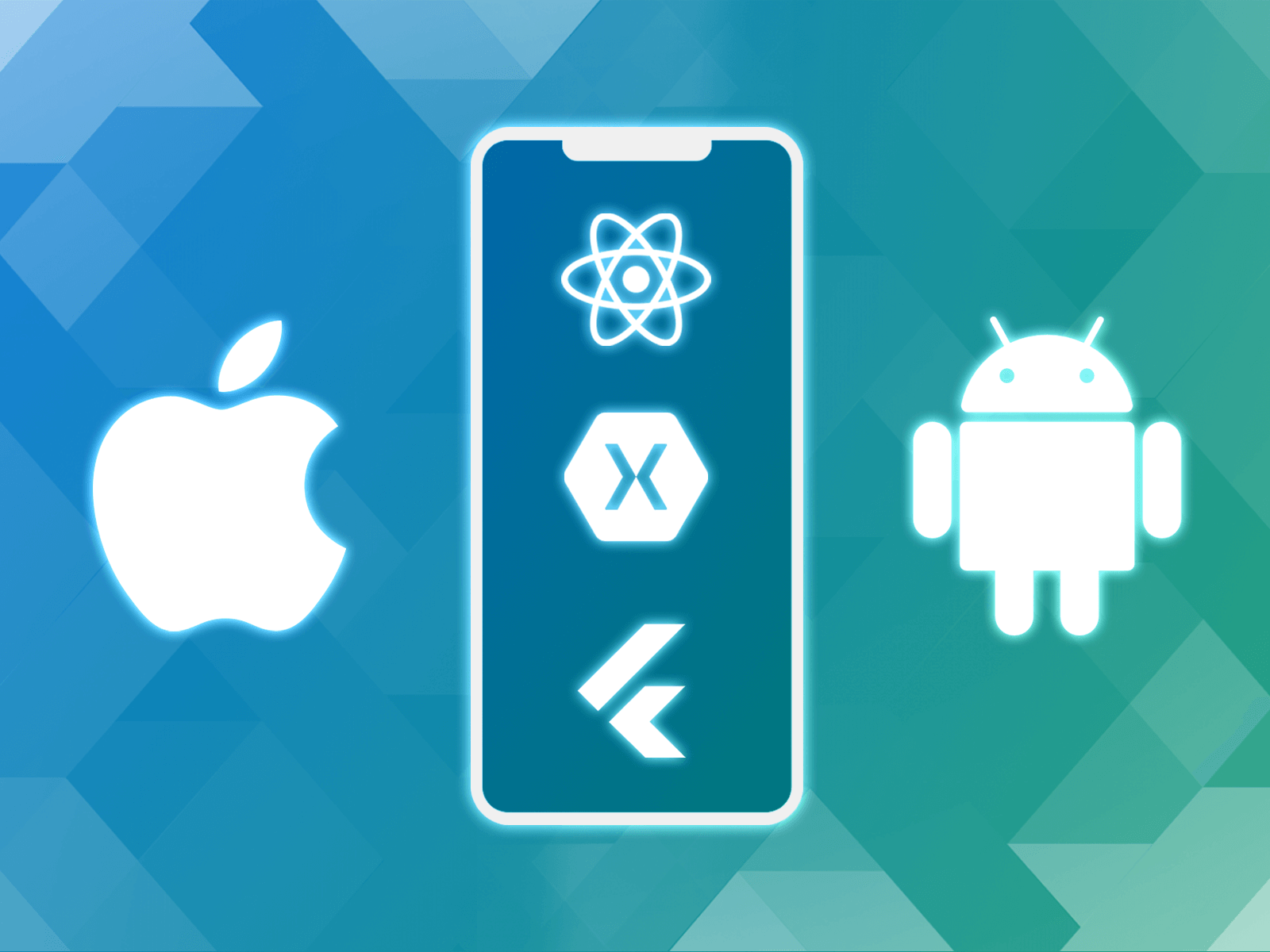
  • React Native: Backed by Facebook, React Native allows developers to build mobile apps using JavaScript and React. It boasts a large community, extensive libraries, and excellent performance for many applications.
  • Flutter: Google’s UI toolkit, Flutter, uses Dart as its programming language. It’s renowned for its fast development, expressive UI capabilities, and impressive native-like performance.
  • Xamarin: Owned by Microsoft, Xamarin enables C# developers to build cross-platform apps. It offers deep integration with native APIs and is particularly strong for enterprise applications.

Is Cross-Platform Right for Your Startup?

While cross-platform development offers compelling benefits, it’s essential to consider your specific needs. For highly complex apps requiring intricate device-specific functionalities or pixel-perfect native performance, native development might still be the optimal choice. However, for the vast majority of startups, especially those focused on efficiency, cost-effectiveness, and rapid iteration, cross-platform app development presents an undeniable advantage.

The Bottom Line:

In the fast-paced world of startups, every dollar and every day counts. By embracing cross-platform app development, new businesses can significantly reduce their financial outlay, accelerate their time-to-market, and achieve broader reach, ultimately paving the way for sustainable growth and success. Don’t let the traditional barriers of app development hold your brilliant idea back – explore the power of cross-platform and unlock your startup’s full potential.