

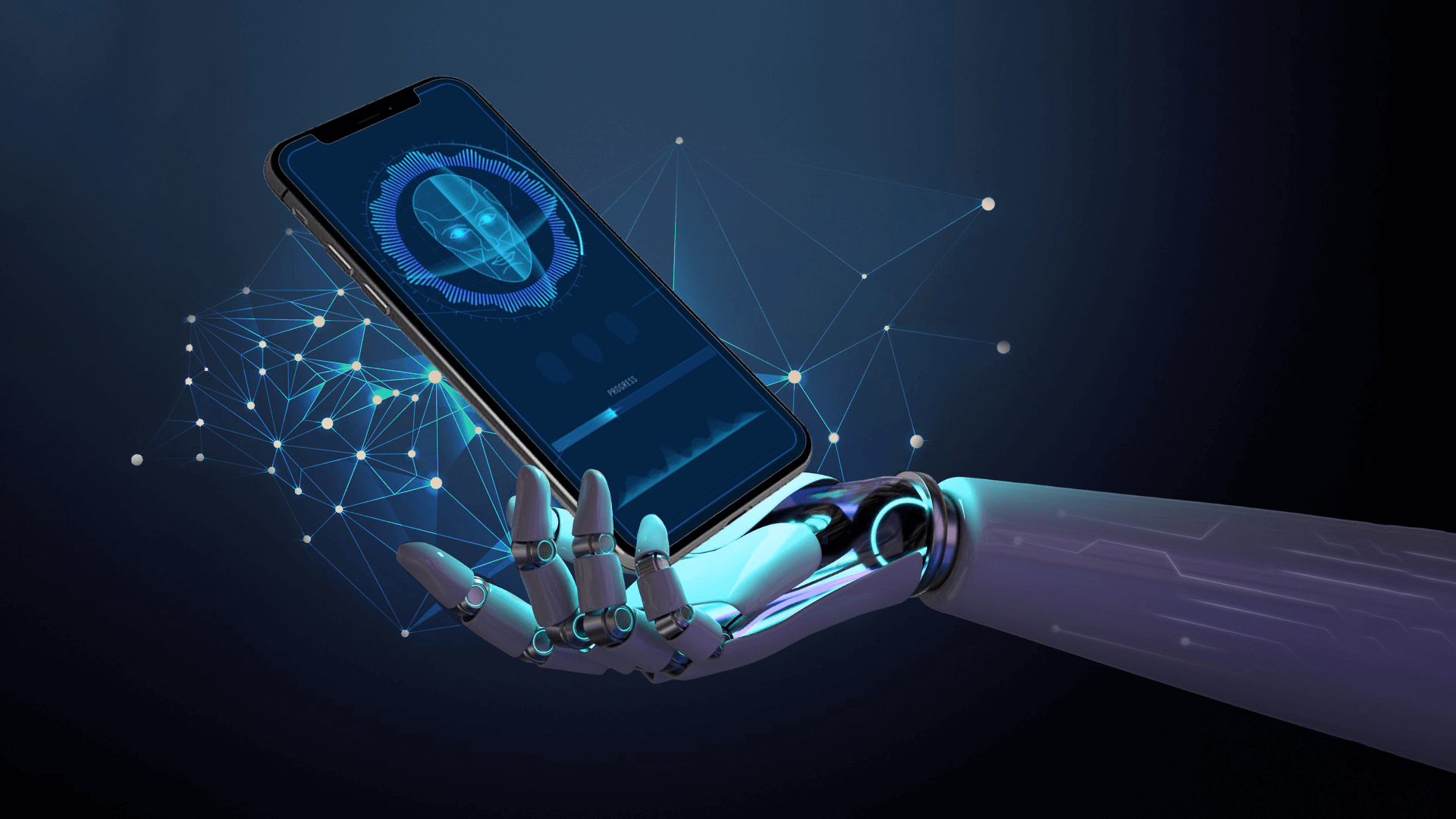
Artificial intelligence is no longer a futuristic add-on in digital products. It is quickly becoming one of the main forces shaping how modern mobile apps and web platforms are designed, developed, and improved. From personalized user experiences and smart automation to predictive analytics and conversational interfaces, AI development is changing the way businesses think about software.
A few years ago, AI in apps was often limited to basic chatbots or recommendation engines. Today, it goes much further. Businesses are building mobile and web applications that can understand user behavior, automate tasks, recognize images, process voice, generate content, detect fraud, and make real-time decisions. This shift is not only improving user experience but also helping companies operate more efficiently and scale faster.
For startups, AI offers a way to launch smarter products from day one. For enterprises, it provides the ability to modernize old systems and create more intelligent customer journeys. Whether it is an eCommerce app suggesting the right products, a healthcare platform assisting with patient triage, or a business dashboard generating insights automatically, AI development is redefining what applications can do.
In this blog, we will explore how AI development is transforming mobile and web applications, why businesses are investing in AI-powered platforms, and what this means for the future of digital experiences.
The Growing Role of AI in App Development
Mobile and web applications are no longer expected to simply function. Users now expect them to understand preferences, reduce effort, deliver relevant recommendations, and provide fast, intuitive interactions. AI helps make that possible.
Traditional applications follow predefined logic. They respond based on rules created by developers. AI-powered applications, on the other hand, can learn from data, identify patterns, and improve outcomes over time. This creates a major shift in how digital products serve users.
For example, a standard shopping app may show the same product categories to everyone. An AI-powered shopping app can analyze browsing history, purchase behavior, time spent on certain pages, and even seasonal preferences to present a much more personalized experience. The difference is not just convenience. It directly affects conversion rates, user satisfaction, and retention.
The same applies to web platforms. AI is helping websites become more interactive, more responsive, and more useful. Businesses can now create platforms that offer instant support through conversational AI, automate repetitive workflows, improve search relevance, and predict what users may need next.
How AI Is Changing Mobile Applications
Mobile applications have become a central touchpoint for consumers and businesses alike. AI is making mobile apps more intelligent, context-aware, and capable of delivering richer experiences.
1. Personalized User Experiences
One of the biggest impacts of AI on mobile app development is personalization. Users do not want generic experiences anymore. They want apps that understand their preferences, habits, and needs.
AI makes this possible by analyzing user interactions and using that data to tailor content, recommendations, and app flows. Streaming apps suggest content based on viewing behavior. Fitness apps create smarter workout plans based on progress and goals. Food delivery apps recommend restaurants based on order history, location, and timing patterns.
This level of personalization helps businesses create more engaging mobile experiences while increasing customer loyalty.
2. Voice Assistants and Conversational Interfaces
Voice search and conversational interactions are becoming more common in mobile environments. AI-powered voice recognition and natural language processing allow users to speak to apps instead of typing everything manually.
This is especially useful in navigation apps, healthcare applications, productivity tools, and customer service solutions. Users can schedule tasks, ask questions, search content, or complete actions with less friction.
As voice-first interactions continue to grow, AI development is becoming essential for mobile apps that want to stay competitive and accessible.
3. Predictive Features
AI enables mobile apps to anticipate user needs. Instead of waiting for users to take the next step, apps can proactively guide them.
A travel app can predict preferred destinations based on past searches. A finance app can flag unusual transactions before the user notices them. A productivity app can suggest meeting times or auto-organize notes based on behavior patterns.
Predictive capabilities save time, improve usability, and make applications feel smarter and more valuable.
4. Image and Facial Recognition
Many mobile applications now use AI for image recognition, facial authentication, and visual search. This is especially useful in industries like retail, healthcare, security, real estate, and social media.
Users can scan products to find similar items, unlock apps securely using face authentication, or upload images to detect objects or receive recommendations. AI-driven visual capabilities are opening up entirely new interaction models for mobile users.
5. Smarter Security and Fraud Detection
Security is a major concern in mobile app development, especially in fintech, healthcare, and enterprise solutions. AI helps improve security by monitoring user behavior, identifying anomalies, and detecting suspicious activity in real time.
For example, an AI-powered banking app can recognize when a login attempt does not match normal user behavior and trigger additional verification. This reduces fraud risk without creating unnecessary friction for legitimate users.
How AI Is Transforming Web Applications
Web applications are also undergoing major changes through AI integration. Businesses are moving beyond static websites and dashboards toward platforms that can think, respond, and optimize continuously.
1. Intelligent Search and Discovery
Search is one of the most important features of any web application. AI improves search by making it more contextual and relevant. Instead of matching only keywords, AI-powered search understands intent, behavior, and semantic meaning.
This is especially useful for eCommerce websites, content platforms, learning portals, and large enterprise systems. Users can find what they need faster, even when they use vague or conversational queries.
This also aligns with AEO and GEO goals, since answer-focused and intent-based content structures perform better in modern search environments.
2. AI Chatbots and Virtual Assistants
Web applications increasingly rely on AI chatbots to improve customer support, lead generation, onboarding, and internal operations. Unlike traditional scripted bots, modern AI assistants can handle more natural conversations, answer complex queries, and escalate when needed.
This makes websites more helpful and reduces the load on human support teams. It also creates a better customer journey by offering instant, 24/7 assistance.
For businesses, AI chatbots can qualify leads, recommend services, answer FAQs, book appointments, and guide users through key actions on the site.
3. Automated Content and Workflow Management
AI is also helping web applications automate internal processes. Content management systems can now use AI to assist with summarization, tagging, translation, optimization, and content generation. Business dashboards can generate reports automatically. CRM platforms can score leads and recommend next steps.
This kind of automation is especially valuable for organizations looking to improve efficiency without increasing manual workload.
4. Better Analytics and Decision Support
One of AI’s strongest contributions to web applications is its ability to turn raw data into useful insights. Traditional dashboards often require users to interpret charts and reports manually. AI-enhanced platforms can go further by identifying trends, highlighting risks, and suggesting actions.
For example, an AI-powered sales dashboard can tell a manager which deals are likely to close, which accounts need attention, and which campaigns are underperforming. This makes business intelligence more actionable and accessible.
5. Accessibility and User Experience Improvements
AI can also improve accessibility in web applications by supporting voice commands, automated captions, text simplification, image descriptions, and adaptive interfaces. This helps businesses create platforms that are more inclusive and easier to use for a wider audience.
As user expectations continue to rise, accessibility is becoming an important part of application design, not just a compliance checkbox.
Why Businesses Are Investing in AI Development
The reason AI development is gaining so much momentum is simple. It creates measurable business value.
AI-powered mobile and web applications can improve engagement, increase retention, reduce operational costs, accelerate decision-making, and unlock new revenue opportunities. Businesses are no longer adopting AI just for innovation headlines. They are adopting it because it solves real problems.
Here are some of the biggest business benefits:
Higher personalization: AI helps deliver tailored experiences that improve conversions and loyalty.
Improved efficiency: Automation reduces manual tasks and speeds up workflows.
Better decision-making: AI extracts insights from large datasets faster than traditional methods.
Enhanced customer support: AI chatbots and assistants improve response times and service availability.
Stronger security: AI can detect fraud, unusual behavior, and potential threats more effectively.
Scalability: Intelligent systems help businesses handle growth without proportional increases in cost.
For organizations competing in crowded markets, these benefits can make a major difference.
Industries Seeing the Biggest Impact
AI development is transforming nearly every industry, but some sectors are seeing especially strong results in mobile and web applications.
eCommerce
AI is helping eCommerce businesses personalize shopping experiences, optimize pricing, improve product recommendations, and automate support.
Healthcare
AI-powered applications are supporting symptom checking, patient engagement, medical imaging analysis, scheduling, and smarter health data management.
Finance
Banks and fintech companies are using AI for fraud detection, credit scoring, customer service, financial insights, and automation.
Real Estate
AI is improving property recommendations, virtual assistance, lead scoring, and market analysis.
Education
Learning platforms use AI to personalize lessons, assess progress, recommend content, and support students with intelligent tutoring.
Travel and Hospitality
AI helps with pricing predictions, travel recommendations, chat-based booking support, and customer personalization.
Key Considerations Before Building AI-Powered Applications
While the benefits are significant, successful AI development requires careful planning. Businesses should not add AI for the sake of trends. It needs to be connected to clear goals and real user needs.
Some important considerations include:
Defining the Use Case
Not every feature needs AI. The best results come from identifying specific challenges where AI can improve outcomes, such as personalization, automation, recommendations, or prediction.
Data Quality
AI systems are only as good as the data behind them. Poor data quality leads to poor results. Businesses need a clear data strategy before moving into AI development.
Privacy and Security
Applications that use AI often process sensitive user data. Strong privacy practices, secure infrastructure, and responsible AI policies are essential.
User Trust
Users want convenience, but they also want transparency. Businesses should make AI interactions understandable and avoid creating experiences that feel invasive or confusing.
Scalability and Integration
AI features should fit naturally within the application architecture. That means thinking about APIs, cloud infrastructure, data pipelines, and future growth from the beginning.
The Future of AI in Mobile and Web Applications
AI development is still evolving rapidly. In the coming years, we will likely see even deeper integration between AI and digital applications.
Mobile apps will become more proactive, context-aware, and autonomous. Web platforms will offer more conversational, intelligent, and self-optimizing experiences. Generative AI will continue to influence content creation, coding support, customer communication, and internal knowledge management.
We are also moving toward a future where AI agents play a larger role in applications. Instead of just answering questions or making recommendations, these agents will complete tasks, coordinate workflows, and support users more independently.
For businesses, this means the definition of a great application is changing. It is no longer only about clean UI and functional performance. It is about intelligence, adaptability, and relevance.
Final Thoughts
AI development is transforming mobile and web applications in ways that are practical, measurable, and increasingly necessary. It is helping businesses create smarter products, deliver better customer experiences, automate operations, and stay competitive in a fast-changing digital environment.
The most successful applications in the coming years will not just be digital. They will be intelligent. They will learn from users, respond in real time, and continuously improve the value they provide.
For businesses planning their next mobile app or web platform, AI is no longer something to consider later. It should be part of the conversation from the start. The opportunity is not only to build software that works, but to build software that thinks, adapts, and creates better outcomes for both users and businesses.
FAQ’s
AI is used in mobile applications for personalization, voice assistants, smart recommendations, image recognition, fraud detection, predictive analytics, and automated customer support.
AI improves web applications by enabling intelligent search, chatbots, predictive insights, workflow automation, personalization, and better analytics for decision-making.
AI is important because it helps apps become more user-focused, efficient, scalable, and intelligent. It improves both the customer experience and business operations.
Industries like eCommerce, healthcare, finance, education, travel, logistics, and real estate are seeing strong benefits from AI-powered applications.
The cost depends on the complexity of the AI features, the amount of data involved, and the integration requirements. However, many businesses see strong long-term ROI through automation, efficiency, and improved conversions.
Yes, AI can often be integrated into existing applications through APIs, machine learning models, chat interfaces, recommendation systems, and analytics tools, depending on the current architecture.
Traditional app development relies on fixed rules and logic, while AI app development enables applications to learn from data, recognize patterns, and improve decisions over time.
AI can improve security through fraud detection and anomaly monitoring, but it must be implemented carefully with strong privacy controls, secure data handling, and compliance practices.
AI will not replace traditional development. Instead, it enhances it by making applications smarter and more capable. Developers still play a critical role in building secure, scalable, and user-friendly products.
Businesses should consider the use case, data quality, privacy, security, user trust, integration strategy, and long-term scalability before investing in AI development.