

The Future of Work is Here: How Salesforce Agentforce is Reshaping Business Operations

The Future of Work is Here: How Salesforce Agentforce is Reshaping Business Operations

The landscape of business operations is undergoing a seismic shift, driven by the relentless march of artificial intelligence. In this transformative era, Salesforce’s Agentforce is emerging as a true game-changer, fundamentally reshaping how businesses interact with customers, empower employees, and drive efficiency. It’s not just about automation; it’s about intelligent, autonomous agents collaborating with humans to unlock unprecedented levels of productivity and customer satisfaction.

What Exactly is Salesforce Agentforce?

At its core, Salesforce Agentforce is a platform that allows businesses to build and deploy autonomous AI agentsdesigned to handle a wide range of tasks for both customers and employees. Unlike traditional chatbots that simply follow pre-programmed scripts, Agentforce agents leverage a company’s vast business knowledge and data to understand context, make decisions, and execute tasks independently, with minimal or no human intervention.

Think of it as a new breed of digital worker, powered by advanced AI models and natural language processing (NLP). These agents can be customized for specific roles – from a “Service Agent” that deflects cases and resolves customer inquiries, to a “Sales Agent” that nurtures leads and schedules meetings, or even an “Operations Agent” that streamlines internal workflows.

Reshaping Business Operations: A Deeper Dive

Salesforce Agentforce is impacting various facets of business operations, leading to tangible improvements:

  • Rethinking Customer Service: Automated, Fast, Efficient: This is perhaps where Agentforce shines brightest. Imagine a customer wanting to return an item or check an order status. Instead of waiting on hold or navigating complex FAQs, an Agentforce service agent can instantly analyze the request, access relevant data, and resolve the issue in real-time, often without human involvement. For more complex issues, the agent can intelligently escalate to the most appropriate human specialist, armed with a comprehensive overview of the customer’s history. This leads to:
    • Significantly reduced wait times.
    • Faster case resolutions (reports suggest up to 30% faster).
    • 24/7 multichannel support, improving customer satisfaction and loyalty.
    • Reduced operational costs by automating routine inquiries.
  • More Power for Sales & Marketing: Context Meets Precision: Agentforce empowers sales and marketing teams to operate with unparalleled efficiency and personalization.
    • Sales Agents can proactively nurture leads, respond to inquiries, and even schedule meetings, always with a full understanding of the customer’s history and preferences. They can identify cross-selling and upselling opportunities and even act as a “sales coach” for human reps, providing real-time tips during customer interactions.
    • Marketing Agents can ensure campaigns are precisely targeted, identifying content that truly interests each customer and avoiding wasteful mass communications. They can also assist with content creation, ensuring brand consistency.
  • Streamlining Internal Operations: Beyond Customer-Facing Roles: The benefits of Agentforce extend deep into internal business processes.
    • Operations Agents can assist with supply chain management, inventory tracking, and logistics, streamlining workflows and reducing manual errors.
    • IT Agents can help employees with technical issues, software troubleshooting, and system access requests, freeing up IT staff for more strategic initiatives.
    • Agentforce can automate administrative tasks, generate reports, and even proactively monitor Salesforce environments to identify cost-saving opportunities like underutilized licenses.
  • Evolving Roles: Human and AI in Collaboration: The future of work with Agentforce isn’t about replacing humans, but about augmenting them. AI agents handle the repetitive, data-intensive tasks, freeing up human employees to focus on activities that require critical thinking, empathy, creativity, and strategic decision-making. This collaborative model leads to:
    • Increased employee productivity and job satisfaction.
    • Reduced burnout as routine tasks are offloaded.
    • A need for new skills: employees will need to understand how to effectively collaborate with and leverage AI agents.

The Underpinnings of Agentforce’s Power

Agentforce’s capabilities are built on a robust foundation:

  • Trusted Data and Security: Operating on Salesforce’s core platform, Agentforce integrates seamlessly with existing CRM data, knowledge articles, and customer interaction histories. The Einstein 1 Platform’s Trust Layer ensures data privacy and security.
  • Natural Language Understanding and Generative AI: Agentforce goes beyond keyword recognition, understanding the intent behind user queries and generating conversational, human-like responses.
  • Agent Builder: This low-code/no-code tool allows businesses to easily create and customize AI agents tailored to their specific needs, defining topics, actions, and even brand voice.
  • Data Cloud Integration: By unifying data from various sources (structured and unstructured), Data Cloud provides Agentforce with a comprehensive, 360-degree view of the customer, enabling hyper-personalized interactions.
  • Retrieval Augmented Generation (RAG): This technique, residing within the Atlas Reasoning Engine, allows Agentforce to augment prompts with relevant, contextual data, ensuring accurate and grounded responses.

The Road Ahead: Continued Innovation and Growth

Salesforce is continually investing in Agentforce, with recent innovations like Agentforce 3 introducing a “Command Center” for enhanced AI observability, governance, and performance tuning. The platform also supports the Model Context Protocol (MCP) for seamless integration with external tools and workflows.

The adoption of agentic AI is rapidly growing, and Salesforce Agentforce is at the forefront of this revolution. By enabling autonomous operations, enhancing customer and employee experiences, and driving significant efficiencies, Agentforce is not just a feature; it’s a fundamental shift in how businesses will operate in the years to come. The future of work is here, and it’s powered by intelligent agents collaborating with humans to achieve unprecedented success.

Salesforce Revenue Cloud vs. CPQ: Key Differences and When to Choose Which

Salesforce Revenue Cloud vs. CPQ: Key Differences and When to Choose Which

In the evolving landscape of revenue management, Salesforce offers powerful solutions to streamline your sales and finance operations. For years, Salesforce CPQ (Configure, Price, Quote) has been the go-to for automating complex quoting processes. However, with the advent of Salesforce Revenue Cloud, the conversation has shifted. This blog will break down the key differences between these two offerings and help you determine which is the right fit for your business.

Salesforce CPQ: The Quoting Powerhouse

Salesforce CPQ, born from the SteelBrick acquisition, is a robust solution designed to help sales teams generate accurate, consistent, and professional quotes with speed and efficiency. It’s a managed package that enhances Salesforce Sales Cloud with advanced capabilities for:

  • Product Configuration: Handles complex product bundles, dependencies, and rules, ensuring that sales reps configure valid and sellable solutions. This includes “Guided Selling” to walk reps through product selection.
  • Pricing Management: Automates pricing calculations, applying various discounting options (volume, multi-tiered, automatic, partner), and supporting subscription pricing and prorations. It can manage a “Price Waterfall” to show all adjustments.
  • Quote Generation: Quickly generates professional, branded quotes, proposals, and contracts, often with dynamic content based on specific deal criteria.
  • Contract and Renewal Management: Simplifies the creation of contracts from won opportunities and automates the renewal process for subscriptions, including amendments and co-terminations.
  • Advanced Approvals: Provides flexible and customizable approval workflows based on various criteria like discount percentage or quote value.

When to Choose Salesforce CPQ:

Salesforce CPQ is an excellent choice if your primary need is to:

  • Automate complex product configuration and pricing: You have a large product catalog with intricate bundles, dependencies, and pricing rules.
  • Improve quoting accuracy and speed: Your sales team spends too much time manually creating quotes, leading to errors and delays.
  • Standardize quote generation: You need consistent, professional-looking quotes that reflect your brand.
  • Manage subscriptions and renewals efficiently: You have recurring revenue models and need to streamline contract generation, amendments, and renewals.
  • Require robust approval processes: Your deals involve multiple levels of approval based on various criteria.

Considerations: While Salesforce CPQ is powerful for quoting, it’s generally considered the “front-end” of the revenue process. For comprehensive billing, invoicing, and revenue recognition, businesses often need to integrate it with other systems or Salesforce Billing. It’s important to note that Salesforce CPQ is entering an “End of Sale” phase, with Salesforce’s future investment focused on Revenue Cloud.

Salesforce Revenue Cloud: The End-to-End Revenue Lifecycle Platform

Salesforce Revenue Cloud, formerly known as Revenue Lifecycle Management (RLM) or Revenue Cloud Advanced (RCA), is a more comprehensive solution designed to manage the entire revenue lifecycle on the Salesforce platform. It essentially builds upon the foundation of CPQ and extends it to include billing, invoicing, contract lifecycle management, and revenue recognition, offering a unified quote-to-cash experience.

Key capabilities of Revenue Cloud include:

  • All CPQ functionalities: It incorporates the core Configure, Price, Quote capabilities found in Salesforce CPQ.
  • Native Billing and Subscription Management: Automates billing for various models (one-time, subscription, usage-based), including invoicing, payment collection, and recurring revenue management.
  • Contract Lifecycle Management (CLM): Provides end-to-end management of contracts, from creation and negotiation to redlining, approvals, and obligation management, often with AI-powered assistance.
  • Revenue Recognition and Compliance: Simplifies complex revenue recognition processes to ensure compliance with accounting standards (e.g., ASC 606, IFRS 15).
  • Dynamic Revenue Orchestration (DRO): Automates post-sale workflows like provisioning licenses or triggering product deliveries.
  • Unified Product Catalog and Pricing: Offers a centralized catalog for all B2B channels and advanced pricing procedures with a visible pricing waterfall.
  • Headless API Architecture: Built natively on the Einstein 1 platform, it offers robust and flexible APIs for seamless integration with external systems, supporting omnichannel experiences.

When to Choose Salesforce Revenue Cloud:

Revenue Cloud is the ideal choice if your business:

  • Requires an end-to-end quote-to-cash solution: You want to unify your sales, finance, and operations on a single platform, eliminating data silos and manual handoffs between systems.
  • Operates with complex revenue models: You deal with subscription, recurring, or usage-based billing, and need robust capabilities for managing these models.
  • Needs comprehensive contract management: Your legal and sales teams require a streamlined process for contract creation, negotiation, and compliance.
  • Prioritizes financial compliance and accurate revenue recognition: You need to meet accounting standards and have real-time insights into revenue performance.
  • Seeks future-proofing and scalability: Revenue Cloud is Salesforce’s strategic direction for revenue management, offering greater flexibility, native capabilities, and ongoing innovation.
  • Is new to revenue management solutions: Starting with Revenue Cloud provides a flexible and scalable platform from the outset.
  • Is currently using CPQ but facing limitations: If your existing CPQ setup requires extensive customizations for billing, contract management, or other post-sales processes, upgrading to Revenue Cloud can offer a more integrated and efficient solution.

Key Differences at a Glance:

Feature/AspectSalesforce CPQSalesforce Revenue Cloud
ScopePrimarily Configure, Price, QuoteEnd-to-end revenue lifecycle management (CPQ + Billing + Contracts + Revenue Recognition + more)
ArchitectureManaged package for Sales CloudBuilt “on-core” on the Einstein 1 Platform (native, API-first)
Core FunctionalityQuoting, product configuration, pricing, approvals, basic contracts, renewalsAll CPQ features, plus native billing, subscription management, advanced contract lifecycle management, revenue recognition, dynamic orchestration
IntegrationRequires integrations for billing/CLMUnified platform, seamless integration across sales, finance, and operations
ComplexityRelatively easier to implement for quotingMore comprehensive, potentially more complex to set up due to broader scope
Future DirectionEntering End of Sale phaseSalesforce’s strategic and future-proof revenue management solution
Ideal ForBusinesses focused primarily on complex quoting and basic subscription managementBusinesses seeking a unified, scalable platform for all revenue operations, especially with recurring or usage-based models

Export to Sheets

Conclusion

While Salesforce CPQ remains a powerful tool for configuring and quoting, Salesforce Revenue Cloud represents the future of revenue management. For businesses looking to automate their entire quote-to-cash process, manage complex recurring revenue models, and achieve greater financial visibility and compliance, Revenue Cloud is the clear strategic choice.

If you’re already leveraging Salesforce CPQ effectively and your current system meets your needs, a careful assessment is required before transitioning. However, for those embarking on a new revenue management journey or outgrowing the capabilities of CPQ, Salesforce Revenue Cloud offers a truly integrated and scalable solution to drive growth and efficiency. The decision ultimately hinges on the breadth of your revenue operations and your long-term strategic goals.

What is Salesforce Revenue Cloud and Why Does Your Business Need It?

What is Salesforce Revenue Cloud and Why Does Your Business Need It?

In today’s fast-paced, digital economy, managing revenue isn’t just about closing deals; it’s about optimizing every step from the initial customer interaction to the final payment and beyond. This is where Salesforce Revenue Cloud steps in, offering a comprehensive suite of solutions designed to streamline, automate, and provide deep insights into your entire revenue lifecycle.

At its core, Salesforce Revenue Cloud is an integrated platform built on the Salesforce ecosystem that brings together key functionalities like Configure, Price, Quote (CPQ), Billing, Subscription Management, and Revenue Recognition. It aims to eliminate the traditional silos between sales, finance, and operations, providing a unified view of your revenue processes and empowering businesses to grow efficiently and effectively.

What Makes Up Salesforce Revenue Cloud?

Salesforce Revenue Cloud isn’t a single product, but rather a powerful combination of capabilities that work seamlessly together:

  • Configure, Price, Quote (CPQ): This is the foundation for accurate and efficient quoting. CPQ automates the process of configuring complex products and services, applying dynamic pricing rules (including discounts, bundles, and tiered pricing), and generating professional, error-free quotes. This significantly speeds up the sales cycle and reduces manual errors.
  • Billing: Beyond just generating invoices, Salesforce Billing handles the entire billing process, from managing one-time, subscription, and usage-based models to automating payment collections and handling amendments, cancellations, and renewals with precision. It ensures timely and accurate transactions, improving cash flow and reducing disputes.
  • Subscription Management: For businesses with recurring revenue models, this component is crucial. It automates the entire subscription lifecycle, from initial sign-up and usage tracking to renewals and payment processing, ensuring continuous service delivery and minimizing revenue leakage.
  • Revenue Recognition: Compliance with accounting standards like ASC 606 and IFRS 15 is vital. Revenue Cloud automates complex revenue recognition processes, ensuring that revenue is recognized accurately and aligns with contract terms, providing audit-ready financial records and real-time revenue insights.
  • Contract Lifecycle Management (CLM): While often an add-on or integrated component, CLM capabilities within Revenue Cloud help manage contracts from creation to renewal. This ensures adherence to contract terms and provides visibility into contract performance, further streamlining the quote-to-cash process.
  • Partner Relationship Management (PRM): For businesses that leverage partners, Revenue Cloud can also facilitate collaboration with them, ensuring smooth revenue sharing and joint sales efforts.
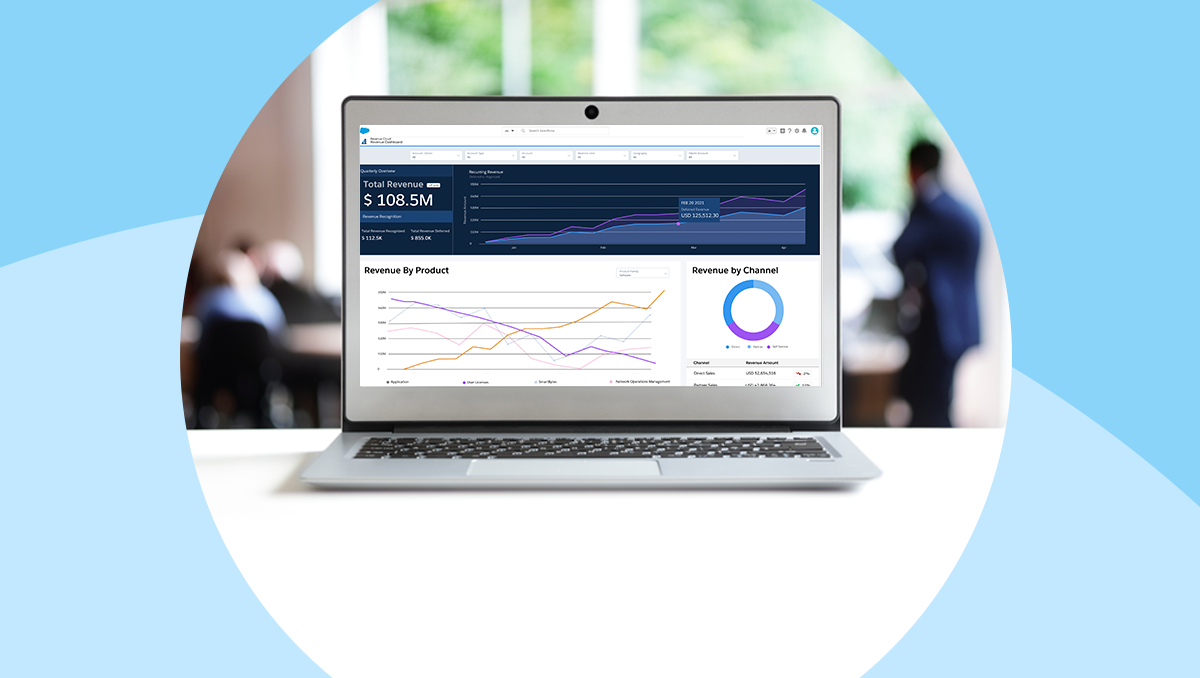
  • Revenue Operations and Analytics: With real-time dashboards and predictive forecasting powered by AI, Revenue Cloud provides deep insights into revenue performance, helping sales, finance, and operations teams make data-driven decisions to optimize pricing strategies, identify cross-selling opportunities, and improve customer retention.

Why Does Your Business Need Salesforce Revenue Cloud?

The benefits of implementing Salesforce Revenue Cloud extend across various departments and directly impact your bottom line. Here are compelling reasons why your business needs it:

  1. Accelerated Sales Cycles and Improved Efficiency:
    • Faster Quoting: With automated CPQ, sales teams can generate complex, accurate quotes in minutes, not hours or days, leading to quicker deal closures.
    • Reduced Errors: Manual errors in quoting and billing are costly. Revenue Cloud minimizes these, ensuring pricing consistency and compliance.
    • Streamlined Workflows: By integrating sales and finance processes, the platform eliminates bottlenecks and allows teams to focus on strategic activities rather than administrative tasks.
  2. Enhanced Revenue Accuracy and Compliance:
    • Precise Billing: Automates invoicing and payment processing for all revenue models (one-time, subscription, usage-based), ensuring you bill the right amount every time.
    • Automated Revenue Recognition: Ensures adherence to accounting standards (ASC 606/IFRS 15), providing accurate financial reporting and reducing the risk of non-compliance.
    • Reduced Revenue Leakage: By automating processes and ensuring accuracy, Revenue Cloud helps prevent lost revenue due to billing errors, missed renewals, or incorrect pricing.
  3. Better Customer Experience:
    • Flexible Offerings: Supports various monetization models, including complex subscription and usage-based pricing, allowing you to offer more flexible options to your customers.
    • Consistent Interactions: Provides a unified view of customer data across sales, service, and finance, leading to more personalized and consistent interactions.
    • Faster Onboarding and Service: Streamlined processes mean quicker deal finalization and smoother onboarding, leading to higher customer satisfaction and loyalty.
  4. Scalability and Agility for Growth:
    • Supports Complex Models: Designed to handle complex product catalogs, pricing structures, and recurring revenue models, making it ideal for growing businesses, especially in SaaS and subscription-based industries.
    • Adaptability to Market Changes: Enables businesses to quickly launch new products, services, and pricing models, allowing them to respond to market demands and gain a competitive edge.
    • Seamless Integration: As part of the broader Salesforce Customer 360 platform, it integrates seamlessly with Sales Cloud, Service Cloud, and other ERP/finance systems, ensuring data consistency across your enterprise.
  5. Improved Financial Visibility and Strategic Decision-Making:
    • Real-Time Analytics: Gain immediate insights into cash flow, deferred revenue, accounts receivable, and other key financial metrics.
    • Predictive Forecasting: Leverage AI and historical data for more accurate revenue forecasting, enabling better strategic planning.
    • Cross-Functional Alignment: Bridges the gap between sales and finance, fostering collaboration and ensuring everyone works with the same, accurate revenue data.

Who Benefits Most from Salesforce Revenue Cloud?

While any business can benefit from improved revenue management, Salesforce Revenue Cloud is particularly impactful for:

  • SaaS and Subscription-Based Businesses: Its robust subscription and usage-based billing capabilities are critical for managing recurring revenue and churn.
  • Businesses with Complex Product Offerings: Companies with extensive product catalogs, configurable products, and intricate pricing models will find immense value in CPQ.
  • High-Growth B2B Companies: As businesses scale, manual processes become unsustainable. Revenue Cloud provides the automation and scalability needed to manage increasing transaction volumes.
  • Organizations Seeking Compliance: For those needing to adhere to stringent revenue recognition standards like ASC 606 and IFRS 15, the automated compliance features are invaluable.

Conclusion

In an era where every revenue dollar counts, optimizing your revenue lifecycle is no longer a luxury but a necessity. Salesforce Revenue Cloud provides the unified, intelligent platform that empowers your sales, finance, and operations teams to work together seamlessly, accelerate deals, ensure accuracy, and gain the insights needed to drive sustainable growth. By investing in Salesforce Revenue Cloud, your business isn’t just acquiring a software solution; it’s adopting a strategic approach to unlock its full revenue potential.