

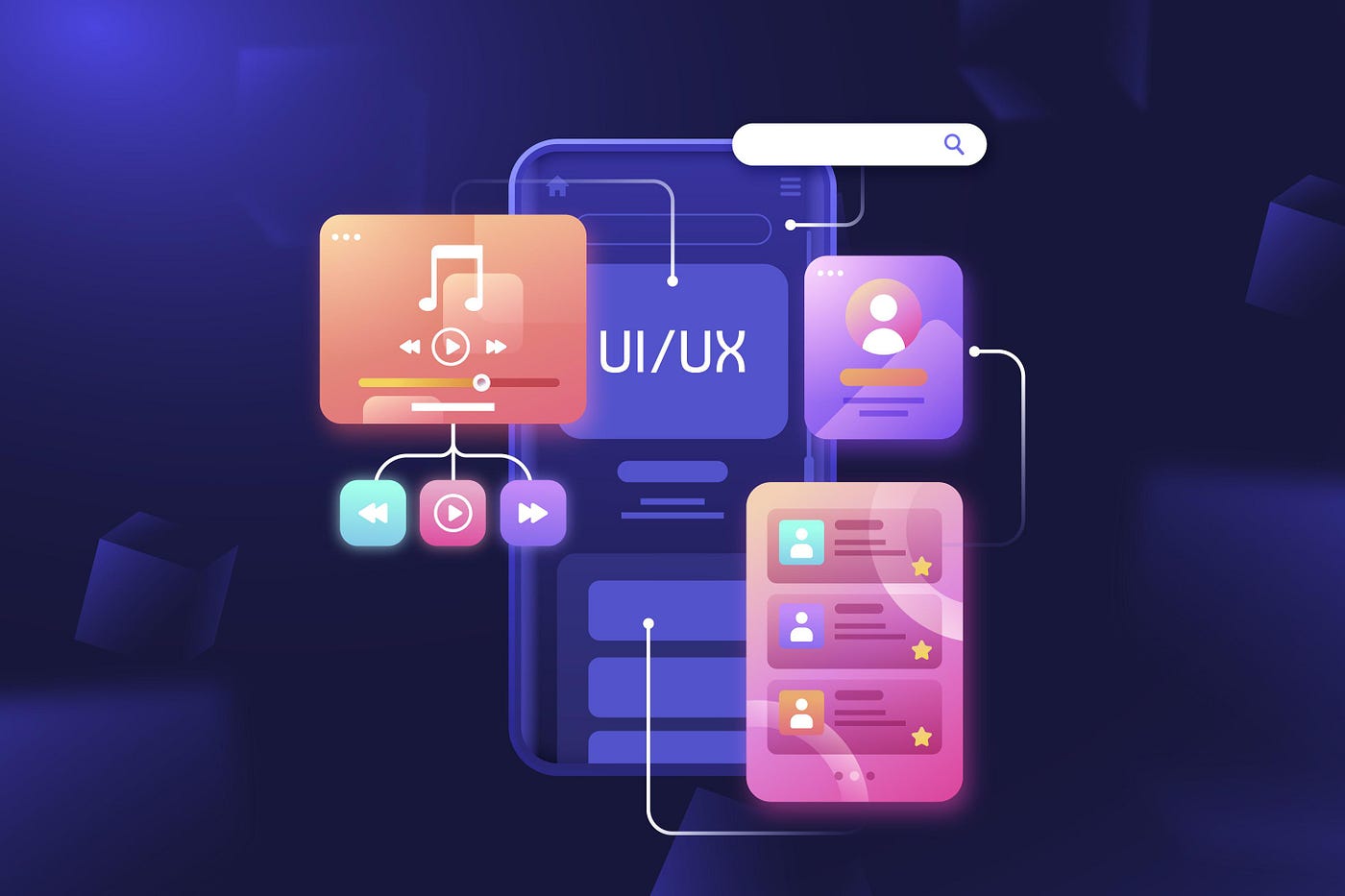
The Ultimate UX/UI Guide for Modern OTT Apps: Creating Timeless Experiences with Current Trends

The Ultimate UX/UI Guide for Modern OTT Apps: Creating Timeless Experiences with Current Trends

In the ever-evolving landscape of digital entertainment, Over-The-Top (OTT) platforms have become the new frontier. But in a sea of streaming services, what truly makes an app stand out? The answer lies in exceptional UX/UI design. While the core principles of great design are timeless, focusing on current trends can give your app the competitive edge it needs. A top-notch mobile app development company in sydney understands that a user’s journey is a tapestry woven from seamless navigation, multi-platform consistency, and deep personalization. This guide will walk you through the key elements that can transform your OTT app from a simple content library into a truly engaging and unforgettable experience.


1. Intuitive Navigation: Guiding the User with Effortless Flow

The primary goal of any OTT app is to get the user to their desired content with minimal friction. Clunky menus and confusing layouts are a user’s worst nightmare and a surefire way to increase churn. Here’s how to ensure your navigation is as intuitive as possible:

  • Simplify the Home Screen: The home screen should act as a personalized content hub. Utilize carousels and horizontally scrollable rows to present a variety of content categories without overwhelming the user. Highlight trending shows, new releases, and personalized recommendations front and center. A skilled mobile app developer in sydney knows that a clean, scannable interface is key to keeping users engaged from the moment they open the app.
  • Logical Hierarchy: Content should be organized into clear, logical categories. Use a persistent bottom navigation bar on mobile devices and a sidebar on web/TV platforms for easy access to key sections like “Home,” “Search,” “My List,” and “Settings.” The search function should be powerful, with predictive text and filtering options to help users find what they’re looking for, even if they’re not sure of the exact title.
  • Visual Cues and Micro-interactions: Use subtle animations, hover effects, and visual feedback to guide the user’s eye and confirm their actions. For example, a small animation when a user adds a show to their watchlist can be a delightful and helpful touch. These small details, when executed well, create a more polished and responsive feel.

2. Multi-Platform Consistency: A Unified Brand Experience

Today’s user consumes content across a multitude of devices. They might start a movie on their smart TV, pause it to hop on a train, and continue watching on their mobile phone. Ensuring a consistent and seamless experience across all these platforms is no longer a luxury—it’s a necessity. This is a core competency for any leading app development company in sydney.

  • Adaptive, Not Just Responsive, Design: While responsive design ensures the app scales to different screen sizes, adaptive design goes a step further by optimizing the layout and experience for each specific device. A remote-controlled interface on a smart TV requires a different navigation paradigm than a touch-based one on a smartphone.
  • Synced User States: The user’s viewing history, watchlists, and preferences must be perfectly synced across all devices. When a user pauses content on one device, it should be ready to resume at the exact same timestamp on another. This seamless handover is critical for a frustration-free experience.
  • Consistent Visual Language: Despite the different layouts, the visual language—including color palettes, typography, and iconography—must remain consistent. This reinforces brand identity and makes the user feel familiar and comfortable, regardless of the device they are using. A professional app developer in sydneyunderstands the importance of maintaining a unified visual language to build trust and brand recognition.

3. Using Data to Personalize the User Journey

In the modern OTT world, content is king, but personalization is the crown. Moving beyond simple genre-based recommendations, current trends leverage sophisticated data analytics and machine learning to create a truly bespoke experience for each user.

  • Hyper-Personalized Recommendations: Data on viewing history, search queries, watch duration, and even time of day can be used to predict what a user might want to watch next with remarkable accuracy. This creates a “discovery engine” that introduces users to new content they’re likely to enjoy, increasing engagement and watch time.
  • Dynamic Content Ordering: The order in which content rows and carousels appear on the home screen can be dynamically rearranged based on user behavior and preferences. If a user frequently watches documentaries, that row can be moved higher up on their home page. This makes the interface feel alive and tailored to their specific interests.
  • A/B Testing and User Feedback: Data isn’t just for personalization; it’s also a powerful tool for continuous improvement. By A/B testing different UI layouts, recommendation algorithms, or feature placements, you can gather data on what works best for your audience. Furthermore, providing channels for user feedback and integrating those insights into your design process is invaluable. The best mobile app developers in sydney use data-driven insights to refine and enhance the user experience continuously.

By focusing on intuitive navigation, multi-platform consistency, and a data-driven approach to personalization, you can create an OTT app that not only stands out but also builds a loyal and engaged user base. In a market where content is abundant, UX/UI is the differentiator that can make or break your success.
Mobile App Development for Non-Tech Founders: Your Ultimate Guide to Building an App from Scratch

Mobile App Development for Non-Tech Founders: Your Ultimate Guide to Building an App from Scratch

Starting a tech company without a technical background can feel like standing at the foot of a mountain. You have a brilliant idea, a clear vision, but the path to building it seems shrouded in complex terminology and technical challenges. The good news is that thousands of successful apps have been launched by non-technical founders. The key isn’t knowing how to code, but knowing how to navigate the process, assemble the right team, and manage the project effectively. This detailed guide is your roadmap.


1. Decoding the Mobile App Development Lifecycle

Before you can build an app, you need to understand the journey. Think of it as a multi-stage process where each phase builds on the last.

  • Discovery & Strategy: The Blueprint Phase This is arguably the most critical stage. Instead of jumping straight into coding, you must first define your app’s purpose.
    • User Persona & Market Research: Who is your target user? What problem does your app solve for them? A strong understanding of your audience will guide every design and feature decision.
    • Feature Prioritization (The MVP): You can’t build everything at once. Focus on the core features that solve the primary problem. This “Minimum Viable Product” (MVP) allows you to launch faster, gather user feedback, and iterate.
    • Monetization Strategy: How will your app make money? Consider subscription models, in-app purchases, or ad revenue from the very beginning.
  • Design (UI/UX): The User’s Journey A great app isn’t just functional; it’s a pleasure to use. This phase is divided into two key areas:
    • User Experience (UX): This is the core logic and flow of your app. It’s about how users navigate from one screen to another. Is it intuitive? Is the process logical?
    • User Interface (UI): This is the visual aspect—the colors, fonts, buttons, and overall aesthetic. UI brings the UX to life. A well-designed app will retain users and build trust.
  • Development: Bringing Your App to Life This is where the code is written. It’s a complex stage, but your primary role is to monitor progress, not write the code.
    • Front-end vs. Back-end: The front-end is what your users see and interact with. The back-end is the server, database, and logic that powers the app’s functionality (user authentication, data storage, etc.).
    • Platform Choice (Native vs. Cross-Platform): Your team will help you decide whether to build a native app (separate codebases for iOS and Android for the best performance) or a cross-platform app (a single codebase for both, which can be faster and more cost-effective).
  • Testing & Quality Assurance (QA): The Bug Hunt Before your app reaches users, it must be thoroughly tested. This phase involves a team dedicated to finding and documenting every bug, glitch, or potential vulnerability. Types of testing include functional, performance, security, and usability testing. A polished, bug-free app is crucial for a positive first impression.
  • Deployment & Launch: Hitting the Stores The final step is submitting your app to the Apple App Store and Google Play Store. This process includes creating compelling descriptions, screenshots, and videos. Your team will also help with App Store Optimization (ASO) to improve your app’s visibility in search results.

2. Finding and Hiring the Right Development Partner

This is the most critical decision you will make. Your choice of a development partner will determine the quality, speed, and cost of your project.

  • Your Options:
    • Freelancers: Can be cost-effective for smaller, single-feature apps. However, you’ll be managing multiple individuals (designer, front-end dev, back-end dev), which can be challenging.
    • In-house Team: A great long-term solution, but expensive and time-consuming to build from scratch.
    • Dedicated Agencies: A full-service agency is often the best choice for non-technical founders. They provide a cohesive team of designers, developers, and project managers.

If you are building your app from the ground up, a reputable mobile app development company in Dubai can provide a team of specialists to handle every aspect of the project. When vetting potential partners, go beyond the pitch. Ask these questions:

  • Can you show me a portfolio of apps you’ve built?
  • How will you handle project management and communication?
  • What happens after the app is launched? Do you offer maintenance and support?

A great app development company in Dubai will not just build your app; they will be a strategic partner, guiding you through the technical and business challenges.


3. Managing the Project as the Visionary

As the founder, your role is not to write code. It is to be the Product Owner. You are the one who understands the market, the user, and the ultimate vision. Here’s how to manage effectively:

  • Communicate Clearly and Often: Establish a regular communication schedule. Be available to answer questions and provide feedback. Don’t be afraid to ask for explanations in simple terms. Your mobile app developer in Dubai should be able to explain the “what” and “why” behind their technical decisions.
  • Establish Milestones and Feedback Loops: Work with your team to create clear project milestones. Provide timely, constructive feedback at each stage. This prevents major issues from arising late in the process.
  • Trust and Delegate: You hired experts for a reason. While you are the visionary, you must trust the technical expertise of your team. This allows the app developer in Dubai to focus on what they do best: building a robust and scalable product.

4. Custom vs. Off-the-Shelf: When to Go Bespoke

Your app idea might be so unique that it requires a custom solution. This is where a custom app developer in Dubai truly shines.

  • When to Choose Custom Development:
    • Your app requires unique functionalities not found in standard solutions.
    • You need to integrate with specific third-party services or APIs.
    • You have a complex back-end or data management requirements.
    • You need full ownership and control over the code for future scalability.

custom app developer in Dubai specializes in building bespoke solutions from scratch, ensuring your app is perfectly aligned with your vision and business model.

In conclusion, your lack of a technical background is not a weakness—it’s a strength. It allows you to focus on the business, the user, and the overall vision. By understanding the development process, choosing a reliable partner, and managing the project with clear communication, you can turn your brilliant idea into a thriving mobile application.

The Future is Talking: How Conversational AI is Reshaping Mobile Applications

The Future is Talking: How Conversational AI is Reshaping Mobile Applications

Remember when chatbots were just clunky, rule-based programs that could barely answer a simple FAQ? That era is long gone. Fueled by advancements in large language models (LLMs) and generative AI, chatbots and conversational AI are no longer a novelty but a core component of the mobile experience. The future of mobile apps is not about navigating complex menus and tapping buttons; it’s about seamless, human-like conversations that anticipate our needs.

This evolution is a hot topic, and for good reason. It’s a huge opportunity for a mobile app development company in New York to build the next generation of engaging applications. The demand for a skilled app developer in NYC has never been higher, as companies seek to integrate this cutting-edge technology.

So, what does this future look like? Here are some of the key trends and innovations driving the evolution of conversational AI in mobile applications.

1. From Simple Chat to Hyper-Personalized Assistants

The next generation of conversational AI goes far beyond basic Q&A. By leveraging advanced data analytics and on-device machine learning, these digital assistants are becoming truly personal. They will analyze user behavior, preferences, and past interactions to provide hyper-personalized recommendations and support. Imagine an e-commerce app where the chatbot suggests items based on your recent Browse history, or a healthcare app where the assistant proactively reminds you of an upcoming appointment and offers wellness tips based on your health data.

This shift toward “AI-driven hyper-personalization” makes interactions more intuitive and engaging, creating a user experience that feels less like a transaction and more like a conversation with a knowledgeable friend. This is the kind of innovative work that a top app development company in New York is currently focused on.

2. The Rise of Multimodal and Multichannel Interaction

The chatbot of the future won’t be limited to text. Multimodal AI will enable users to interact using a combination of text, voice, video, and rich visual content. For example, a user could send a picture of a product to a shopping app’s chatbot and ask it to find similar items. A voice assistant could understand and respond to complex requests, while an app for home repair could guide you through a task using a combination of spoken instructions and augmented reality (AR) overlays.

Furthermore, conversational AI will become “multichannel,” meaning it will maintain context and provide a unified experience across different platforms, from a mobile app and website to messaging services and even smart devices. A talented mobile app developer in New York will be crucial in building these complex, interconnected systems.

3. The Power of Large Language Models (LLMs) and Generative AI

The integration of LLMs like GPT-4 is the game-changer. Unlike older, rule-based chatbots, LLMs are trained on massive datasets, allowing them to understand nuance, generate dynamic responses, and handle complex, multi-turn conversations. They are making conversations feel more natural, coherent, and genuinely intelligent.

This technology is paving the way for “intent-based navigation” and “generative UI,” where users can simply tell the app what they want to do using natural language, and the app will generate the necessary interface or complete the task on its own. This eliminates the need for users to hunt through menus or follow rigid workflows.

4. On-Device Intelligence and Enhanced Privacy

While many conversational AI systems rely on the cloud, the trend of “on-device intelligence” is gaining momentum. By running smaller, optimized LLMs directly on the smartphone, developers can significantly reduce latency, improve response times, and, most importantly, enhance user privacy. Sensitive personal data can be processed on the device itself, eliminating the need to send it to a remote server. This is a crucial development for applications in finance, healthcare, and other sectors where data security is paramount.

The Impact on Mobile App Development

For developers, this new landscape presents both opportunities and challenges. While building a truly conversational interface requires a new way of thinking about user experience, the availability of powerful AI platforms and APIs from companies like Google, OpenAI, and Microsoft is making it easier to integrate these advanced capabilities. The focus is shifting from simply creating an app to building a system that can learn, adapt, and converse with its users. This is where a top app developer in New York can truly shine.

The future of mobile applications is conversational. As the technology continues to mature, we can expect to see apps that are not just tools, but intelligent, helpful partners in our digital lives. For any business looking to lead the charge, partnering with an experienced mobile app development company in New York is a strategic move to stay ahead of the curve.