

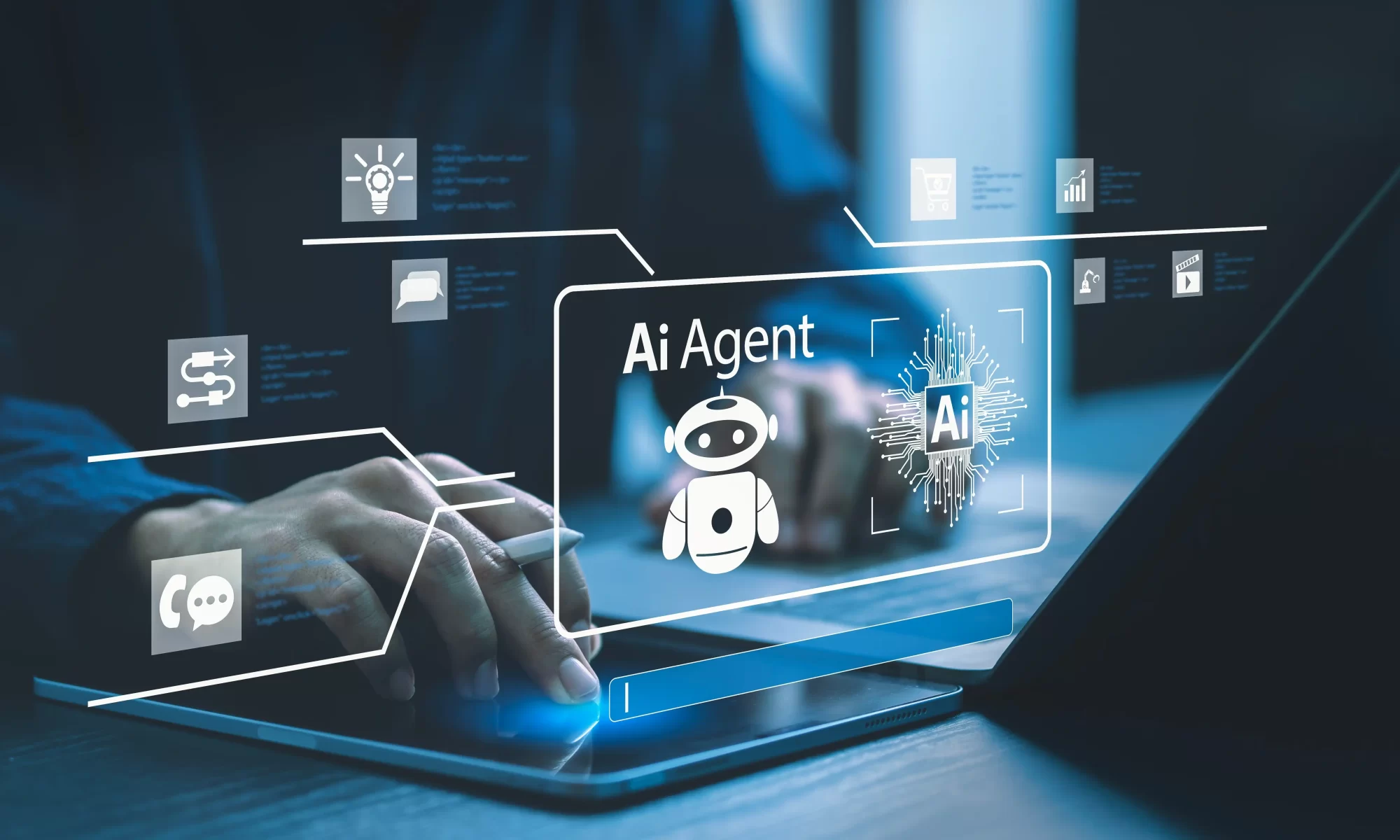
How AI Agents Are Replacing Manual Workflows Across Sales, Support, and Operations

How AI Agents Are Replacing Manual Workflows Across Sales, Support, and Operations

Artificial intelligence is no longer limited to chatbots, recommendation engines, or predictive dashboards. A much bigger shift is happening across modern businesses. AI agents are now moving beyond assisting teams and are starting to execute work that was once fully manual. From qualifying leads and replying to support requests to updating internal systems and coordinating operational tasks, AI agents are becoming active participants in day-to-day business workflows.

For companies under pressure to reduce costs, improve speed, and scale without constantly increasing headcount, this change is highly significant. Manual workflows have long been a bottleneck in sales, customer support, and operations. They consume time, introduce inconsistency, and slow down decision-making. AI agents are changing that by acting with context, memory, and goal-oriented behavior.

This is not just automation in the old sense. Traditional automation follows fixed rules. AI agents can interpret information, make decisions based on available data, interact with multiple systems, and complete multi-step tasks with minimal human input. That is why businesses across industries are increasingly turning to AI agents to modernize how they work.

What Are AI Agents?

AI agents are intelligent software systems designed to perform tasks autonomously or semi-autonomously. Unlike simple bots or rule-based scripts, AI agents can understand language, analyze inputs, reason through tasks, and take action based on a defined objective.

An AI agent may do things such as:

  • Read incoming emails and determine priority
  • Qualify sales leads based on CRM data and website activity
  • Respond to customer queries by pulling answers from knowledge bases
  • Trigger follow-up actions across tools like CRM, helpdesk, ERP, and communication platforms
  • Monitor workflows and escalate exceptions when needed

The real value of AI agents lies in their ability to connect systems, understand intent, and move work forward without waiting for someone to manually coordinate each step.

Why Manual Workflows Are Becoming Unsustainable

Most businesses still rely heavily on manual workflows, even after investing in digital tools. Teams often jump between spreadsheets, emails, CRM systems, ticketing tools, and internal dashboards to complete simple tasks. The process may be manageable at a small scale, but as the business grows, inefficiency becomes unavoidable.

Manual workflows usually create problems such as:

  • Delayed response times
  • Repetitive administrative effort
  • Human errors in data entry and reporting
  • Poor visibility across departments
  • Inconsistent customer experiences
  • Slower revenue cycles and higher support costs

Employees end up spending too much time on low-value work instead of focusing on relationship building, strategic planning, or complex problem-solving. AI agents help eliminate this gap by taking over repetitive and process-driven tasks.

AI Agents in Sales: Replacing Repetitive Revenue Tasks

Sales teams are among the biggest beneficiaries of AI agents. A large part of the sales process is filled with manual work that takes time away from actual selling. Reps often spend hours researching prospects, updating CRM records, following up with leads, booking meetings, and preparing summaries.

AI agents can handle many of these tasks with speed and consistency.

Lead Qualification

One of the earliest areas where AI agents are making an impact is lead qualification. Instead of asking sales reps to manually review every incoming inquiry, AI agents can analyze form submissions, website behavior, past interactions, industry signals, and CRM records to score and prioritize leads.

This helps teams focus on high-intent opportunities while filtering out low-fit prospects. It also ensures that good leads are not ignored because of delayed review.

Automated Follow-Ups

Following up is essential in sales, but it is also one of the easiest tasks to delay. AI agents can automatically send personalized follow-up emails, reminders, meeting confirmations, and next-step messages based on where the prospect is in the funnel.

They can adapt messaging based on context, schedule future outreach, and even alert a human rep when a lead shows strong buying signals.

CRM Data Entry and Updates

CRM hygiene has always been a challenge. Many sales teams struggle with incomplete records, outdated contact details, and missing activity logs because manual updates are time-consuming. AI agents can automatically log calls, summarize meetings, update opportunity stages, and capture key information from emails and chats.

This improves reporting accuracy and reduces the administrative burden on sales teams.

Sales Assistance and Opportunity Insights

AI agents can also act as internal sales assistants. They can recommend the next best action, identify stalled deals, summarize account history before meetings, and generate tailored talking points for outreach. Instead of forcing reps to search through multiple tools, the agent brings relevant information together in one place.

The result is a more efficient sales process with faster responses, better prioritization, and more time spent on revenue-generating activity.

AI Agents in Customer Support: Delivering Faster and Smarter Service

Customer support has already seen major automation through chatbots, but AI agents represent the next level. Traditional support bots often fail because they rely on rigid scripts and limited intent recognition. AI agents are more capable because they understand context, retrieve knowledge intelligently, and perform actions across support systems.

Instant Query Resolution

AI agents can respond to common support questions in real time, whether through chat, email, voice, or messaging platforms. They can pull answers from product documentation, previous tickets, internal knowledge bases, and policy documents. This reduces the need for human agents to repeatedly answer the same questions.

Customers get faster responses, and support teams can focus on more complex cases.

Smart Ticket Triage

Manually sorting and assigning support tickets takes time and often leads to delays. AI agents can analyze incoming requests, detect urgency, identify the topic, assess sentiment, and route tickets to the right team or queue. They can also enrich tickets with relevant customer history before a human agent even opens them.

This leads to faster resolution times and better workload distribution.

Agent Assistance During Live Support

AI agents do not only replace work. They also support human agents in real time. During a live conversation, an AI agent can suggest responses, surface help articles, summarize the issue, and recommend escalation steps. This improves agent productivity and helps maintain consistency across support interactions.

Post-Interaction Work

After a support case is resolved, there is often more manual work to complete. Agents need to write summaries, tag the case, update status fields, and sometimes trigger follow-up workflows. AI agents can complete these tasks automatically, which shortens handling time and keeps systems updated.

For support organizations, this means lower operational cost, improved customer satisfaction, and higher agent efficiency.

AI Agents in Operations: Driving Efficiency Behind the Scenes

Operations teams often manage the invisible work that keeps the business running. This includes approvals, reporting, document handling, inventory coordination, vendor communication, compliance checks, and internal service requests. Much of this work is repetitive, rules-based, and spread across disconnected systems.

AI agents are increasingly being used to bring intelligence into operational workflows.

Workflow Coordination

Operational processes often involve multiple steps across different departments. For example, onboarding a new vendor may require document collection, verification, approval, account creation, and internal notifications. AI agents can coordinate these steps, track progress, and move tasks forward automatically.

Instead of relying on email chains and manual follow-ups, the process becomes streamlined and traceable.

Document Processing

Operations teams deal with invoices, contracts, forms, purchase orders, and reports. AI agents can extract data from documents, validate entries, match records across systems, and flag inconsistencies for review. This reduces manual effort and speeds up processing cycles.

Internal Request Management

Many organizations still manage internal service requests through emails or basic ticket systems. AI agents can interpret employee requests, categorize them, answer common questions, and route them to the appropriate department. In some cases, they can resolve the issue directly, such as resetting access, retrieving policy information, or generating standard documents.

Monitoring and Exception Handling

Operations are not only about completing tasks. They are also about monitoring for issues. AI agents can continuously watch for anomalies, missed deadlines, supply disruptions, policy violations, or incomplete transactions. When they detect a problem, they can alert the right team or trigger corrective actions.

This makes operational processes more proactive instead of reactive.

AI Agents vs Traditional Automation

It is important to understand that AI agents are not the same as traditional workflow automation tools. Traditional automation follows predefined if-then rules. It works well for stable and repetitive processes, but it struggles when tasks involve unstructured data, natural language, changing context, or exceptions.

AI agents add a layer of intelligence that makes automation more flexible and useful.

Traditional automation says:
If a form is submitted, create a record and send an email.

An AI agent says:
Review the form, determine the lead quality, check CRM history, draft a personalized response, assign the record to the right rep, and schedule a reminder if there is no reply.

That difference is what makes AI agents so powerful. They are not just automating clicks. They are helping businesses automate decision-driven work.

Key Benefits of AI Agents Across Business Functions

The growing adoption of AI agents is driven by measurable business outcomes. Organizations are not deploying them just because AI is popular. They are doing it because the impact is practical and visible.

Higher Productivity

Employees spend less time on repetitive tasks and more time on high-value work. Sales teams sell more, support teams solve more meaningful issues, and operations teams improve process control.

Faster Response Times

AI agents work instantly and continuously. Leads can be followed up faster, customer issues can be addressed sooner, and operational workflows can move without waiting for manual intervention.

Improved Accuracy

Manual processes often introduce errors, especially when teams are overloaded. AI agents reduce mistakes in data handling, routing, reporting, and record updates.

Better Scalability

As businesses grow, manual work increases quickly. AI agents allow companies to scale workflows without needing a proportional increase in staff for every administrative task.

Consistent Experiences

Whether it is a customer receiving support or a sales lead entering the pipeline, AI agents help ensure that processes are followed consistently and service quality remains stable.

Real-World Use Cases of AI Agents

Businesses across industries are already deploying AI agents in practical ways.

In e-commerce, AI agents answer order-related questions, process returns, and support inventory updates.

In healthcare administration, they handle appointment scheduling, insurance verification, and patient communication workflows.

In finance, they assist with document review, client onboarding, and compliance checks.

In manufacturing, they monitor supply chain updates, coordinate vendor communications, and flag delays.

In software and SaaS businesses, they qualify product inquiries, manage support tickets, summarize user feedback, and assist customer success teams.

These examples show that AI agents are not limited to one function or industry. Their value grows anywhere there is a repeatable process involving information, decisions, and actions.

Challenges Businesses Must Consider

Despite the benefits, AI agents are not a plug-and-play solution. Successful implementation requires planning, governance, and integration.

Data Quality

AI agents are only as effective as the systems and data they rely on. Poor CRM records, outdated documents, or fragmented knowledge bases can reduce performance.

Integration Complexity

To be useful, AI agents often need access to multiple systems such as CRM, ERP, helpdesk, email, and communication platforms. Integration must be handled carefully.

Oversight and Governance

Businesses need clear rules for where AI agents can act independently and where human approval is required. This is especially important in regulated industries or customer-facing scenarios.

Change Management

Employees may resist automation if they see it as a threat. Organizations need to position AI agents as tools that remove repetitive work and improve employee productivity rather than simply replacing jobs.

Security and Compliance

Access control, audit trails, and responsible handling of sensitive data must be part of any AI agent strategy.

The Future of Work: Human Teams and AI Agents Together

The most realistic future is not one where AI agents completely replace human workers. It is one where human teams and AI agents work together. AI handles repetitive tasks, process coordination, and information-heavy work. Humans focus on judgment, empathy, creativity, and strategic decisions.

In sales, reps will spend less time on admin and more time on relationships.

In support, agents will spend less time on repetitive tickets and more time on high-empathy problem solving.

In operations, teams will spend less time chasing tasks and more time improving systems and outcomes.

This partnership model is what makes AI agents so transformative. They do not just automate work. They reshape how work is organized.

How Businesses Can Start with AI Agents

Organizations interested in adopting AI agents should begin with a focused approach.

Start by identifying workflows that are repetitive, time-consuming, and dependent on multiple systems. Look for areas where delays, manual errors, or administrative burden are hurting business performance. Sales follow-ups, support triage, onboarding processes, invoice handling, and internal request routing are often strong starting points.

Next, define the role of the AI agent clearly. Decide what actions it can take, what tools it can access, and when human oversight is needed. Then integrate it with the right data sources and systems.

Most importantly, measure outcomes. The success of an AI agent should be evaluated based on business impact such as response time reduction, conversion improvement, cost savings, or processing efficiency.

Conclusion

AI agents are quickly becoming one of the most important technologies in modern business operations. They are replacing manual workflows across sales, support, and operations not by simply speeding up tasks, but by changing how those tasks are performed altogether.

As businesses face increasing pressure to deliver faster service, improve efficiency, and scale intelligently, AI agents offer a powerful path forward. They reduce repetitive work, connect disconnected systems, and enable teams to focus on what truly matters.

The companies that adopt AI agents strategically will be better positioned to operate efficiently, serve customers effectively, and grow without being held back by manual processes. The shift is already happening, and it is redefining the future of work across every department.

Fintech App Development: Features Users Expect in 2026

Fintech apps are no longer judged only by whether they work. In 2026, users expect them to feel effortless, intelligent, secure, and deeply personal. The standard has shifted. People do not compare a fintech app only with another banking or payments mobile app anymore. They compare it with every smooth digital experience they use every day, from shopping apps to ride-hailing platforms to AI assistants.

That change matters.

A few years ago, users were impressed by basic conveniences like checking balances, paying bills, or transferring money from a phone. In 2026, those are baseline expectations. What users now want is speed without confusion, personalization without creepiness, and security without friction. They want financial apps that help them make better decisions, protect them from fraud, and fit naturally into daily life.

The fintech market is also being shaped by bigger forces behind the scenes. Instant payment infrastructure is expanding, AI is moving from experimentation into core workflows, fraud threats are becoming more sophisticated, and open banking rules are pushing the industry toward more portable, consumer-controlled financial data. At the same time, consumers are asking for something very simple: innovation they can trust. 

For businesses planning to build or upgrade a fintech app, this creates both pressure and opportunity. The pressure is obvious: a generic app with outdated UX and basic features will struggle to retain users. The opportunity is equally clear: companies that build around real user expectations can create stronger engagement, loyalty, and revenue.

So what exactly do users expect from fintech apps in 2026?

Let’s explore the features that matter most.

1. Frictionless onboarding with instant verification

The first experience defines whether a user stays or disappears.

Users in 2026 do not want to spend half an hour filling forms, uploading documents multiple times, or waiting days for verification. They expect onboarding to be quick, guided, and mobile-first. That means smart form filling, camera-based document capture, biometric checks, real-time status updates, and a clear explanation of why certain data is being requested.

The biggest mistake many fintech products still make is designing onboarding around internal compliance processes rather than user psychology. Compliance is necessary, but the experience should not feel like a bureaucratic obstacle course.

A strong onboarding flow should feel almost invisible. It should guide users one step at a time, reduce typing wherever possible, detect errors early, and build confidence with simple language. When a verification step takes longer, the app should explain what is happening instead of leaving the user uncertain.

In 2026, users associate speed with competence. If an app cannot get them started quickly, they start doubting everything else too.

2. Passwordless login and stronger authentication

People want security, but they do not want to suffer for it.

This is why password-heavy systems feel increasingly outdated. Passkeys and phishing-resistant authentication are gaining momentum because they offer a better balance between safety and convenience. FIDO has highlighted growing passkey adoption and the business benefits of passkey-based sign-ins, while its broader standards work continues to push passwordless authentication into mainstream digital services. 

For fintech apps, this matters even more than in other sectors. Financial users are more sensitive to account takeovers, phishing attempts, SIM-swap risks, and identity fraud. They want secure access, but they also want a login experience that feels fast and modern.

That means users increasingly expect:

Biometric login through fingerprint or face authentication, passkey support across devices, smart step-up authentication for sensitive actions, and login alerts when unusual behavior is detected.

The key here is invisible security. A good fintech app should quietly protect the user in the background and only introduce additional friction when risk is higher. If every action feels like a security challenge, the experience becomes exhausting. If security feels too weak, trust collapses.

The best apps in 2026 will make users feel protected without making them feel punished.

3. Real-time payments and instant money movement

Waiting is now a bad user experience.

As instant payment infrastructure expands, users increasingly expect money to move immediately, not eventually. The Federal Reserve describes FedNow as infrastructure that enables instant payments in real time, around the clock, every day of the year, with recipients receiving full access to funds immediately. Treasury has also started using FedNow for federal disbursements through its digital payout program. 

Whether the use case is peer-to-peer transfers, merchant payments, salary disbursement, bill splitting, insurance payout, or business settlement, users now expect visibility and speed. They want to know exactly when money leaves, when it arrives, and whether there is any action required.

This expectation changes product design in a major way. A fintech app in 2026 cannot treat payments as a background process with vague status labels like “processing.” Users want event-based updates, live transaction tracking, and immediate confirmation. Even when a payment cannot settle instantly due to banking rails, compliance checks, or corridor limitations, the app should communicate clearly.

Speed is only half the story. Users also want confidence. They expect transaction receipts, beneficiary verification, fraud warnings before sending, and fast reversals or support pathways when something looks wrong.

In other words, people want money movement to feel as transparent as package tracking.

4. AI-powered financial guidance that feels useful, not robotic

By 2026, users no longer see AI as a novelty. They expect it to be present, but they only value it when it is genuinely helpful.

This is an important distinction.

Nobody wants a fintech app that simply adds a chatbot to look innovative. Users want intelligent assistance that saves time, explains choices, and helps them avoid mistakes. Financial institutions are increasingly using AI for fraud prevention, risk scoring, and customer-facing functions, but regulators have also warned that chatbot experiences can frustrate or harm users when they are inaccurate, rigid, or hard to escape. 

That means the AI layer in a fintech app has to be designed carefully.

Users expect AI to do things like summarize spending patterns, predict cash flow gaps, suggest smarter payment timing, explain why a transaction was flagged, recommend savings actions, and answer product questions in plain language. They also expect the app to know when AI is enough and when a human should step in.

The future is not “AI replacing finance teams” inside an app. The future is AI reducing mental effort for the user.

For example, instead of merely showing a list of expenses, the app might say:

You spent 18% more on subscriptions this month than last month. Two annual renewals are due in the next 10 days. Would you like a reminder before they are charged?

That is the difference between data and intelligence.

5. Hyper-personalized dashboards and insights

Generic finance experiences are losing relevance.

In 2026, users expect fintech apps to understand their habits, goals, and preferences. They do not want one dashboard designed for everyone. A student, a salaried professional, a gig worker, a small business owner, and an active investor all have different needs. If they all see the same home screen, the experience feels lazy.

Personalization now goes beyond showing a first name and a few recommended offers. Users expect dynamic dashboards, custom widgets, goal-based insights, flexible alert settings, and transaction views that reflect how they actually manage money.

This trend is part of a broader consumer shift. Deloitte’s 2025 connected consumer research found that people are embracing newer technologies, but they want stronger transparency, control, and safeguards as digital experiences become more intelligent. 

That means personalization must be accompanied by control. Users should be able to choose what appears on their home screen, what notifications they receive, how much automation they want, and what data is used to generate recommendations.

The smartest fintech apps in 2026 will not just personalize the experience. They will let users personalize the personalization.

6. Full transparency on fees, limits, and financial terms

Fintech users are smarter and more skeptical than ever.

They have seen hidden fees, confusing exchange rates, surprise penalties, and vague loan terms before. So in 2026, clarity becomes a feature in itself.

Users expect every financial action to come with clear information before they confirm it. If they are taking a loan, they want to understand total repayment, not just the monthly amount. If they are sending money internationally, they want to see exchange rate markups, delivery estimates, and the final amount the recipient gets. If they are using a credit feature, they want to know late fee implications and payment schedules in plain language.

This is especially important in remittance and cross-border finance. The World Bank’s remittance data continues to show that cost remains a meaningful issue, while digital remittance adoption research highlights fees as a major pain point for users. 

Transparency builds retention because it reduces regret. When users feel tricked, they churn. When they feel informed, they stay.

In many cases, the clearest fintech product wins, even if it is not the flashiest.

7. Smarter fraud detection and proactive alerts

Fraud prevention is no longer something users assume happens quietly in the background. They now expect to see it working for them.

This shift is partly driven by a more dangerous threat landscape. Industry research points to rising concern around sophisticated scams, authorized push payment fraud, deepfakes, and synthetic identity attacks, with AI increasingly used both by defenders and attackers. 

As a result, users want fintech apps to do more than send a generic “suspicious activity detected” notification. They expect contextual warnings, location-based anomaly checks, merchant risk indicators, unusual-device alerts, and temporary controls like freezing a card or pausing transfers in one tap.

More importantly, users want fraud protection that is proactive.

If a transfer looks unusual, the app should explain why. If a login occurs from an unfamiliar device, the user should be notified immediately. If a user is about to send money to a potentially risky recipient, the app should intervene before the transaction is complete.

Trust in fintech is no longer built only through branding. It is built through visible, intelligent protection.

8. Open banking connectivity and easy account aggregation

People do not want their financial life fragmented across ten disconnected apps.

As open finance and data portability continue to advance, users increasingly expect fintech apps to connect with their broader financial ecosystem. The CFPB’s personal financial data rights rule was designed to give consumers more control, privacy, and choice by requiring financial providers to make personal financial data available to consumers and authorized third parties at the consumer’s request. 

For users, this translates into a simple expectation: let me see my financial life in one place.

They want to connect bank accounts, wallets, cards, loans, investments, subscriptions, and sometimes even payroll or accounting systems. They expect synced balances, categorized transactions, cash flow summaries, and a clearer picture of their financial health without manual spreadsheets.

But there is a catch.

Aggregation alone is not enough anymore. Users want connected data to become useful data. They expect the app to interpret what it sees, highlight risks, spot patterns, and recommend actions. A fintech app that merely imports transactions is not impressive in 2026. A fintech app that converts scattered financial data into clarity is.

9. Embedded finance experiences that feel natural

Many users no longer care whether a financial service is being delivered by a bank, a fintech startup, or a non-financial platform. They care whether it solves the moment they are in.

This is why embedded finance keeps growing in importance. Financial experiences are increasingly being placed inside commerce, software, and service platforms rather than existing only in standalone banking apps. Industry analysis continues to point to embedded finance as a major growth area for institutions and ecosystem players. 

In practical terms, users in 2026 expect financial services to appear at the right time and place. They may want installment offers during checkout, insurance options when booking travel, instant working capital inside a merchant dashboard, or payroll-linked financial tools inside an employee app.

For fintech product builders, this changes feature strategy. The question is no longer only what features belong in the main app. The question is also how those features can surface contextually inside partner journeys.

The best embedded finance experiences do not interrupt. They assist.

10. Better support, with human handoff when needed

Customer support remains one of the most underestimated differentiators in fintech.

Users may tolerate mediocre support from a food delivery app. They are far less forgiving when their money is involved. If a payment fails, an account is restricted, a card is blocked, or a transfer is delayed, they want immediate answers.

AI can help, but not at the cost of empathy or resolution. The CFPB has specifically examined how chatbot use in consumer finance can create challenges when customers struggle to get help, correct errors, or escalate problems. 

This means users in 2026 expect support that is:

Fast, contextual, available across channels, and capable of escalation to a human without repeated explanation.

A smart fintech app should already know the transaction, the timeline, the device, and the relevant account event when support begins. Users should not have to retype everything from scratch. Good support feels like continuity, not interrogation.

The apps that win trust will be the ones that treat support as part of product design, not as an afterthought.

11. Cross-border convenience and lower-friction remittances

Global work, migration, freelancing, and digital commerce have made cross-border money movement more common. In response, users increasingly expect fintech apps to support international payments, remittances, and multi-currency experiences without complexity.

The World Bank reported that remittance flows to low- and middle-income countries reached very large scale, and its remittance pricing data continues to track the ongoing challenge of transfer costs. Visa’s 2025 remittance adoption research also notes the size of the peer-to-peer cross-border market and highlights fees as a leading pain point. 

So what do users want in 2026?

They want faster transfers, transparent fees, competitive FX conversion, saved recipient details, payment tracking, and local payout flexibility. They also want apps to support their real financial lives, which may involve earning in one currency, spending in another, and supporting family in a third geography.

This is especially relevant for fintech founders targeting diaspora audiences, global freelancers, exporters, travel users, and digitally native SMEs.

Cross-border finance is no longer a niche feature set. For many apps, it is becoming a core expectation.

12. Budgeting and money management without shame

Traditional budgeting tools often failed because they were too rigid or too judgmental. They treated users like they needed discipline, not support.

That does not work anymore.

In 2026, users expect money management tools that are adaptive, realistic, and encouraging. They want budgeting experiences that reflect variable income, category flexibility, and real-world behavior. They want cash flow forecasting, bill reminders, emergency buffer suggestions, and “safe to spend” guidance that actually makes sense.

The tone matters too. A good fintech app does not shame users for spending. It helps them understand trade-offs and stay in control.

This is where UX and AI can work beautifully together. Instead of showing static spending charts, the app can translate patterns into meaningful guidance. Instead of rigid monthly budgets, it can offer adjustable weekly pacing. Instead of generic “you overspent” messages, it can surface decisions users can actually make.

Financial wellness in 2026 is less about restriction and more about confidence.

13. Investment and wealth features for everyday users

Users increasingly expect investing to be part of the fintech experience, even if the app is not built as a pure brokerage platform.

This does not mean every fintech app needs full trading functionality. But users do expect pathways to grow money, not just move it. That could mean automated savings, goal-based investing, round-up features, recurring investment plans, risk-based portfolios, or educational nudges that reduce intimidation.

The key shift is accessibility.

Users want wealth features that feel understandable. They do not want dense terminology, complex chart overload, or product options that assume prior expertise. If the app includes investing, they expect guidance, transparency, and risk explanations in plain language.

The most effective wealth experiences in 2026 will make first-time users feel capable, not excluded.

14. Accessibility, simplicity, and inclusive design

One of the biggest fintech myths is that innovation always means adding more features. Often, innovation is removing confusion.

Users increasingly expect apps to be accessible across age groups, income levels, languages, devices, and levels of digital confidence. Research from PwC on the future of payments has emphasized the need for accessibility, simplicity, affordability, and trust in digital payment services. 

That means good fintech design in 2026 should support readable typography, intuitive navigation, assistive technologies, clear calls to action, easy error recovery, and plain-language explanations of financial terms.

This is not just a design preference. It is a business advantage.

An app that works well for more people reaches more people.

15. Privacy controls and visible user choice

Consumers are becoming more aware of how their data is used, and they are more cautious about financial apps that feel overly invasive or opaque.

That caution is not irrational. Research highlighted by the CFPB has connected extensive personal data collection and sharing with increased exposure to financial fraud risks in some contexts. Meanwhile, broader consumer research shows people want innovation with stronger safeguards and clearer control. 

This means users in 2026 expect fintech apps to provide privacy as a product feature. They want permission settings that make sense, clear consent language, transparent data-sharing choices, and the ability to revoke access easily.

They also expect the app to explain why specific data improves the experience. When users understand the value exchange, they are more comfortable opting in. When they feel monitored without explanation, trust erodes quickly.

Privacy is no longer just legal text in the footer. It is part of the user experience.

What all of this means for fintech businesses

The fintech app of 2026 is not defined by one breakthrough feature. It is defined by how well multiple expectations work together.

Users want fast onboarding, instant payments, intelligent assistance, deep personalization, visible fraud protection, transparent pricing, and easy data connectivity. But they also want control, empathy, privacy, and simplicity.

That combination is what makes fintech product design harder now than it was a few years ago. The bar is higher because users expect more from every layer of the experience. Security must be stronger, but friction must be lower. AI must be smarter, but trust must remain intact. Data must be connected, but privacy must stay under user control.

In practical terms, fintech companies building for 2026 should focus less on adding random features and more on answering a few core questions:

Does this feature reduce effort for the user?
Does it increase clarity?
Does it improve trust?
Does it solve a real financial moment?
Does it feel modern without becoming confusing?

If the answer is yes, it probably belongs in the roadmap.

Final thoughts

Fintech in 2026 is moving beyond digital convenience into something more meaningful. Users do not just want an app that lets them transact. They want an app that helps them navigate money more intelligently and more confidently.

That is the real opportunity in fintech app development now.

The winners will not be the apps with the longest feature list. They will be the ones that understand user behavior, remove friction, communicate clearly, and build trust into every interaction.

Because in finance, trust is still the product.

And in 2026, users can tell the difference between an app that simply offers features and an app that truly understands what they need.