


Salesforce Spring ’26 Release: What Matters Most for Growing Businesses

Salesforce Spring ’26 Release: What Matters Most for Growing Businesses

Every Salesforce release comes with a long list of updates. But most growing businesses are not asking, “How many features were launched?” They are asking a much simpler question:

What will actually help us sell faster, serve better, and grow without adding chaos?

That is where the Salesforce Spring ’26 Release stands out. Salesforce positions this release around AI, automation, and becoming an “Agentic Enterprise,” but for a growing business, the real value is more practical: better seller productivity, smarter service, stronger security, and more usable tools for small and mid-sized teams. The Spring ’26 release was announced in January 2026, with rollout beginning February 23, 2026. 

In plain terms, this release matters because it pushes Salesforce further in the direction many businesses already need: less manual work, faster decision-making, and better customer experiences without having to build everything from scratch. Salesforce says Spring ’26 brings new AI, data, and automation capabilities across sales, service, and customer experience, including an AI-powered Sales Workspace, Proactive Service, and a next-generation Shield experience. 

Why growing businesses should pay attention

Growing companies usually hit the same problems at the same time. Sales reps spend too much time switching between screens. Service teams become reactive instead of proactive. Reporting gets delayed. Admins are stretched thin. Security and integration decisions made in the early stage start becoming risky at scale.

Spring ’26 addresses many of those pressure points. This is not just a release for enterprises with huge Salesforce teams. Salesforce’s Spring ’26 materials also highlight updates for Starter Suite and Pro Suite, including AI-driven insights through Einstein Conversation Insights and a streamlined Email Builder Lite for small business suites. That makes the release especially relevant for businesses that want enterprise-grade capability without enterprise-level complexity. 

1) Sales productivity is becoming more actionable, not just more automated

One of the most meaningful updates in Spring ’26 is the new Sales Workspace. Salesforce describes it as a hub that brings together agents, analytics, predictive insights, and recommended next steps in one place for reps. For growing businesses, that matters because sales inefficiency usually does not come from lack of effort. It comes from scattered information and poor prioritization. 

A growing sales team often loses momentum when reps have to jump between pipeline views, tasks, emails, notes, and forecasting screens. A more intelligent workspace can reduce that friction. It also helps founders, sales managers, and revenue leaders create a clearer operating rhythm: what to follow up on, which deals are slipping, and where reps need support.

The important takeaway is this: Spring ’26 is not only about AI generating content. It is also about AI helping teams focus on the right work. That is far more useful for growth.

2) Customer service is shifting from reactive support to proactive support

Salesforce also highlights Proactive Service as one of the major Spring ’26 updates, aimed at increasing case deflection while lowering service costs. That is highly relevant for growing businesses because service pressure tends to rise faster than headcount. 

In early growth stages, support teams often spend too much time answering repetitive issues, escalating simple cases, and manually identifying patterns. Proactive service capabilities can help businesses identify likely customer issues earlier, reduce avoidable support volume, and improve response consistency.

For a growing company, that can mean three real business outcomes:

  • fewer repetitive service tickets,
  • better customer satisfaction,
  • and more room for the support team to handle high-value cases.

In other words, the service team stops acting like a fire brigade and starts acting like a growth enabler.

3) Small businesses are getting more useful AI, not just enterprise-only innovation

A common mistake is assuming that new Salesforce AI features are only relevant to very large organizations. The Spring ’26 small business suite notes suggest otherwise. Salesforce added Einstein Conversation Insights to Starter and Pro Suite, and also introduced a more streamlined, component-based Email Builder Lite experience. 

That matters because growing businesses need tools that help them improve sales conversations and communication quality without adding expensive complexity. Conversation insights can help teams understand what is happening in customer interactions. A simplified email builder helps teams move faster on campaigns and communications.

For smaller teams, the biggest win is not “advanced AI.” It is clarity. If AI helps a lean team understand calls better, communicate faster, and take smarter follow-up actions, that is a real growth lever.

4) Admin experience improvements can quietly save a lot of time

Not every important release item is flashy. Some of the most valuable updates for growing businesses are the ones that reduce admin friction.

Salesforce Admin coverage of Spring ’26 highlights improvements in Flow Builder, including the ability to collapse branches on the flow canvas and preview action input details more easily. These may sound small, but for teams managing growing automation complexity, they can make a real difference in maintainability and speed. 

This matters because many growing businesses reach a point where automation starts becoming messy. Flows multiply. Logic becomes harder to follow. Changes become riskier. Cleaner admin tools help teams scale operations more safely.

That is the overlooked theme of Spring ’26: growth is not only about adding features; it is also about making systems easier to manage.

5) Security and integration changes deserve serious attention

Some Spring ’26 updates are not optional mindset upgrades. They are operationally important. Salesforce’s architecture guidance for Spring ’26 says the release restricts Connected App creation by default in favor of External Client Apps, and continues the phase-out of legacy authentication patterns such as the Platform SOAP API login() call in new orgs. 

For growing businesses, this is significant. Many companies move quickly in the early phase and build integrations in whatever way works fastest. Later, those shortcuts become security and governance risks.

Spring ’26 is a reminder that scaling on Salesforce means thinking about:

  • secure integrations,
  • modern authentication,
  • long-term admin governance,
  • and technical decisions that will still hold up a year from now.

This part of the release may not feel exciting, but it could be one of the most important if your business is expanding its Salesforce footprint.

6) Accessibility and usability updates are more strategic than they look

Spring ’26 also includes accessibility-related release updates across Lightning UI components, including page headers, modal windows, date pickers, popovers, utility bars, cards, docked containers, menu lists, and panels, with enforcement phased into later releases. 

Why should a growing business care?

Because usability is part of scalability. A CRM that becomes harder to use as teams grow becomes a hidden tax on adoption. Better interface accessibility and reflow behavior can improve day-to-day usability for a wider range of users and reduce friction across teams.

This is one of those updates that may not drive headlines but can improve the long-term health of your Salesforce environment.

What matters most for growing businesses, practically speaking?

If you are running or scaling a business on Salesforce, the Spring ’26 release is most valuable in five practical ways:

First, it helps revenue teams focus better.
Sales Workspace and AI-assisted prioritization can reduce noise and improve rep execution. 

Second, it helps service teams scale smarter.
Proactive service capabilities can reduce repetitive support pressure and improve customer experience. 

Third, it gives smaller teams better tools.
Starter and Pro Suite enhancements show that useful AI and productivity gains are no longer reserved only for large enterprises. 

Fourth, it makes admin work more manageable.
Flow and admin usability improvements can reduce maintenance pain as your operations grow. 

Fifth, it pushes businesses toward safer scale.
Security and integration modernization are becoming part of responsible Salesforce growth, not optional technical cleanup. 

The real message behind Spring ’26

The biggest lesson from this release is not that Salesforce added more AI.

It is that Salesforce is trying to make AI, automation, data, and security feel more operational for real businesses. That is a meaningful shift. Growing businesses do not need innovation for presentation slides. They need systems that help their teams move faster, make fewer mistakes, and deliver better customer experiences.

That is why Spring ’26 matters.

Not every feature will apply to every business. But the direction is clear: businesses using Salesforce need to prepare for a future where CRM is not just a database of customer records. It is becoming a working system that guides sales, supports service, strengthens governance, and helps teams act faster with more confidence. 

Final thoughts

For growing businesses, the smartest way to approach the Salesforce Spring ’26 Release is not to chase every update. Focus on the changes that affect your daily execution:

  • sales productivity,
  • service efficiency,
  • admin simplicity,
  • secure integrations,
  • and better usability.

That is where the business value is.

A good release does not just add features.
A good release removes friction.

And that is exactly why Salesforce Spring ’26 is worth paying attention to.

FAQ’s

1. What is the Salesforce Spring ’26 Release?

The Salesforce Spring ’26 Release is one of Salesforce’s major platform releases for 2026. Salesforce announced it in January 2026, and rollout began on February 23, 2026. It includes updates across AI, sales, service, data, security, admin tools, and small business products. 

2. Why is the Spring ’26 Release important for growing businesses?

It is important because it focuses on areas that directly affect growth-stage operations: sales productivity, service scalability, admin efficiency, and safer platform governance. It also includes updates for Starter and Pro Suite, making parts of the release relevant for smaller teams. 

3. What are the top Spring ’26 features growing businesses should watch?

The most relevant updates include Sales Workspace, Proactive Service, Einstein Conversation Insights for Starter and Pro Suite, Email Builder Lite for small business suites, Flow Builder usability enhancements, and security changes around Connected Apps and legacy authentication

4. Is Salesforce Spring ’26 mainly about AI?

AI is a major theme, but the release is not only about AI generation. It is also about better workflows, smarter sales execution, proactive support, admin productivity, and stronger security foundations.

5. Does Spring ’26 include anything useful for Salesforce admins?

Yes. Admin-focused highlights include improvements in Flow Builder such as collapsing branches on the flow canvas and better visibility into action input parameters, along with accessibility-related release updates across Lightning UI.

6. Are there any security changes businesses should prepare for?

Yes. Spring ’26 restricts Connected App creation by default in favor of External Client Apps and continues moving away from older authentication patterns like the SOAP login() approach in new orgs. Businesses with older integrations should review their setup carefully.

7. Is the Salesforce Spring ’26 Release relevant for small businesses?

Yes. Salesforce’s small business release notes for Spring ’26 include features such as Einstein Conversation Insights in Starter and Pro Suite and a streamlined Email Builder Lite, which can be valuable for lean teams looking to improve sales and communication workflows

8. How should a growing business approach this release?

Start with business priorities, not feature lists. Review what can improve selling efficiency, support operations, automation maintainability, and integration security. Then test relevant updates in sandbox before wider rollout. Salesforce also recommends checking release readiness resources and maintenance schedules for your org.

The Ultimate Guide to Managing Subscriptions in Salesforce Revenue Cloud

The Ultimate Guide to Managing Subscriptions in Salesforce Revenue Cloud

In today’s digital-first economy, businesses across industries are shifting from one-time transactions to recurring revenue models. Subscriptions, usage-based pricing, and flexible billing have become the new standard, offering companies predictable revenue streams while giving customers flexibility and long-term value.

But managing these models efficiently is no small task. From billing cycles to renewals and mid-term amendments, businesses often face operational bottlenecks without the right tools in place. That’s where Salesforce Revenue Cloud comes in—a unified solution designed to simplify subscription management and optimize the customer revenue lifecycle.

In this blog, we’ll take a deep dive into how Salesforce Revenue Cloud enables businesses to seamlessly manage recurring revenue models, covering billing, renewals, and amendments in detail.


Understanding Subscription Management in the Digital Era

Subscription management goes beyond charging customers on a monthly or yearly basis. It involves handling:

  • Complex pricing models (flat-rate, tiered, usage-based, hybrid)
  • Multiple billing cycles (monthly, quarterly, annually, or custom)
  • Mid-term changes (upgrades, downgrades, add-ons, suspensions)
  • Customer retention and renewals

Without automation, these processes quickly become error-prone and resource-intensive. Businesses need a platform that integrates sales, finance, and customer success teams to deliver a frictionless subscription experience.


Salesforce Revenue Cloud: The Subscription Engine

Salesforce Revenue Cloud combines CPQ (Configure, Price, Quote)Billing, and Subscription Management into one platform. It enables organizations to deliver a unified revenue lifecycle—from the first customer quote to recurring billing and long-term renewals.

Here are the core areas where Salesforce Revenue Cloud transforms subscription management:


1. Subscription Billing Made Simple

One of the biggest challenges for recurring revenue businesses is billing flexibility. Salesforce Billing, a key component of Revenue Cloud, provides:

  • Automated Invoicing: Generate invoices automatically based on subscription terms, usage, or milestone completions.
  • Multiple Pricing Models: Supports flat-rate, usage-based, or hybrid billing scenarios.
  • Proration: Handles billing adjustments for mid-cycle upgrades or downgrades.
  • Consolidated Billing: Customers with multiple subscriptions or products receive one unified invoice.

This ensures accuracy in revenue recognition and saves finance teams countless hours.


2. Seamless Renewal Management

Customer retention is the lifeline of subscription-based businesses. However, renewals often become a weak link due to lack of automation and visibility. Salesforce Revenue Cloud addresses this with:

  • Automated Renewal Workflows: Create and manage renewal opportunities before contracts expire.
  • Flexible Renewal Terms: Adjust contract lengths, pricing, and discounts easily.
  • 360° Customer View: Sales teams can access real-time data about usage, billing history, and support cases to personalize renewal strategies.
  • AI-Driven Predictions (via Salesforce Einstein): Identify customers at risk of churn and proactively engage them.

By turning renewals into a strategic touchpoint, businesses can improve retention and grow lifetime value.


3. Handling Amendments with Ease

Subscription customers expect flexibility—whether they want to upgrade, downgrade, add features, or pause services. These mid-term changes (amendments) can complicate billing and revenue tracking.

Revenue Cloud simplifies this process with:

  • Amendment Management: Update subscription terms mid-cycle without creating duplicate contracts.
  • Automated Prorated Billing: Adjust invoices accurately when customers change their plans mid-billing period.
  • Audit Trail: Maintain full visibility into what changed, when, and why for compliance.
  • Customer Self-Service Portals: Empower customers to make subscription changes themselves through Salesforce Experience Cloud integration.

This agility reduces manual errors, improves customer satisfaction, and ensures accurate revenue reporting.


Benefits of Subscription Management with Salesforce Revenue Cloud

Implementing Revenue Cloud for subscription management provides multiple business advantages:

  • Revenue Accuracy: Eliminate manual errors and ensure compliance with ASC 606 and IFRS 15 standards.
  • Operational Efficiency: Automate complex processes across sales, finance, and operations.
  • Scalability: Support multiple business models—B2B, B2C, or hybrid—under one system.
  • Improved Customer Experience: Provide transparency and flexibility to customers, driving satisfaction and retention.
  • Data-Driven Growth: Access actionable insights into churn, usage trends, and revenue forecasting.

Real-World Use Cases

  1. SaaS Companies: Managing tiered pricing, free trials, and usage-based billing.
  2. Telecom Providers: Handling large volumes of subscriptions with mid-term plan upgrades.
  3. Manufacturers: Offering subscription-based after-sales services (e.g., predictive maintenance).
  4. Media & Entertainment: Managing renewals and flexible content access tiers.

Final Thoughts

As the world moves increasingly toward subscription-first business models, companies can no longer afford manual processes and siloed systems. Salesforce Revenue Cloud provides the automation, visibility, and scalability needed to succeed in the subscription economy.

By streamlining billing, renewals, and amendments, it empowers businesses to not only maximize recurring revenue but also deliver an exceptional customer experience.

For organizations looking to scale subscriptions with efficiency and accuracy, Salesforce Revenue Cloud is not just a tool—it’s a game changer.
Headless Commerce with Salesforce Commerce Cloud: Unleashing Flexibility and Innovation

Headless Commerce with Salesforce Commerce Cloud: Unleashing Flexibility and Innovation

In today’s rapidly evolving digital landscape, consumer expectations are higher than ever. Brands are constantly striving to deliver seamless, personalized, and lightning-fast experiences across a myriad of touchpoints. Traditional e-commerce architectures, with their tightly coupled front-end (what the customer sees) and back-end (the engine that powers commerce), often struggle to keep pace. This is where headless commerce steps in, offering a revolutionary approach that empowers brands with ultimate control and unprecedented agility.

What is Headless Commerce and Why Does it Matter?

Imagine your e-commerce platform as a human body. In a traditional setup, the “head” (the storefront, user interface) is inextricably linked to the “body” (product catalog, order management, payment processing, etc.). Any change to the head often requires complex modifications to the body, leading to slow innovation, limited customization, and a rigid customer experience.

Headless commerce, on the other hand, decouples the front-end from the back-end. They communicate via APIs (Application Programming Interfaces) – essentially a set of rules that allow different software applications to talk to each other. This separation offers a multitude of benefits:

  • Unrivaled Flexibility and Customization: Brands gain complete freedom to design and build unique, pixel-perfect front-end experiences using any modern technology or framework (React, Vue.js, Angular, etc.). No longer confined to pre-built templates, you can craft a user journey that perfectly aligns with your brand identity and customer needs.
  • Omnichannel Excellence: With a decoupled architecture, you can seamlessly deliver consistent experiences across diverse channels – websites, mobile apps, in-store kiosks, smart devices, social media, and even emerging technologies like voice commerce and AR/VR. Your back-end serves as a central hub, feeding data to all these “heads.”
  • Blazing Fast Performance: By separating concerns, the front-end can be highly optimized for speed and performance, leading to quicker page load times and a smoother user experience. This directly impacts conversion rates, as even a one-second delay can significantly affect sales.
  • Accelerated Innovation and Agility: Developers can work independently on the front-end without impacting critical back-end operations. This means faster deployment of new features, A/B testing, and rapid adaptation to market trends and customer feedback.
  • Future-Proofing Your Business: As new technologies emerge, you can integrate them into your front-end without overhauling your entire e-commerce infrastructure. This allows your brand to stay ahead of the curve and remain competitive.
  • Best-of-Breed Integrations: Headless commerce facilitates easier integration with specialized third-party services like advanced CMS, personalization engines, loyalty programs, and analytics tools, allowing you to build a truly composable commerce ecosystem.

Salesforce Commerce Cloud and the Headless Revolution: Powered by PWA Kit

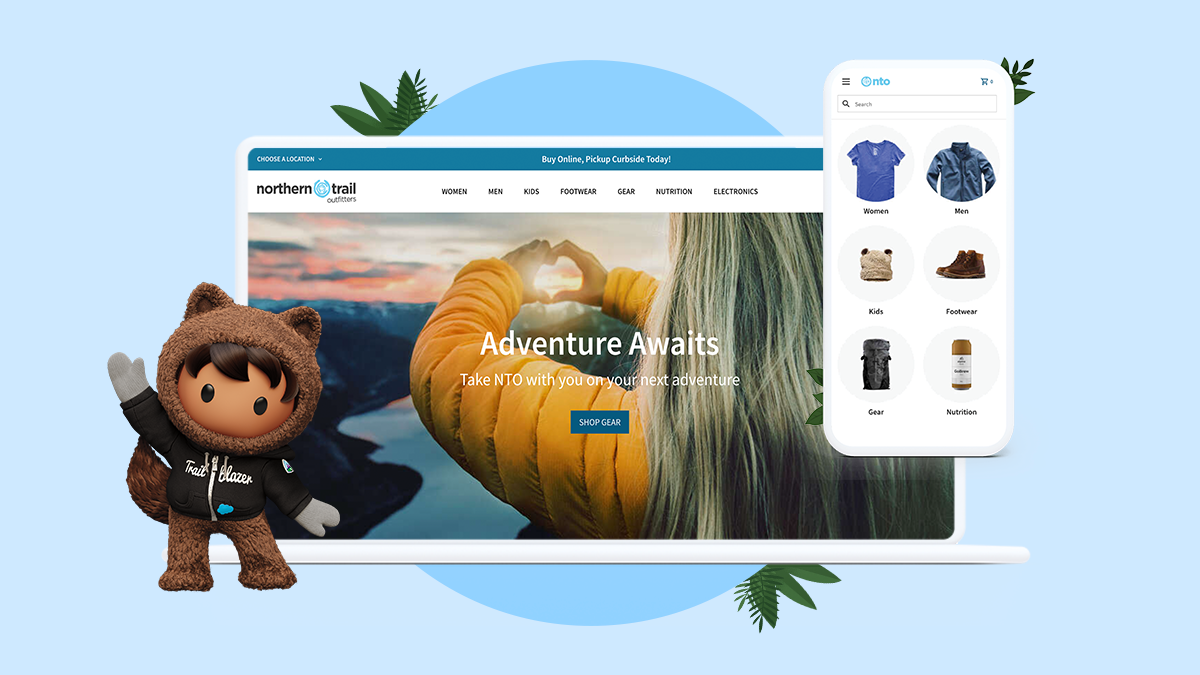
Salesforce Commerce Cloud (SFCC) stands as a robust e-commerce powerhouse, and it has fully embraced the headless paradigm. SFCC provides the powerful, scalable back-end functionalities – from product information management and pricing to order processing and promotions – while offering extensive API capabilities to enable seamless communication with a custom front-end.

A cornerstone of SFCC’s headless offering is the PWA Kit (Progressive Web App Kit). This solution is specifically designed to accelerate the development of headless storefronts by providing:

  • A Modern Foundation: The PWA Kit is built on React.js, a popular and powerful JavaScript library for building user interfaces. This gives developers a familiar and efficient environment to work in.
  • App-Like Experiences on the Web: Progressive Web Apps (PWAs) deliver a native app-like experience directly through a web browser. This includes features like fast loading times, offline access, push notifications, and the ability to be added to a user’s home screen, blurring the lines between websites and apps.
  • Accelerated Time-to-Market: The PWA Kit comes with a pre-built Retail React App template, offering standard e-commerce pages and functionalities (PLPs, PDPs, cart, checkout) as a starting point. This significantly reduces development time compared to building everything from scratch.
  • Managed Runtime: SFCC’s Managed Runtime provides the cloud infrastructure to deploy and host your PWA Kit storefront, ensuring high availability (99.9% uptime) and seamless scaling to handle fluctuating traffic.
  • Seamless Integration with SFCC Features: The PWA Kit is designed to work hand-in-hand with SFCC’s core functionalities, including Page Designer for dynamic content rendering and robust APIs for data exchange.

Real-World Advantages for Brands Seeking Ultimate Control

For brands that demand ultimate control over their digital presence and are committed to delivering cutting-edge customer experiences, headless commerce with SFCC and the PWA Kit offers undeniable advantages:

  • Luxury Brands: Imagine a luxury fashion brand that wants to deliver a highly immersive and visually rich experience, complete with interactive lookbooks and augmented reality try-on features. A headless SFCC setup allows them to achieve this without being constrained by a monolithic platform’s limitations.
  • Omnichannel Retailers: Retailers with a strong brick-and-mortar presence and a growing online footprint can leverage headless to unify their customer data and provide consistent experiences across online, in-store, and even mobile app touchpoints. A customer can start Browse on their phone, add items to their cart, and seamlessly continue their shopping journey at a physical store, with all information synchronized in real-time.
  • Brands with Unique UX Requirements: Businesses with highly specific or complex user experience needs that cannot be met by off-the-shelf templates can leverage headless commerce to build a truly bespoke storefront, optimizing every single interaction for their target audience.
  • Companies Prioritizing Speed and Agility: In fast-paced industries, the ability to quickly iterate, deploy new marketing campaigns, or respond to competitive pressures is crucial. Headless SFCC empowers marketing and development teams to move at lightning speed.
  • B2B Companies with Complex Buying Journeys: While often associated with B2C, headless commerce is increasingly valuable for B2B brands that need highly customized portals, personalized pricing, and complex ordering workflows that go beyond standard e-commerce templates.

In conclusion, headless commerce, particularly when powered by a robust platform like Salesforce Commerce Cloud and its innovative PWA Kit, represents the future of digital retail. It’s not just about technology; it’s about empowering brands to unleash their creativity, adapt rapidly, and deliver unparalleled customer experiences that drive loyalty and growth in an ever-competitive market.