


Top AI Development Companies in Melbourne Leading the Tech Revolution

Top AI Development Companies in Melbourne Leading the Tech Revolution

Artificial Intelligence is shaking up the way businesses work, no matter the industry—retail, finance, healthcare, you name it. As tech keeps moving faster, more companies in Melbourne are turning to the best AI development teams to build the kind of smart tools that actually make things run smoother and help people make better decisions. When you team up with an experienced AI company here, you get developers who know how to create systems that fit exactly what your business needs.

  1. Why Melbourne Businesses Are Jumping into AI

Melbourne’s become a real hotspot for AI development. There’s this buzzing mix of startups, research centers, and tech talent that keeps the innovation coming. Companies here are using AI for everything from predicting trends to automating work that used to eat up way too much time. The top AI firms in Melbourne help businesses bring in machine learning, natural language processing, and computer vision—so they can work smarter, not harder.

  1. What AI Development Companies Actually Do

Good AI companies in Melbourne handle everything, start to finish. That means they’ll help you figure out where AI fits into your business, set up your data, train your models, and roll everything out.

Here’s what they usually handle:

  • AI Consultation: They dig into your business goals and spot where AI brings the most value.
  • Custom AI Solutions: They build algorithms and automation that actually fit your business, not just some one-size-fits-all thing.
  • Integration Services: They make sure the new tech works with what you already have.
  • Ongoing Support: They keep things running and tweak performance as you go.

Behind all this, you’ve got teams of AI developers, data scientists, and engineers working together to get real results.

  1. AI in Action: How Melbourne Businesses Are Using It

Across Melbourne, businesses are jumping on AI for a bunch of real-world uses:

  • Retail: Recommending the right products and predicting what customers want.
  • Finance: Catching fraud and managing risk with smart models.
  • Healthcare: Automating diagnoses and analyzing patient data.
  • Real Estate: Using AI for smarter pricing and property assessments.
  • Manufacturing: Predicting when machines need maintenance and making production run smoother.

These are just a few ways AI services are helping companies in Melbourne step up their game.

  1. How to Pick the Right AI Developer in Melbourne

Finding the best AI developer comes down to a few things: experience, tech skills, and knowing your industry. Before you sign on, take a close look at their past projects—actual results matter. Check if they’re solid with tools like Python, TensorFlow, or PyTorch. Make sure they take data security seriously and ask if they can handle your business as it grows.

  1. Where AI in Melbourne Is Headed

Honestly, the future looks bright. As more companies want smarter automation, Melbourne’s AI developers are leading the charge, coming up with new solutions that really change how industries work. Whether it’s building smarter cities or making businesses more sustainable, AI teams and local companies are shaping the city’s tech future together.

Wrapping Up

Melbourne’s top AI development companies aren’t just keeping up—they’re setting the pace for how businesses use data and technology. Whether you’re just starting out or running an established company, working with the right AI team here helps you innovate faster, get more done, and make sure your business is ready for whatever’s next.
AI and Machine Learning in Trading, Risk, and Fraud Prevention

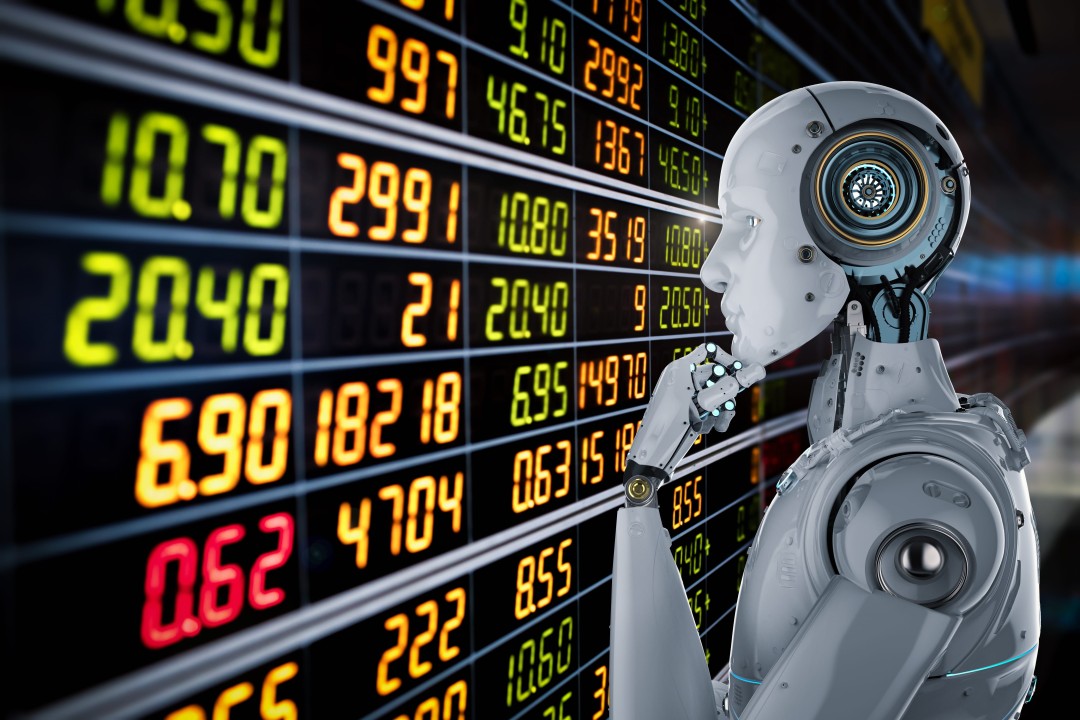
Machine Learning in Finance: Fraud Detection, Trading & Risk Management

The financial sector has always been at the forefront of innovation—constantly leveraging new technologies to improve efficiency, security, and decision-making. Among the most transformative technologies reshaping finance today is Machine Learning (ML). From fraud detection to automated trading and risk management, ML is enabling financial institutions to analyze vast amounts of data, detect hidden patterns, and make faster, more accurate predictions.

In this blog, we’ll explore how machine learning is driving three critical areas of finance: fraud detectiontrading, and risk management.


1. Fraud Detection with Machine Learning

Fraudulent activity in banking, payments, and insurance continues to evolve, costing the global economy billions of dollars annually. Traditional rule-based systems often fall short, as fraudsters constantly adapt their methods. This is where ML comes in.

How ML Improves Fraud Detection

  • Anomaly Detection: ML algorithms identify unusual spending patterns or abnormal account activities in real time, flagging potential fraud.
  • Supervised Learning Models: Algorithms are trained on historical data labeled as “fraud” or “legitimate” transactions, allowing them to detect suspicious activities with high accuracy.
  • Unsupervised Learning: These models uncover hidden fraud patterns without relying on labeled datasets, catching new types of fraud that weren’t previously identified.
  • Behavioral Biometrics: ML models analyze user behavior—like typing speed, geolocation, and device fingerprinting—to differentiate between genuine users and fraudsters.

Example in Action

Credit card companies and digital payment platforms use ML-powered fraud detection systems to prevent real-time fraudulent transactions. For instance, if a customer typically spends in New York but suddenly makes a high-value purchase in another country, the ML system can instantly flag or block the transaction.


2. Machine Learning in Trading

Financial markets are highly dynamic, influenced by countless variables such as economic indicators, news, geopolitical events, and investor sentiment. ML-driven trading systems (often called algorithmic or quantitative trading) are revolutionizing how trades are executed.

How ML Enhances Trading

  • Predictive Analytics: ML models analyze historical data, price patterns, and market trends to forecast future asset movements.
  • Sentiment Analysis: Natural Language Processing (NLP), a subset of ML, scans news articles, financial reports, and even social media posts to gauge market sentiment and make informed trading decisions.
  • Reinforcement Learning: Algorithms continuously learn and adjust trading strategies based on market feedback, maximizing returns over time.
  • High-Frequency Trading (HFT): ML models enable lightning-fast trades by identifying micro-opportunities in milliseconds, something human traders cannot achieve.

Example in Action

Hedge funds and investment banks rely heavily on ML-powered trading algorithms to optimize buy/sell strategies, minimize risks, and improve portfolio performance. Retail investors, too, are gaining access to robo-advisors powered by ML, which provide personalized investment strategies.


3. Risk Management with Machine Learning

Risk is at the heart of finance, whether it’s credit risk, market volatility, or operational threats. Machine learning provides powerful tools to measure, predict, and mitigate these risks.

Applications in Risk Management

  • Credit Scoring: Traditional credit scoring relies on limited factors like repayment history and income. ML models analyze a much broader dataset—including transaction history, digital footprints, and alternative data—to provide more accurate credit risk assessments.
  • Market Risk Analysis: ML can model and simulate market fluctuations, helping institutions prepare for scenarios like economic downturns or sudden market crashes.
  • Operational Risk Management: ML detects inefficiencies, compliance risks, and potential system vulnerabilities within financial organizations.
  • Stress Testing: By analyzing vast datasets, ML can simulate financial crises and help banks build resilience against worst-case scenarios.

Example in Action

Banks now deploy ML models to continuously assess borrower creditworthiness in real time. For example, instead of static annual credit reviews, ML can dynamically adjust lending terms based on a customer’s evolving financial behavior.


Benefits of Machine Learning in Finance

  1. Real-Time Decision-Making – ML systems process data instantly, enabling faster fraud detection and trading decisions.
  2. Scalability – Capable of analyzing billions of transactions and datasets without human limitations.
  3. Accuracy and Efficiency – Reduced errors compared to manual systems.
  4. Adaptive Learning – Algorithms evolve with changing market conditions and fraud tactics.
  5. Cost Reduction – Automation reduces operational costs while improving outcomes.

Challenges & Ethical Considerations

While ML offers immense potential, financial institutions must navigate challenges such as:

  • Bias in Data: Poor-quality or biased data can lead to unfair decisions, especially in credit scoring.
  • Transparency: Many ML models operate as “black boxes,” making it difficult to explain decisions to regulators or customers.
  • Cybersecurity: ML systems themselves can become targets for sophisticated cyberattacks.
  • Regulatory Compliance: Financial institutions must ensure ML models adhere to strict compliance frameworks.

The Future of Machine Learning in Finance

As financial data grows exponentially, the reliance on ML will only deepen. We can expect to see:

  • Wider adoption of explainable AI (XAI) to increase transparency in decision-making.
  • More integration of real-time big data analytics for proactive fraud prevention.
  • Use of generative AI in simulating financial markets and stress-testing portfolios.
  • Decentralized finance (DeFi) platforms embedding ML for smarter risk assessment and fraud prevention.

Final Thoughts

Machine learning is not just an enhancement to financial services—it’s a complete transformation. From preventing fraud and improving trading strategies to redefining risk management, ML is unlocking new levels of efficiency, accuracy, and security. However, with great power comes responsibility, and financial institutions must balance innovation with transparency, ethics, and compliance.

As we move forward, one thing is clear: finance powered by machine learning is not the future—it’s the present, and it’s here to stay.

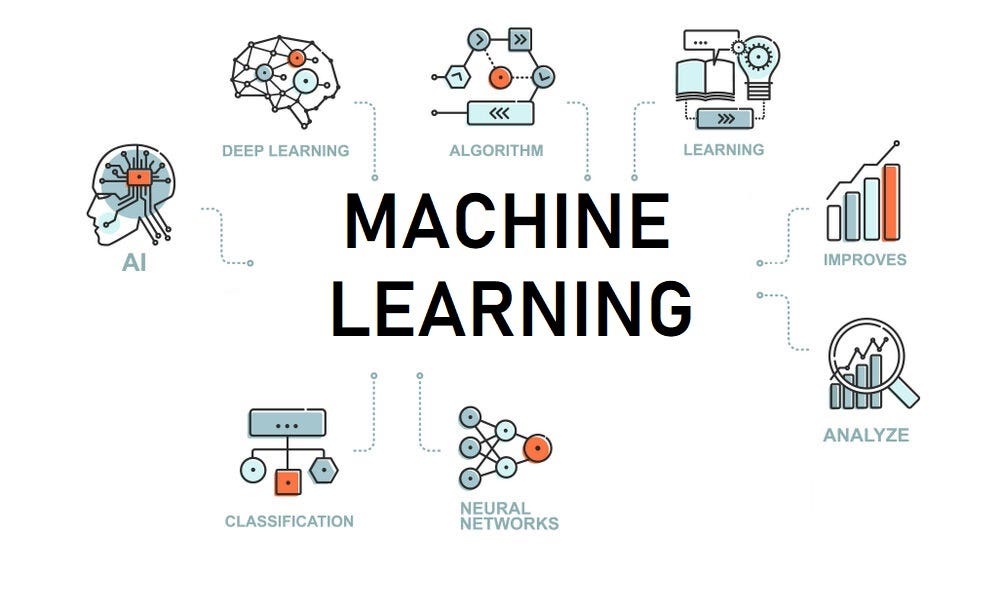
What is Machine Learning (and How Does it Fit into AI)? Demystifying the Relationship Between ML and AI

What is Machine Learning (and How Does it Fit into AI)? Demystifying the Relationship Between ML and AI

In today’s tech-driven world, terms like “Artificial Intelligence” (AI) and “Machine Learning” (ML) are thrown around constantly. They’re often used interchangeably, leading to a lot of confusion. But while they’re deeply intertwined, they’re not the same thing. Think of it this way: AI is the big, ambitious dream, and Machine Learning is one of the most powerful tools we have to make that dream a reality.

Let’s break it down.

What is Artificial Intelligence (AI)?

At its core, Artificial Intelligence is about creating machines that can simulate human intelligence. The goal of AI is to enable machines to perform tasks that typically require human cognitive abilities, such as:

  • Learning: Acquiring knowledge and skills.
  • Reasoning: Using logic to draw conclusions.
  • Problem-solving: Finding solutions to complex challenges.
  • Perception: Interpreting sensory information (like images and sounds).
  • Understanding natural language: Communicating with humans in a human-like way.

Historically, AI has been a vast field encompassing various approaches, from symbolic AI (rule-based systems) to expert systems. However, in recent years, one particular subfield has truly propelled AI into the mainstream: Machine Learning.

What is Machine Learning (ML)?

Machine Learning is a subset of AI that focuses on enabling systems to learn from data without being explicitly programmed. Instead of writing millions of lines of code to cover every possible scenario, ML algorithms are fed vast amounts of data. Through this data, they identify patterns, make predictions, and improve their performance over time.

Imagine teaching a child to identify a cat. You don’t give them a detailed rulebook of “a cat has four legs, fur, whiskers, and meows.” Instead, you show them many pictures of cats and dogs, saying “This is a cat,” or “This is a dog.” Over time, the child learns to distinguish between them. Machine Learning works in a similar fashion.

Key characteristics of Machine Learning:

  • Data-driven: ML models rely heavily on large datasets to learn.
  • Pattern recognition: They excel at identifying complex patterns and relationships within data.
  • Continuous improvement: The more data they are exposed to, the better their performance tends to become.
  • Automation of tasks: ML allows for the automation of tasks that are difficult or impossible to program manually.

The Relationship: How ML Fits into AI

So, where does Machine Learning fit into the grand scheme of AI?

ML is a primary driver and a powerful technique for achieving AI. Think of AI as the broad aspiration to create intelligent machines. Machine Learning is the engine that powers many of the most impressive AI applications we see today.

Here’s a simple analogy:

  • AI is the entire field of medicine. Its goal is to improve human health.
  • Machine Learning is a specialized surgical technique (like minimally invasive surgery) that is incredibly effective for achieving specific medical outcomes.

You can have AI without ML (e.g., old-school rule-based AI systems), but the most advanced and flexible forms of AI today are almost invariably powered by ML.

Why the Confusion?

The interchangeable use of AI and ML often stems from the fact that many cutting-edge AI developments are, in fact, breakthroughs in Machine Learning. When you hear about AI excelling at image recognition, natural language processing, or recommendation systems, you’re almost certainly talking about applications driven by Machine Learning (and often, specifically deep learning, which is a subfield of ML).

Real-World Examples of ML within AI:

  • Self-driving cars: ML algorithms process sensor data (cameras, radar, lidar) to understand the environment, predict the behavior of other vehicles, and make driving decisions. This is an AI goal achieved through ML.
  • Speech recognition (e.g., Siri, Alexa): ML models are trained on vast amounts of audio data to convert spoken words into text, enabling intelligent assistants to understand and respond.
  • Facial recognition: ML algorithms identify and verify individuals by learning patterns from facial features.
  • Spam filters: ML models learn from examples of spam and legitimate emails to automatically filter unwanted messages.
  • Medical diagnosis: ML algorithms can analyze patient data, scans, and symptoms to assist doctors in diagnosing diseases.

The Takeaway

In essence:

  • Artificial Intelligence (AI) is the overarching concept of creating machines that can think, learn, and act like humans.
  • Machine Learning (ML) is a powerful and currently the most successful approach to building AI systems, allowing computers to learn from data without explicit programming.

So, the next time you encounter these terms, remember that while they are intimately connected, Machine Learning is a vital tool within the broader, ambitious landscape of Artificial Intelligence. Understanding this relationship is key to demystifying the incredible technological advancements shaping our world.