
Loading...
 Winklix
IT Solution Simplified


Business Units
Backed by deep expertise in ML engineering, data pipeline development, and LLM alignment, Winklix builds production-grade fine-tuned models that genuinely perform on your domain-specific tasks. Every fine-tuning engagement is grounded in rigorous data curation, systematic evaluation, and enterprise-grade deployment—delivering measurable accuracy improvements over general-purpose LLMs.





We align our success with our clients success : Our client-centric approach delivers clients satisfaction consistently .


AT&T collaborates with Winklix to enhance SAP performance, streamlining ERP processes and optimizing sales operations.


Boeing partnered with Winklix’s eCommerce experts to unify multiple ecommerce product platforms and improve digital experience.


Burberry partnered with Winklix to revamp its online store, enhancing user engagement and driving higher traffic.


Coles Group engaged Winklix to develop its website and app using Adobe Experience Cloud for better customer experience.


MTailor partnered with Winklix for the development of its website and mobile app for custom-made clothing experiences.


OnTheMarket partnered with Winklix for Salesforce implementation, application development, and digital transformation initiatives.


Valvoline partnered with Winklix for SAP HANA implementation and ongoing maintenance to improve operational efficiency.


VMware trusted partnership background image
Winklix is trusted by renowned global brands, enterprises, and ambitious businesses to deliver technology solutions that create real impact. We take pride in building long-term partnerships through innovation, reliability, and results-driven execution.


Global enterprises trust Winklix to lead their transformation
Developers
A decade of enterprise delivery, zero shortcuts
Complex problems, delivered at scale
Agentforce & AI, built for enterprise complexity
Winklix delivered our Salesforce solution with clarity, speed, and professionalism. Their team helped us improve visibility, streamline workflows, and create a more connected client experience.

Winklix modernized a SharePoint site by implementing enhanced functionality, improving usability, and delivering a more efficient digital experience.


From the very beginning of the project through software release and beta testing, Winklix demonstrated exceptional attention to detail, strong accountability, and a consistent commitment to quality.

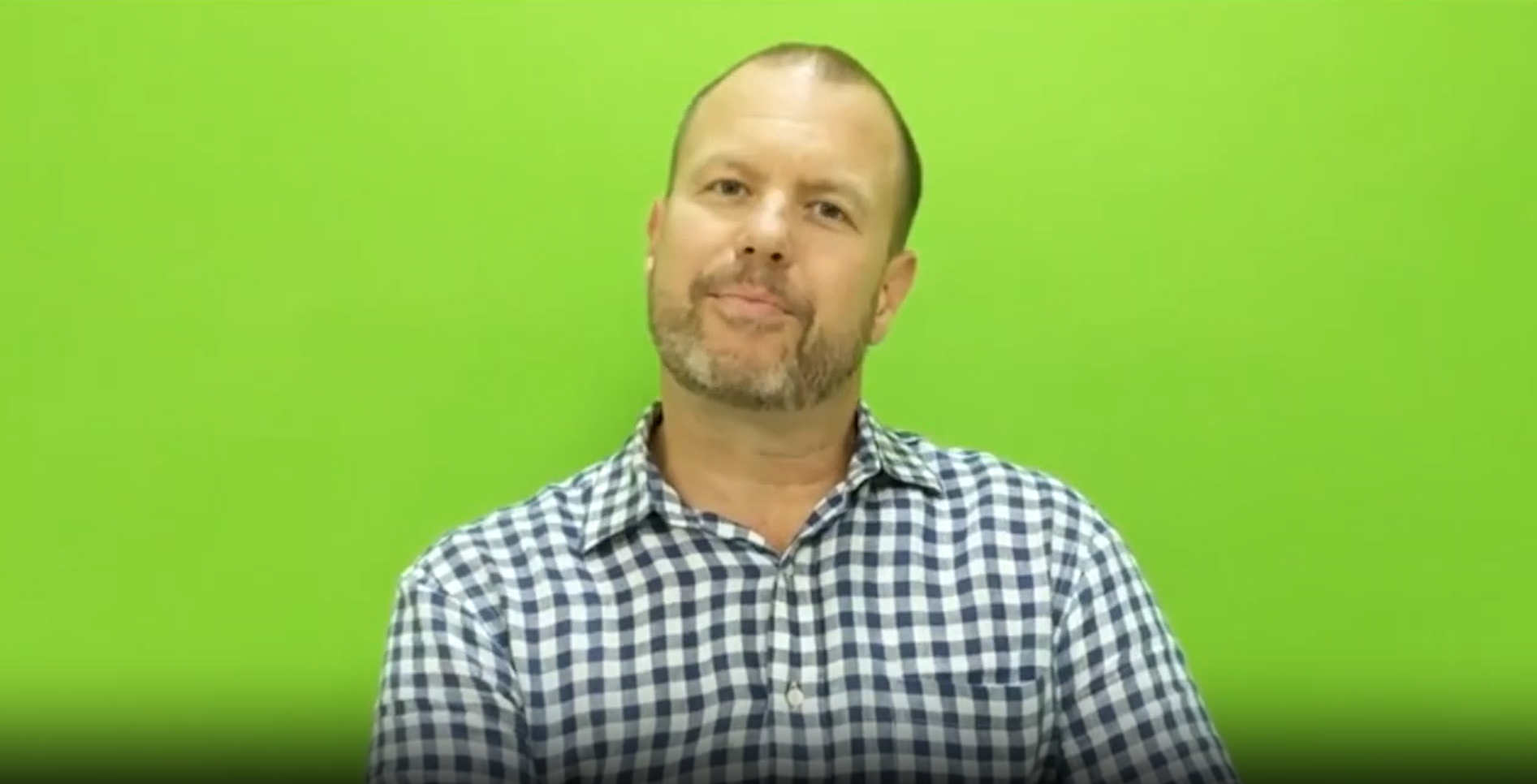
Winklix provided us with a team of highly skilled PHP developers and consistently showed great flexibility in helping us meet our deadlines.

Winklix designed and developed a native iOS app that delivers a quantitative assessment of users' physical fitness, with every task completed accurately, promptly, and efficiently.

Learn why professionals trust our solutions to
complete their customer journeys.
Winklix engineers went beyond standard testing procedures and identified critical risks that could have been easily overlooked. Their reporting was clear, practical, and focused on the actual level of risk, giving us strong evidence to support our compliance efforts and the data protection commitments we make to our customers.

We are fully satisfied with our partnership with Winklix. Their team delivered penetration testing services in a timely, professional, and dependable manner.

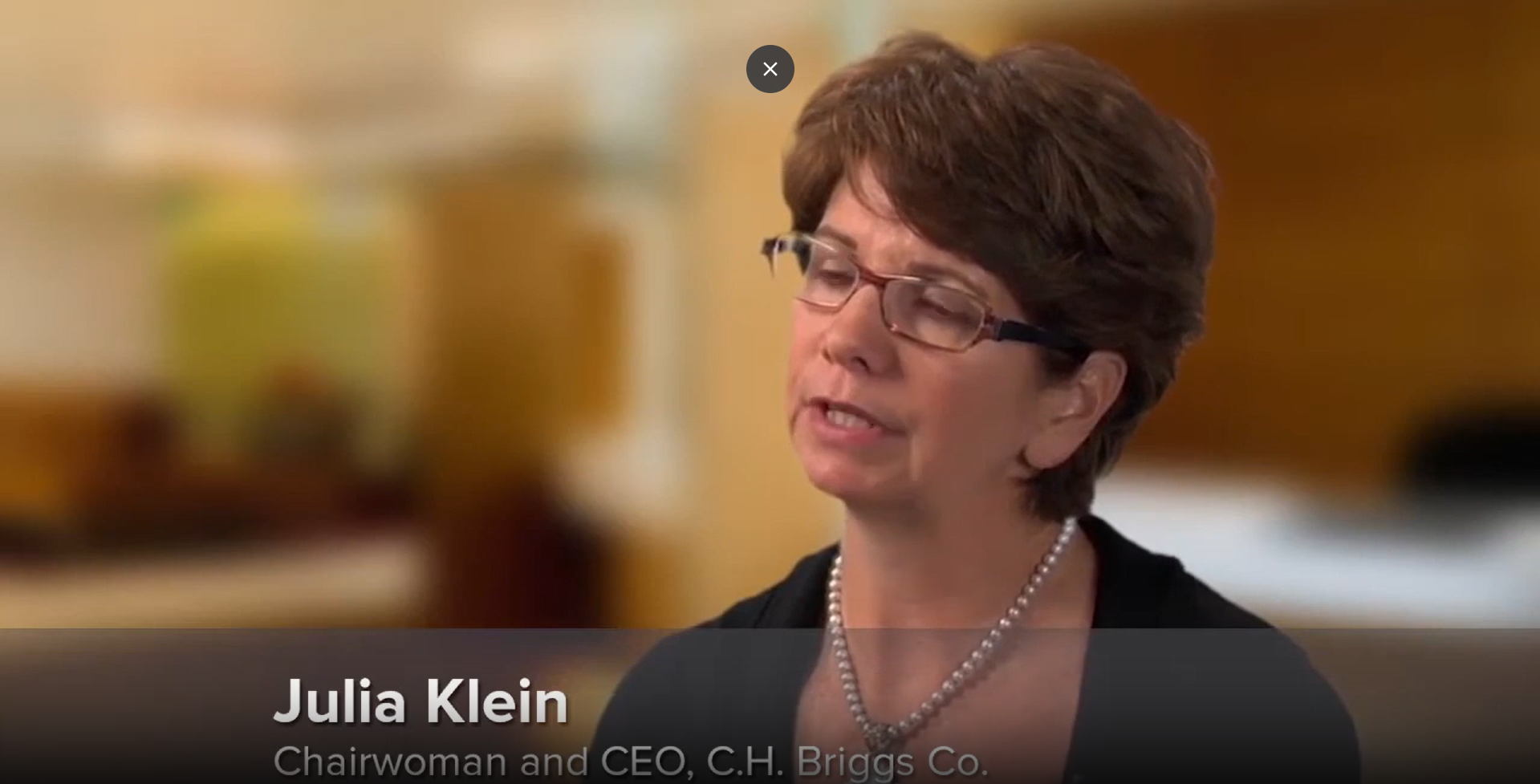
The team at Winklix leveraged SharePoint capabilities to create an attractive, functional, and easy-to-use intranet. We truly appreciate Winklix's professionalism, dedication, and commitment to the success of the project.

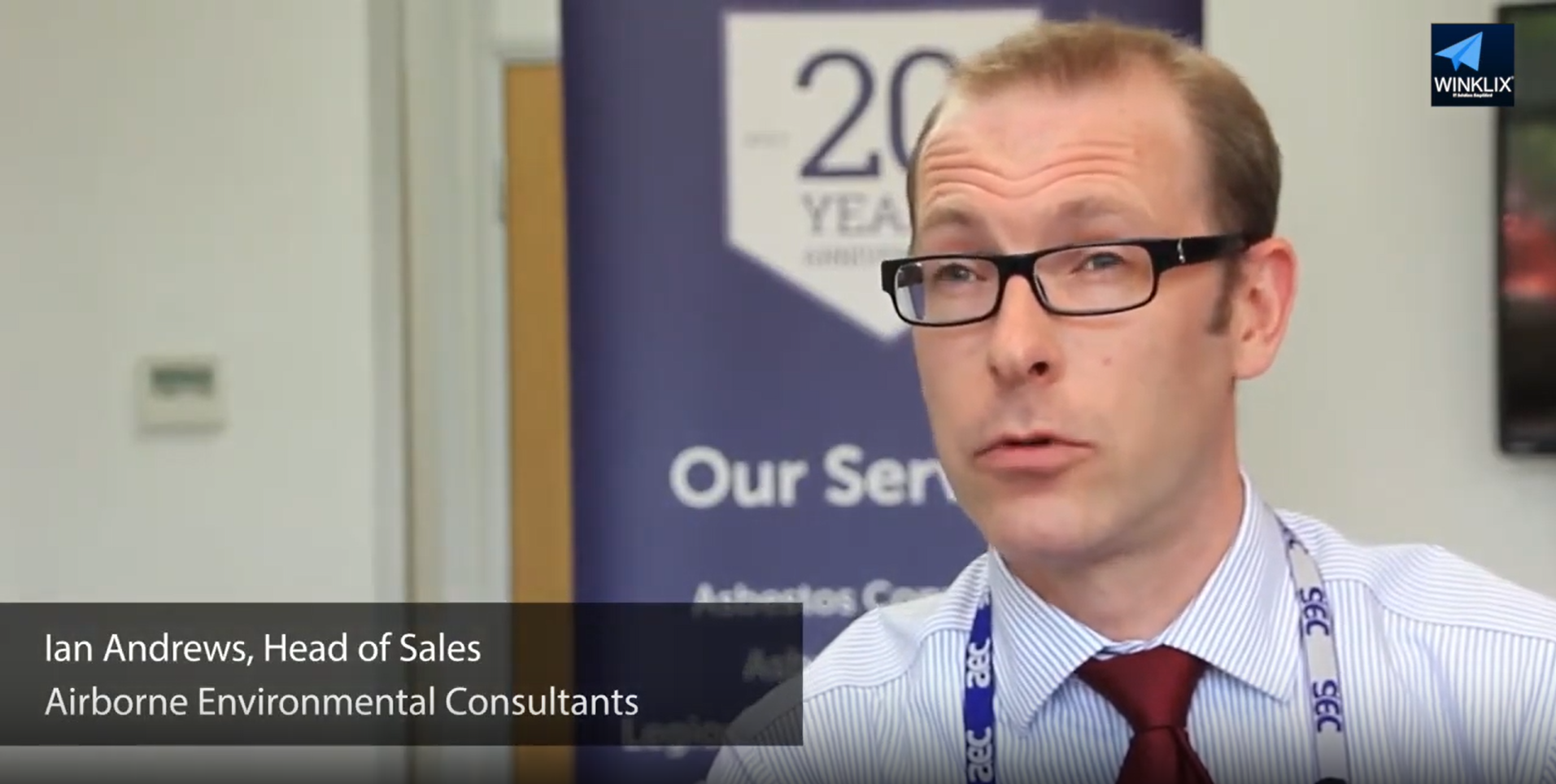
Winklix helped us streamline our Salesforce implementation with a practical, efficient, and highly responsive approach. Their team made the process smooth and delivered real business value

We engaged Winklix to implement Microsoft Dynamics as part of our migration and transition from Salesforce.com. Their team was highly engaging, knowledgeable, professional, and communicated exceptionally well throughout the project.
Our LLM fine-tuning services span the full spectrum of enterprise model customization use cases. From supervised fine-tuning and RLHF alignment to domain adaptation and parameter-efficient LoRA training, we engineer production-ready fine-tuned models that outperform general-purpose LLMs on your specific tasks, data, and workflows—built for accuracy, security, and measurable business impact.
We conduct supervised fine-tuning on high-quality instruction datasets to adapt pre-trained LLMs to your specific tasks, workflows, and domain terminology—producing models that follow your prompts accurately and generate outputs matching your exact quality standards.
We implement Reinforcement Learning from Human Feedback and Direct Preference Optimization pipelines to align fine-tuned models with human preferences, reducing harmful or inaccurate outputs while improving helpfulness, coherence, and task-specific performance.
We apply LoRA and QLoRA to adapt large language models at a fraction of the compute cost of full fine-tuning—making enterprise-grade model customization cost-effective and scalable without sacrificing performance on your target tasks.
We fine-tune models on your proprietary domain corpora—internal documents, industry literature, product data, and operational records—enabling LLMs to speak your language, understand your terminology, and generate outputs aligned with your business context.
We build instruction-tuned models optimized for specific high-value tasks such as document summarization, classification, extraction, translation, code generation, or customer support—delivering significantly higher accuracy than general-purpose models on your target workflows.
We establish automated re-fine-tuning pipelines that retrain models as new data accumulates, monitor production performance for drift, and continuously improve model quality over time—ensuring your fine-tuned LLMs remain accurate as your business evolves.
Deploy custom large language models fine-tuned on your enterprise data, aligned with your workflows, and optimized for your exact tasks. From LoRA parameter-efficient training to RLHF alignment and private deployment, our fine-tuning services deliver models that genuinely outperform general-purpose LLMs on your business use cases.


Our LLM fine-tuning services are purpose-built for the data types, compliance requirements, and task patterns of your industry. We curate domain-specific training datasets, fine-tune models on your proprietary knowledge, and deliver custom LLMs that speak your language—helping teams automate high-value tasks with accuracy that general-purpose models simply cannot match.
 Fine-Tuned Models for Financial Document Analysis and Report SummarizationCustom LLMs for Regulatory Compliance and AML Narrative GenerationDomain-Adapted Models for Risk Assessment and Credit Decision SupportFine-Tuned Sentiment Models for Market News and Earnings Call AnalysisFine-Tuned Clinical NLP Models for Medical Record SummarizationDomain-Adapted LLMs for Drug Interaction and Clinical Trial AnalysisCustom Models for HIPAA-Compliant Patient Communication WorkflowsSpecialized Models for Radiology, Pathology, and Medical Coding AssistanceFine-Tuned Models for Contract Review and Clause ClassificationDomain-Adapted LLMs for Legal Research and Precedent SummarizationCustom Models for Regulatory Filing Generation and Compliance DraftingSpecialized Models for Multi-Jurisdiction Legal Document ProcessingFine-Tuned Models for Product Description Generation at ScaleCustom LLMs for Personalized Shopping Recommendations and Upsell CopyDomain-Adapted Models for Customer Review Analysis and Sentiment ScoringSpecialized Models for Returns, Refunds, and Support Response GenerationFine-Tuned Models for Job Description and Offer Letter GenerationCustom LLMs for Employee Feedback Summarization and Performance InsightsDomain-Adapted Models for HR Policy Q&A and Onboarding AssistantsSpecialized Models for Internal Knowledge Base Search and ResponseFine-Tuned Models for Curriculum-Aligned Content GenerationCustom LLMs for Personalized Student Feedback and Assessment ScoringDomain-Adapted Models for Academic Research Summarization and SynthesisSpecialized Models for Multilingual Tutoring and Language LearningFine-Tuned Models for Technical Manual Generation and SOP AuthoringCustom LLMs for Predictive Maintenance Report SummarizationDomain-Adapted Models for Quality Defect Classification and Root Cause AnalysisSpecialized Models for Supplier Communication and Procurement WorkflowsFine-Tuned Models for Policy Document Drafting and Citizen CommunicationCustom LLMs for Legislative Analysis and Regulatory SummarizationDomain-Adapted Models for Procurement and Tender Document ProcessingMultilingual Fine-Tuned Models for Public Information and Service DeliveryFine-Tuned Models for Editorial Content Generation and Style MatchingCustom LLMs for News Summarization and Fact-Verification AssistanceDomain-Adapted Models for SEO Content Optimization and Topic ClusteringSpecialized Models for Subscriber Personalization and Content RecommendationFine-Tuned Models for Shipment Documentation and Carrier CommunicationCustom LLMs for Supply Chain Risk Narrative GenerationDomain-Adapted Models for Inventory Forecasting Report SummarizationSpecialized Models for Cross-Border Trade Compliance DocumentationFine-Tuned Models for Property Listing Description GenerationCustom LLMs for Lease Agreement Analysis and Clause ExtractionDomain-Adapted Models for Market Report Summarization and Valuation InsightsSpecialized Models for Mortgage and Due Diligence Document ProcessingFine-Tuned Models for Technical Documentation and API Guide GenerationCustom LLMs for Customer Support Ticket Classification and ResolutionDomain-Adapted Models for Network Configuration RecommendationSpecialized Models for Billing Dispute Resolution and Plan ComparisonFine-Tuned Models for Policy Wording Generation and Coverage ExplanationCustom LLMs for Claims Narrative Summarization and Fraud DetectionDomain-Adapted Models for Underwriting Rule Application and Risk ScoringSpecialized Models for Regulatory Filing and Actuarial Report GenerationFine-Tuned Models for Drug Discovery Literature SummarizationCustom LLMs for Clinical Protocol Drafting and Trial Report GenerationDomain-Adapted Models for Regulatory Submission Document ProcessingSpecialized Models for Scientific Abstract Classification and SynthesisFine-Tuned Models for Grid Operations Reporting and Safety DocumentationCustom LLMs for Energy Regulatory Compliance Narrative GenerationDomain-Adapted Models for Sustainability Reporting and ESG DisclosureSpecialized Models for Energy Market Analysis and Demand Forecasting ReportsFine-Tuned Models for Engagement Report and Proposal GenerationCustom LLMs for Industry Benchmark Summarization and Insight ExtractionDomain-Adapted Models for Client-Specific Knowledge Base ResponsesSpecialized Models for Methodology Documentation and Framework AuthoringFine-Tuned Models for Grant Proposal Writing and Impact ReportingCustom LLMs for Program Documentation and Field Team CommunicationDomain-Adapted Models for Beneficiary Support and Policy Q&ASpecialized Models for Donor Report Generation and Engagement MessagingFine-Tuned Models for Vehicle Technical Manual and Repair Guide GenerationCustom LLMs for Warranty Claim Processing and Recall CommunicationDomain-Adapted Models for Dealer Training Content and Parts DocumentationSpecialized Models for Regulatory Homologation Document Processing
Fine-Tuning Capabilities
Our LLM fine-tuning services combine rigorous dataset engineering, advanced training techniques, and systematic evaluation to build models that reliably outperform base LLMs on your exact business tasks. Every capability is engineered for production accuracy, data security, and long-term model quality.
Trains pre-trained LLMs on curated prompt-completion datasets to improve task accuracy and instruction-following for your specific business use cases.
Aligns fine-tuned models with human preferences using reward modeling, PPO, and Direct Preference Optimization to reduce harmful or inaccurate outputs.
Adapts large language models efficiently using low-rank adapters—dramatically reducing compute costs while achieving performance close to full fine-tuning.
Continues model pre-training on your proprietary domain corpora to ground LLMs in your industry knowledge before task-specific fine-tuning.
Builds instruction-following models trained on diverse task datasets to improve generalization and accuracy across your target business workflows.
Trains a single model across multiple related tasks simultaneously—improving generalization and reducing the need for separate per-task model deployments.
Applies regularization and elastic weight consolidation techniques to preserve base model capabilities while adapting to domain-specific tasks during fine-tuning.
Compliance is built into every layer of our LLM fine-tuning process. From private training infrastructure and encrypted data handling to responsible AI governance and model audit logging, we engineer fine-tuning pipelines that meet global regulatory standards—helping enterprises deploy custom AI models with full confidence in security, data privacy, and auditability.









Winklix delivers production-grade LLM fine-tuning services engineered for task accuracy, enterprise scale, and regulatory compliance. Our team combines deep expertise in ML engineering, dataset curation, and model alignment to build fine-tuned models that genuinely perform—delivering measurable improvements in accuracy, consistency, and efficiency over general-purpose LLMs on your real business tasks.
We build fine-tuning pipelines designed for enterprise reliability, not research experiments. Every engagement includes rigorous dataset curation, training infrastructure setup, evaluation benchmarks, and deployment pipelines that deliver measurable improvements in task accuracy.
Generic fine-tuning on low-quality data produces mediocre models. We invest heavily in dataset curation, quality filtering, and domain-specific evaluation to ensure fine-tuned models meaningfully outperform base models on your exact tasks and terminology.
We take full ownership of the entire fine-tuning lifecycle—data preparation, training, alignment, evaluation, serving infrastructure, and monitoring—so you get a production-ready model rather than disconnected components requiring assembly.

Newsweek AI Impact Awards 2025 Winner

Globee Award Gold for Best AI Development

AIM Challenger in Top Data Science Service Providers

Microsoft CNBC AI for All Award Societal Progress

Best Firms for Women in Tech To Work For

Major Contender - Data Annotation & Labeling PEAK Matrix

Rising Star (Europe) IDP Services Study

Edison Award - Bronze Recognition
Newsweek AI Impact Awards 2025 Winner
Globee Award Gold for Best AI Development
AIM Challenger in Top Data Science Service Providers
Microsoft CNBC AI for All Award Societal Progress
Best Firms for Women in Tech To Work For
Major Contender - Data Annotation & Labeling PEAK Matrix
Rising Star (Europe) IDP Services Study
Edison Award - Bronze Recognition
We leverage a modern, enterprise-grade technology stack to build production-ready fine-tuned models tailored to your domain, infrastructure, and compliance requirements. From fine-tuning frameworks and base model hubs to distributed training infrastructure and inference optimization tooling, our capabilities span the full model customization lifecycle—delivering scalable, secure, and highly accurate fine-tuned LLMs that integrate seamlessly with your existing enterprise ecosystem.












As an LLM fine-tuning company, we apply the latest advances in parameter-efficient training, preference alignment, and distributed ML engineering to every engagement. Every technique we apply is selected to maximize task accuracy, minimize training costs, and ensure enterprise-grade reliability from day one.
SFT is the foundational fine-tuning technique we apply to every engagement. By training pre-trained models on high-quality prompt-completion datasets curated for your domain and tasks, we teach LLMs to reliably follow your instructions, adopt your terminology, and generate outputs that match your quality and format requirements.
LoRA enables efficient fine-tuning by injecting trainable low-rank matrices into transformer layers instead of updating all model weights. This reduces GPU memory requirements and training time by orders of magnitude while preserving model quality—making large model fine-tuning practical and cost-efficient for enterprise deployments.
QLoRA extends LoRA with 4-bit quantization of the base model weights, enabling fine-tuning of 70B+ parameter models on a single consumer-grade GPU. We apply QLoRA to maximize cost efficiency without sacrificing fine-tuned model performance—expanding access to powerful model customization without massive infrastructure investments.
RLHF aligns fine-tuned model behavior with human preferences through reward modeling and policy optimization. We train reward models on human preference comparisons, then use PPO to optimize the LLM's outputs toward higher-reward responses—improving helpfulness, accuracy, and safety in a measurable and controllable way.
DPO achieves RLHF-level alignment without the complexity of reinforcement learning by directly optimizing the language model on preference pairs. We use DPO as a simpler and more stable alternative to RLHF for preference alignment—delivering comparable quality improvements with less computational overhead and training complexity.
Instruction tuning trains models on diverse prompt-instruction-response datasets to improve their ability to follow complex instructions accurately. We build and curate high-quality instruction datasets aligned with your use cases and apply instruction tuning to produce models that generalize well across your target task distribution.
For highly specialized domains, continued pre-training on large domain-specific corpora before task-specific fine-tuning significantly improves model performance. We implement domain adaptation pre-training on your internal documents, industry literature, and proprietary datasets to ground the model in your knowledge domain before instruction or preference tuning.
We use DeepSpeed ZeRO optimization stages and distributed training frameworks to efficiently train large models across multiple GPUs—enabling full fine-tuning of 13B to 70B parameter models within practical compute budgets. We configure mixed-precision training, gradient checkpointing, and optimal batch sizing for each engagement.
We evaluate fine-tuned models against task-specific benchmarks, adversarial test sets, and production-representative validation data. We measure accuracy, BLEU, ROUGE, perplexity, and task-specific metrics—establishing clear baselines and iterating until models meet your quality targets before deployment.
Post fine-tuning, we apply quantization (INT8, INT4, GPTQ, AWQ) and inference optimization techniques to reduce model serving costs and latency without meaningful quality degradation—ensuring production deployments are both accurate and cost-efficient at scale.
Powering next-generation solutions with a diverse stack of industry-leading AI architectures.


We help enterprises unlock the full potential of large language models by fine-tuning them on proprietary data and aligning them to specific business tasks. From strategic consulting and dataset curation to training, evaluation, and ongoing optimization, our LLM fine-tuning services deliver custom models that outperform general-purpose AI—with measurable accuracy improvements, full data security, and production-grade reliability.
We help you identify the optimal fine-tuning approach for your data, tasks, and infrastructure—defining model selection, dataset requirements, training strategy, and a clear implementation roadmap before any training begins.
We source, clean, format, and quality-filter your training data into high-quality datasets optimized for your fine-tuning method—covering instruction sets, preference pairs, domain corpora, and task-specific examples.
We execute supervised fine-tuning, LoRA/QLoRA parameter-efficient training, and RLHF or DPO alignment pipelines to produce models that accurately follow your instructions and reflect your domain knowledge.
We adapt pre-trained LLMs to your industry vocabulary, document types, and reasoning patterns through continued pre-training and task-specific fine-tuning—delivering models that outperform general LLMs on your exact workflows.
We rigorously evaluate fine-tuned models against task-specific benchmarks, measure accuracy and quality metrics, run adversarial test cases, and iterate until models consistently meet your performance targets.
We deploy fine-tuned models with optimized inference infrastructure, monitor production performance, and establish automated re-training pipelines that keep models accurate as your data and requirements evolve.
We begin by understanding your business goals, data landscape, and target tasks. Our team evaluates base model candidates, defines success metrics, and designs a fine-tuning strategy tailored to your domain, data quality, and deployment constraints before any training begins.
We source, clean, deduplicate, and format your training data into high-quality datasets optimized for your fine-tuning approach. This includes prompt-completion pair generation, instruction set construction, preference dataset creation for RLHF, and rigorous quality filtering to remove noise and inconsistencies.
We evaluate and recommend the optimal base model for your use case—balancing task performance, inference cost, deployment requirements, and data privacy constraints. We work with LLaMA, Mistral, Mixtral, GPT-3.5, GPT-4, Gemini, Falcon, and specialized open-source models.
We implement LoRA and QLoRA fine-tuning to adapt large language models to your domain without full weight updates—dramatically reducing compute requirements and training time while achieving performance comparable to full fine-tuning. We configure rank, alpha, and target layers optimally for your model and task.
We conduct supervised fine-tuning on curated instruction datasets to teach the model to follow your task-specific prompts accurately. We apply chat templates, system prompt conditioning, and response formatting rules that align model outputs with your application's exact requirements.
We implement Reinforcement Learning from Human Feedback pipelines including reward model training, PPO-based policy optimization, and Direct Preference Optimization (DPO) to align fine-tuned models with human preferences—reducing harmful outputs, improving helpfulness, and enhancing response quality.
We evaluate fine-tuned models rigorously against task-specific benchmarks, held-out validation sets, and adversarial test cases. We measure accuracy, perplexity, BLEU, ROUGE, and task-specific metrics, iterating on training data and hyperparameters until quality targets are consistently met.
We deploy fine-tuned models to production-ready serving infrastructure with optimized inference (quantization, batching, caching) and full observability—tracking output quality, latency, and model drift. We continuously re-fine-tune as new data becomes available and requirements evolve.





Winklix delivers artificial intelligence services for businesses looking to build secure, scalable, and user-friendly apps. We create custom iOS, Android, and cross-platform solutions designed to support growth, improve customer experience, and drive real business results.
+4 more services
LLM fine-tuning is the process of further training a pre-trained large language model on your domain-specific data so it learns your terminology, tone, workflows, and task patterns. While general-purpose LLMs like GPT-4 or LLaMA are powerful, they often underperform on specialized tasks because they were never trained on your industry's data. Fine-tuning adapts these models to your exact use case—producing more accurate, consistent, and cost-efficient outputs than prompt engineering alone can achieve.
We provide end-to-end LLM fine-tuning services including dataset curation and preparation, supervised fine-tuning (SFT), instruction tuning, RLHF and preference alignment, parameter-efficient fine-tuning with LoRA and QLoRA, domain adaptation, model evaluation and benchmarking, and production deployment with continuous optimization. We work with both open-source and proprietary models across cloud and on-premise environments.
We fine-tune a wide range of models including Meta LLaMA 2 and LLaMA 3, Mistral, Mixtral, Falcon, GPT-3.5 and GPT-4 via OpenAI's fine-tuning API, Google Gemini models, Anthropic Claude (via supported methods), and domain-specific models from Hugging Face. Model selection is based on your task requirements, data sensitivity, deployment environment, and cost constraints.
PEFT methods like LoRA (Low-Rank Adaptation) and QLoRA allow you to fine-tune large language models without updating all model weights—dramatically reducing compute costs and training time while achieving performance close to full fine-tuning. We implement LoRA and QLoRA by default for most fine-tuning engagements, making enterprise-grade model customization accessible without requiring massive GPU clusters.
The data requirements depend on your use case. For instruction tuning, we typically need prompt-completion pairs demonstrating the tasks you want the model to perform. For domain adaptation, we use your internal documents, reports, manuals, or other text corpora. For RLHF, we need preference comparisons between model outputs. We handle all data cleaning, formatting, deduplication, quality filtering, and train/validation splitting as part of our data preparation service.
We implement rigorous quality controls throughout the fine-tuning process including careful dataset curation, evaluation on held-out benchmarks specific to your task, RLHF preference alignment to reduce undesirable outputs, red-teaming and adversarial testing, and post-deployment monitoring dashboards that track model drift, output quality, and error patterns. We establish clear accuracy baselines and iterate until targets are met.
Yes. We support fully private fine-tuning workflows where your data never leaves your infrastructure. We can set up training pipelines on your private cloud (AWS, Azure, GCP) or on-premise GPU clusters, implement strict data access controls and encryption, and ensure no training data is exposed to third-party model APIs. Compliance with GDPR, HIPAA, SOC 2, and other data privacy standards is built into our workflow.
Reinforcement Learning from Human Feedback (RLHF) is a technique used to align LLM behavior with human preferences—making models more helpful, accurate, and less likely to produce harmful or incorrect outputs. We implement RLHF pipelines including reward model training and PPO-based policy optimization, as well as lighter alternatives like Direct Preference Optimization (DPO) that achieve similar alignment results with less computational overhead.
Timelines vary based on model size, dataset volume, compute availability, and iteration requirements. A typical LoRA fine-tuning engagement on a 7B parameter model with a prepared dataset can complete training in days. Full fine-tuning of larger models, or projects requiring multiple evaluation and iteration cycles, may take several weeks. We provide detailed project timelines during the scoping phase after reviewing your data and requirements.
Winklix brings deep expertise in ML engineering, data pipeline development, and LLM alignment to every fine-tuning engagement. We go beyond one-time model training to build repeatable, monitored fine-tuning pipelines that evolve with your data and requirements. Our team handles the full lifecycle—from data curation and training to evaluation, deployment, and ongoing optimization—delivering production-grade fine-tuned models with measurable improvements in task accuracy.
Still have questions? We’re here to help. If you didn’t find what you were looking for, feel free to reach out—our team is ready to assist you.Have a question not listed here? Call our team :
Get In Touch With Our Experts