
Loading...
 Winklix
IT Solution Simplified


Business Units
Backed by deep expertise across the complete LangChain ecosystem—LangChain core, LangGraph, LangSmith, LCEL, and 100+ built-in integrations—Winklix builds production-grade LangChain systems that go far beyond tutorials. We design robust architectures with proper state management, observability, error recovery, and the engineering discipline that enterprise AI applications demand.






We align our success with our clients success : Our client-centric approach delivers clients satisfaction consistently .


AT&T collaborates with Winklix to enhance SAP performance, streamlining ERP processes and optimizing sales operations.


Boeing partnered with Winklix’s eCommerce experts to unify multiple ecommerce product platforms and improve digital experience.


Burberry partnered with Winklix to revamp its online store, enhancing user engagement and driving higher traffic.


Coles Group engaged Winklix to develop its website and app using Adobe Experience Cloud for better customer experience.


MTailor partnered with Winklix for the development of its website and mobile app for custom-made clothing experiences.


OnTheMarket partnered with Winklix for Salesforce implementation, application development, and digital transformation initiatives.


Valvoline partnered with Winklix for SAP HANA implementation and ongoing maintenance to improve operational efficiency.


VMware trusted partnership background image
Winklix is trusted by renowned global brands, enterprises, and ambitious businesses to deliver technology solutions that create real impact. We take pride in building long-term partnerships through innovation, reliability, and results-driven execution.


Global enterprises trust Winklix to lead their transformation
Developers
A decade of enterprise delivery, zero shortcuts
Complex problems, delivered at scale
Agentforce & AI, built for enterprise complexity
Winklix delivered our Salesforce solution with clarity, speed, and professionalism. Their team helped us improve visibility, streamline workflows, and create a more connected client experience.

Winklix modernized a SharePoint site by implementing enhanced functionality, improving usability, and delivering a more efficient digital experience.


From the very beginning of the project through software release and beta testing, Winklix demonstrated exceptional attention to detail, strong accountability, and a consistent commitment to quality.


Winklix provided us with a team of highly skilled PHP developers and consistently showed great flexibility in helping us meet our deadlines.

Winklix designed and developed a native iOS app that delivers a quantitative assessment of users' physical fitness, with every task completed accurately, promptly, and efficiently.

Learn why professionals trust our solutions to
complete their customer journeys.
Winklix engineers went beyond standard testing procedures and identified critical risks that could have been easily overlooked. Their reporting was clear, practical, and focused on the actual level of risk, giving us strong evidence to support our compliance efforts and the data protection commitments we make to our customers.

We are fully satisfied with our partnership with Winklix. Their team delivered penetration testing services in a timely, professional, and dependable manner.

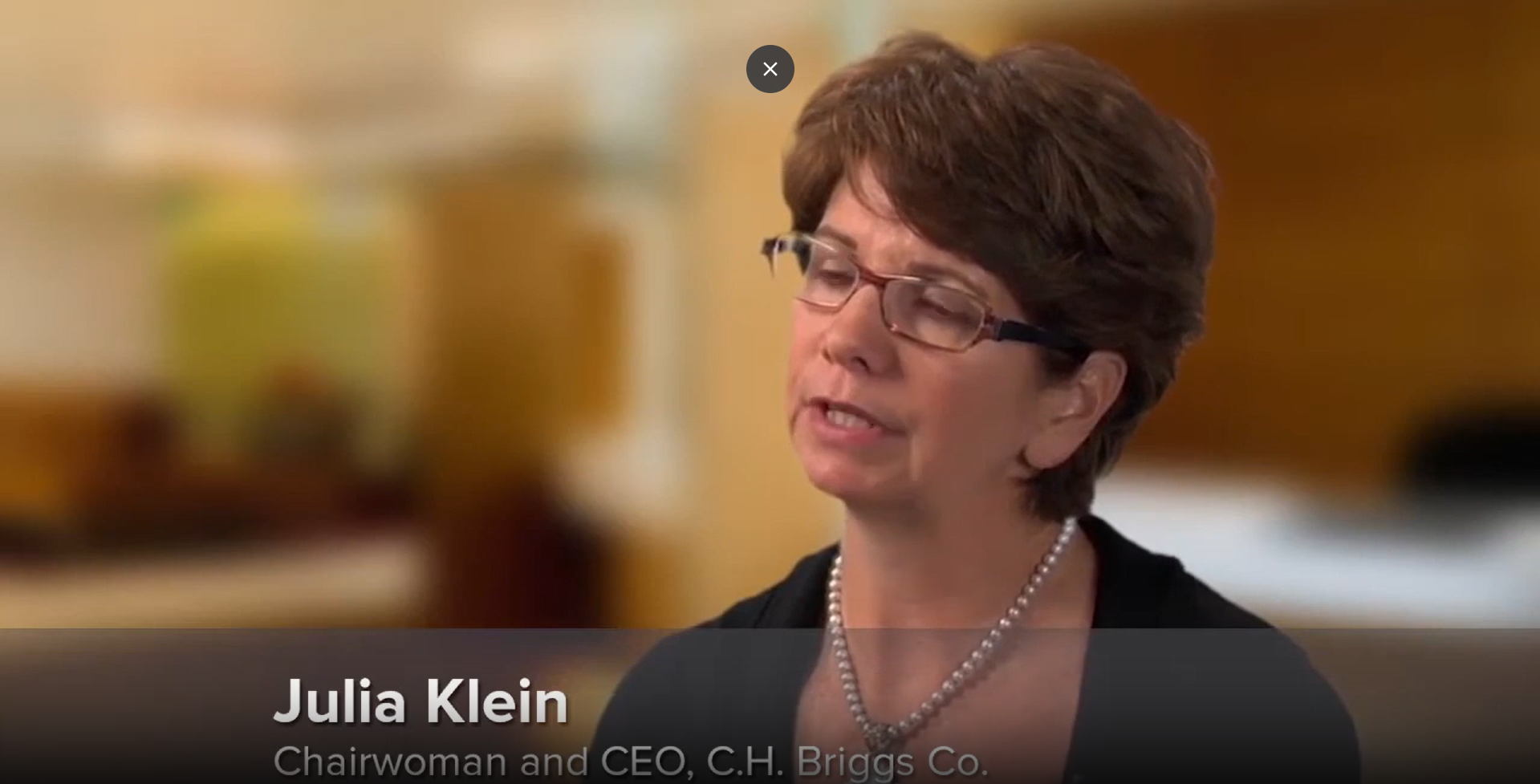
The team at Winklix leveraged SharePoint capabilities to create an attractive, functional, and easy-to-use intranet. We truly appreciate Winklix's professionalism, dedication, and commitment to the success of the project.

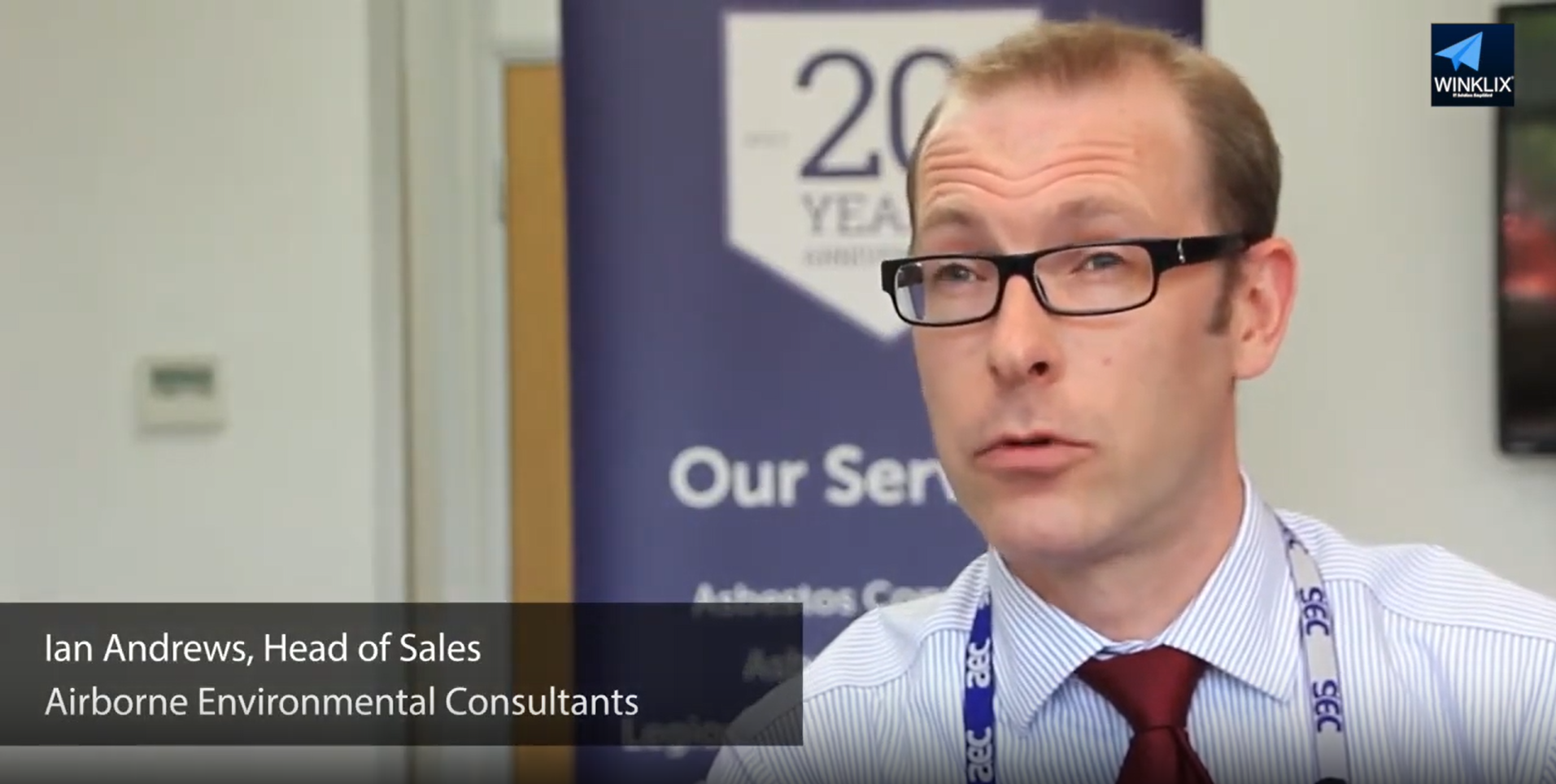
Winklix helped us streamline our Salesforce implementation with a practical, efficient, and highly responsive approach. Their team made the process smooth and delivered real business value

We engaged Winklix to implement Microsoft Dynamics as part of our migration and transition from Salesforce.com. Their team was highly engaging, knowledgeable, professional, and communicated exceptionally well throughout the project.
Our Machine Learning development services span the full lifecycle of production data intelligence and autonomous system use cases. From custom deep learning networks and high-throughput feature engineering pipelines to predictive forecasting analytics, distributed inference optimization, automated MLOps retraining loops, and telemetry-monitored deployments, we engineer high-accuracy ML systems that integrate seamlessly with your technology stack and deliver measurable automation value.
We build custom LangChain chains and agents using LCEL—composing prompts, LLMs, tools, retrievers, and output parsers into production-grade pipelines that automate complex workflows and deliver reliable, accurate outputs for your specific use cases.
We design stateful multi-step agent systems using LangGraph—building graph-based workflows with conditional branching, parallel execution, human-in-the-loop checkpoints, and robust state persistence for enterprise-grade AI automation.
We build complete LangChain RAG systems with optimised document ingestion, chunking, embedding, vector retrieval, and citation-aware LLM generation—grounding AI responses in your enterprise knowledge base with measurably high retrieval accuracy.
We build multi-agent systems where orchestrator agents coordinate specialised subagents—each with dedicated tools, memory, and LLM configurations—enabling complex enterprise workflows that require parallel execution and domain-specific AI reasoning.
We build custom LangChain tool wrappers for your internal APIs, databases, CRM, ERP, and document repositories—enabling LangChain agents to retrieve live data and execute real actions within your enterprise ecosystem.
We instrument LangChain applications with full LangSmith tracing, evaluation datasets, automated quality scoring, and production monitoring—providing the observability infrastructure needed to debug, optimise, and continuously improve AI system performance.
Deploy LangChain-powered AI features engineered with proper architecture — LangGraph state management for robust agents, optimised RAG retrieval, LangSmith observability for every execution trace, custom enterprise tool integrations, and the error handling and monitoring infrastructure that separates production-grade systems from fragile demos.


Our LangChain development capabilities span the full range of industry applications. Whether you are building enterprise knowledge assistants, legal document analysis agents, healthcare documentation systems, financial intelligence pipelines, developer productivity tools, or complex multi-agent research automation, we design LangChain architectures that reflect your domain requirements, data environment, and production reliability standards.
 LangChain-Powered AI Copilot and Assistant Features with Streaming and Tool UseCustom Chain and Agent Architectures Embedded in SaaS Product WorkflowsLangChain RAG Pipelines for In-App Knowledge Search and Q&A FeaturesLangGraph State Machine Agents for Complex Multi-Step SaaS AutomationEnterprise Knowledge Assistants Built on LangChain RAG with Internal Document RepositoriesLangChain Agent Workflows Integrated with CRM, ERP, and Enterprise Data SystemsAutomated Executive Briefing and Report Generation via LangChain Chains and LLMsMulti-Source Data Retrieval and Synthesis Agents for Business IntelligenceLangChain-Powered Customer Support Chatbots with Tool Use and Escalation RoutingAutomated Ticket Classification, Summarisation, and Response Generation ChainsConversational AI Flows with Memory and Context Persistence Across SessionsMultilingual Support Agents Using LangChain with Multiple LLM BackendsLangChain RAG Pipelines for Contract Review and Legal Document Q&ARegulatory Compliance Monitoring Agents Using LangChain with Regulatory Data SourcesMulti-Step Legal Research Agents That Retrieve and Synthesise Case Law and StatutesDocument Intelligence Chains for Due Diligence and Contract Data ExtractionLangChain Clinical Document Summarisation and Medical Note Generation ChainsHIPAA-Aware Healthcare Q&A Assistants Built on LangChain RAG PipelinesDrug Information and Research Literature Retrieval Agents Using LangChainClinical Trial and Protocol Analysis Chains Leveraging Long-Context LLMsLangChain Financial Report Analysis and Market Commentary Generation ChainsCompliance Narrative and Regulatory Filing Assistance AgentsAI Personal Finance Assistants with LangChain Memory and Tool IntegrationMulti-Step Fraud Investigation Agents Using LangChain with Database Tool CallsLangChain Shopping Assistant Agents with Product Catalog Tool AccessAutomated Product Content and SEO Description Generation ChainsCustomer Review Analysis and Sentiment Summarisation PipelinesPersonalised Promotion and Recommendation Agents with Customer Data IntegrationLangChain AI Tutoring Agents with Curriculum Knowledge Base RAG RetrievalAutomated Assessment and Study Guide Generation Chains from Course MaterialsPersonalised Learning Path Recommendation Agents Using LangChain with LMS DataResearch Summarisation Agents That Retrieve and Synthesise Academic LiteratureLangChain Content Generation Pipelines for Articles, Scripts, and NewslettersEditorial Research Agents That Retrieve and Synthesise Source MaterialAutomated Transcript Processing and Content Repurposing ChainsFact-Checking Agents with LangChain Tool Use for Real-Time Source VerificationLangChain-Powered Code Review, Refactoring, and Bug Explanation AgentsAutomated Technical Documentation Generation Chains from Code RepositoriesDeveloper Q&A Assistants Grounded in Engineering Docs via LangChain RAGLangGraph CI/CD Agents That Automate Code Quality Checks and Deployment FlowsLangChain Resume Screening and Candidate Summarisation ChainsEmployee Onboarding Chatbots Built on LangChain RAG with HR Policy DocumentsJob Description Generation and Multi-Board Publishing Automation AgentsHR Policy Q&A Assistants with LangChain Memory and Document RetrievalMulti-Step Research Agents That Plan, Retrieve, and Synthesise Across SourcesLangChain Data Analysis Agents with Python Tool Use and Database Query CapabilitiesAutomated Literature Review Pipelines Using LangChain and Vector RetrievalKnowledge Graph Construction Agents That Extract Entities and Relations from Text
LangChain Capabilities
Our LangChain development services cover the complete ecosystem — LCEL chains, LangGraph agents, RAG pipelines, memory management, tool integration, multi-agent systems, and LangSmith observability — implemented with the architectural discipline, testing rigour, and production infrastructure that enterprise AI applications require.
Builds composable LangChain chains using the Expression Language with streaming, async execution, and parallel branching for reliable, maintainable AI workflow pipelines.
Designs and builds LangChain agents with tool use, reasoning loops, stopping conditions, and output parsing for autonomous multi-step task completion.
Implements stateful AI workflows as LangGraph graphs with conditional routing, parallel execution, state persistence, and human-in-the-loop interruption points.
Builds orchestrator-subagent systems where specialised LangGraph agents collaborate on complex tasks with shared state, parallel execution, and result synthesis.
Configures appropriate LangChain memory types and LangGraph checkpointers for conversation persistence, long-term semantic memory, and cross-session state retention.
Implements Pydantic, JSON, and custom output parsers that reliably extract structured data from LLM responses for downstream application logic.
Builds LangGraph workflows with interruption points that route outputs to human reviewers for approval, correction, or escalation before agent execution continues.
Security and data privacy are foundational to every LangChain application we build. From server-side LLM API key management and input validation to PII scrubbing before data is sent to LLM providers, output content filtering, encrypted data pipelines, role-based access to agent tools, and private deployment options for regulated industries, we engineer LangChain systems that meet enterprise security standards and global data privacy compliance requirements.









Winklix brings production-grade LangChain engineering expertise that goes beyond building chains in notebooks. We design robust AI architectures with LangGraph state management, optimised RAG retrieval, comprehensive LangSmith observability, proper error handling, and the deployment infrastructure that makes LangChain-powered features reliable and maintainable at scale. Every engagement delivers working production systems.
We build LangChain applications designed for enterprise production—not tutorials. Every system includes LangGraph state management for robust agent execution, LangSmith observability for full traceability, optimised RAG retrieval, and the error handling and retry patterns that make AI-powered features reliable at scale.
We work across the complete LangChain ecosystem—LangChain core, LangGraph, LangSmith, LCEL (LangChain Expression Language), and the full library of built-in integrations—selecting the right components and patterns for each use case rather than defaulting to the simplest chain configuration.
We take full ownership of the LangChain development lifecycle—from architecture design and chain engineering through RAG optimisation, LangGraph agent development, LangSmith instrumentation, deployment, and ongoing improvement—delivering a production-ready AI system, not a proof of concept.

Newsweek AI Impact Awards 2025 Winner

Globee Award Gold for Best AI Development

AIM Challenger in Top Data Science Service Providers

Microsoft CNBC AI for All Award Societal Progress

Best Firms for Women in Tech To Work For

Major Contender - Data Annotation & Labeling PEAK Matrix

Rising Star (Europe) IDP Services Study

Edison Award - Bronze Recognition
Newsweek AI Impact Awards 2025 Winner
Globee Award Gold for Best AI Development
AIM Challenger in Top Data Science Service Providers
Microsoft CNBC AI for All Award Societal Progress
Best Firms for Women in Tech To Work For
Major Contender - Data Annotation & Labeling PEAK Matrix
Rising Star (Europe) IDP Services Study
Edison Award - Bronze Recognition
We leverage the complete LangChain technology stack to build production-ready AI applications tailored to your requirements, data infrastructure, and deployment environment. From LangChain core, LangGraph, LangSmith, and LCEL to 100+ LLM and vector database integrations, streaming frameworks, and cloud deployment options, our capabilities span the complete LangChain development lifecycle.

As a LangChain development company, we implement the advanced techniques that separate production-grade AI systems from fragile prototypes — LCEL composition, LangGraph state machines, optimised retrieval chains, LangSmith evaluation, streaming callbacks, custom tool development, and multi-agent orchestration patterns engineered for real-world reliability.
LCEL is the modern LangChain composition interface that enables streaming, async execution, parallel branching, and easy component composition using the pipe operator. We build all chain logic using LCEL rather than legacy chain classes—producing more maintainable, performant, and streaming-capable pipeline code. LCEL's composability enables rapid iteration on chain logic without architectural refactoring.
LangGraph models AI workflows as directed graphs where nodes represent processing steps and edges represent transitions between them. We design LangGraph state schemas, implement node functions, define conditional routing logic, configure state persistence with checkpointers, and build human-in-the-loop interruption points—creating agent workflows that handle complex multi-step reasoning with reliable state management and recovery from failures.
We implement LangChain's full retrieval chain ecosystem—RetrievalQA, ConversationalRetrievalChain, and custom LCEL retrieval chains with contextual compression, maximum marginal relevance retrieval, and self-querying retrievers. We configure retrieval chains to balance recall and precision for your specific query patterns, combining vector search, keyword search, and metadata filtering for optimal retrieval performance.
We build LangChain agents using OpenAI function calling, ReAct, and Structured Chat agent types—selecting the appropriate agent architecture for each task type. We implement custom tool definitions, agent executors, stopping conditions, intermediate step logging, and output parsing logic. For complex tool orchestration requirements, we migrate from standard agent executors to LangGraph for more reliable control flow.
We implement LangChain memory components appropriate for each application's conversation pattern—buffer memory for short conversations, summary memory for long sessions, vector store memory for semantic long-term retrieval, and external persistence using Redis or PostgreSQL for cross-session memory. For LangGraph applications, we configure checkpointers that persist full graph state across interruptions and resume points.
LangChain provides over 100 document loaders for ingesting content from PDFs, Word files, SharePoint, Confluence, Notion, web pages, SQL databases, APIs, and more. We select and configure appropriate loaders and text splitters—recursive character splitting, semantic chunking, Markdown-aware splitting—to produce high-quality document chunks that preserve context boundaries for downstream RAG retrieval.
We implement LangChain's callback system for streaming token-by-token responses, logging intermediate steps, tracking token usage, and integrating with monitoring platforms. Streaming callbacks enable real-time response display in frontend applications while the same callback infrastructure supports LangSmith tracing, cost tracking, and custom analytics pipelines without modifying chain logic.
We implement LangChain output parsers—Pydantic parsers, JSON parsers, and comma-separated list parsers—that extract structured data from LLM responses reliably. For modern models supporting structured output natively, we configure JSON schema constraints at the LLM level combined with LangChain parsing for maximum reliability of structured data extraction from AI-generated content.
LangSmith provides full execution traces for every LangChain run—capturing the complete chain of inputs, outputs, intermediate steps, token counts, and latencies. We implement LangSmith instrumentation, build evaluation datasets representative of production queries, configure automated scoring using LLM-as-judge and custom metrics, and set up alerting on quality regressions—creating a systematic improvement loop for AI application quality.
We implement advanced multi-agent architectures using LangGraph—supervisor patterns where an orchestrator agent dynamically routes tasks to specialist agents, hierarchical agent trees for complex decomposition tasks, and collaborative agent networks where agents share observations and coordinate actions. Each agent in the network has its own LLM, tools, and memory configuration, and LangGraph manages the state and communication between them.
Powering next-generation solutions with a diverse stack of industry-leading AI architectures.


We help product teams and enterprises build reliable, scalable predictive intelligence solutions using modern data engineering and MLOps frameworks — from architectural design and feature pipeline construction to deep learning model development, distributed inference optimization, continuous retraining pipelines, and live production monitoring. Our Machine Learning development services deliver fully integrated, high-accuracy production architectures, not isolated proof-of-concept experiments.
We evaluate your requirements to design the right LangChain architecture—chains vs. agents, LangGraph for stateful workflows, RAG vs. fine-tuning, memory strategy, LLM selection, and observability approach—before any development begins.
We build custom LangChain chains using LCEL—composing prompts, LLMs, tools, retrievers, and parsers into streaming-capable, async, production-grade pipelines for your specific AI workflow automation use cases.
We design and build production-grade stateful agents using LangGraph—implementing graph state schemas, conditional routing, parallel execution, human-in-the-loop checkpoints, and reliable persistence for complex enterprise workflows.
We build optimised LangChain RAG systems grounded in your knowledge base and custom tool wrappers that connect agents to your live APIs, databases, and enterprise systems—delivering AI that retrieves real data and takes real actions.
We implement full LangSmith tracing, evaluation datasets, automated quality scoring, and production monitoring—giving you complete visibility into chain execution, RAG quality, agent decisions, and cost attribution.
We provide continuous post-launch support—optimising chain and retrieval configurations, updating LangGraph workflows as requirements evolve, monitoring LangSmith dashboards for quality regressions, and keeping integrations current with LangChain framework updates.
We begin by understanding your AI application requirements, data sources, LLM preferences, and infrastructure constraints. Our team designs the right LangChain architecture—chains vs. agents, LangGraph vs. standard executors, RAG vs. fine-tuning, memory strategy, and tool scope—defining quality benchmarks, observability requirements, and deployment strategy before development begins.
We build custom LangChain chains using the LangChain Expression Language (LCEL)—composing prompts, LLMs, output parsers, retrievers, and tools into production-grade pipelines. LCEL provides streaming, async execution, parallel branching, and easy composition that we leverage to build efficient, maintainable chain logic for your specific use cases.
We design and build LangChain agents that reason over tools, make decisions, and take multi-step actions to complete complex tasks. We implement tool schemas, agent executors, stopping conditions, error recovery, and output parsing—building agents that reliably complete their tasks rather than looping or hallucinating tool calls.
We build production-grade stateful AI systems using LangGraph—designing graph nodes, edges, and state schemas that encode complex workflow logic with conditional branching, parallel execution, human-in-the-loop checkpoints, and reliable state persistence. LangGraph is our standard for any agent system requiring robust state management beyond simple linear chain execution.
We build complete LangChain RAG pipelines—document ingestion with built-in loaders, optimised text splitting, embedding generation, vector database indexing, hybrid retrieval chains, and citation-aware LLM generation. We go beyond default configurations to optimise chunking strategies, retrieval quality, and reranking for your specific content types and query patterns.
We build custom LangChain tools that expose your internal APIs, databases, search systems, and enterprise services as callable functions for LangChain agents. We implement tool schemas, input validation, error handling, and result formatting—enabling agents to retrieve live data and take real actions within your enterprise environment.
We instrument all LangChain applications with LangSmith for full execution tracing, evaluation datasets, automated quality scoring, and production monitoring. LangSmith visibility enables systematic debugging of agent behaviour, RAG quality evaluation, prompt A/B testing, cost attribution per feature, and regression detection as chains evolve.
We deploy LangChain applications with production infrastructure—LangServe or custom API layers, streaming endpoints, rate limiting, error monitoring, and cost dashboards. Post-launch, we continuously optimise chain logic, update retrieval configurations, and evolve LangGraph workflows as your requirements and LangChain ecosystem updates develop.





Winklix delivers artificial intelligence services for businesses looking to build secure, scalable, and user-friendly apps. We create custom iOS, Android, and cross-platform solutions designed to support growth, improve customer experience, and drive real business results.
+4 more services
We provide end-to-end LangChain development services including custom chain and agent architecture design, RAG pipeline development with LangChain and vector databases, LangGraph stateful agent and multi-agent system development, LangSmith observability and evaluation implementation, tool and API integration for LangChain agents, memory and persistence configuration, LLM integration across OpenAI, Anthropic, Google, and open-source models, production deployment, and ongoing optimisation. We build both standalone LangChain applications and integrate LangChain capabilities into existing products and enterprise systems.
LangChain is the leading open-source framework for building LLM-powered applications. It provides a composable architecture of chains, agents, tools, memory, and retrieval components that dramatically accelerate AI application development compared to building from scratch. LangChain abstracts LLM provider differences, standardises tool use and retrieval patterns, and provides built-in integrations with over 100 data sources, vector databases, and API services. For production applications, LangChain combined with LangGraph and LangSmith provides a complete development, orchestration, and observability stack for enterprise-grade AI systems.
LangGraph is LangChain's framework for building stateful, multi-actor AI applications as graph-based state machines. While standard LangChain chains work well for linear workflows, LangGraph is the right choice when you need persistent state across agent steps, conditional branching logic based on agent decisions, parallel execution of agent branches, human-in-the-loop approval checkpoints, or multi-agent architectures where specialised agents collaborate on complex tasks. We use LangGraph for any production agent system that requires robust state management, reliable recovery from errors, and complex decision logic beyond simple linear chain execution.
We build complete LangChain RAG pipelines covering document ingestion and parsing, text splitting with optimised chunking strategies, embedding generation using OpenAI, Cohere, or open-source models, vector database indexing (Pinecone, Weaviate, Chroma, pgvector), retrieval chain configuration with hybrid search and reranking, and LLM generation with citation-aware prompting. LangChain's built-in retrieval chain abstractions accelerate RAG development while our implementation goes beyond defaults to optimise chunking, retrieval quality, and generation accuracy for your specific content types.
LangChain provides standardised integrations with virtually every major LLM provider, and we leverage this to select and integrate the optimal model for each use case. We work with OpenAI (GPT-4o, GPT-4, GPT-3.5), Anthropic (Claude Opus, Sonnet, Haiku), Google (Gemini Pro, Gemini Flash), Meta (LLaMA 3), Mistral, Cohere, and open-source models hosted on Hugging Face or self-hosted infrastructure. LangChain's provider abstraction means we can swap or route between models without rewriting chain logic.
Yes. We design and build multi-agent architectures using LangGraph where orchestrator agents delegate tasks to specialised subagents—each with their own tools, memory, and LLM configurations. We implement agent communication patterns, shared state management, result aggregation, error recovery, and human-in-the-loop interruption points. Multi-agent systems built with LangGraph are particularly powerful for complex enterprise workflows that require parallel execution, specialised domain agents, and robust state persistence across long-running tasks.
LangSmith is Anthropic's observability and evaluation platform for LangChain applications. It provides full tracing of every chain and agent execution—capturing inputs, outputs, intermediate steps, token usage, latency, and errors across every component in your LangChain application. We implement LangSmith as standard on all production LangChain deployments, using it for debugging complex agent behaviour, evaluating RAG quality, A/B testing chain variants, monitoring production performance, and maintaining prompt version history.
LangChain provides multiple memory types for different use cases: ConversationBufferMemory for maintaining recent conversation context, ConversationSummaryMemory for compressing long histories, ConversationBufferWindowMemory for sliding window context, and VectorStoreRetrieverMemory for semantic memory retrieval from long interaction histories. We select and implement the appropriate memory configuration for your application's conversation pattern, token budget constraints, and the level of personalisation required across sessions.
Yes. LangChain's tool framework provides a standardised way to expose any API, database, or service as a callable tool for LangChain agents. We build custom tool wrappers for your internal APIs, CRM systems, databases, document repositories, and third-party services—enabling LangChain agents to retrieve live data and take real-world actions within your enterprise environment. We also use LangChain's built-in document loaders for direct integration with SharePoint, Confluence, Notion, Google Drive, SQL databases, and other enterprise data sources.
Winklix brings production-grade LangChain engineering expertise that goes beyond tutorials and demos. We design robust LangChain architectures with LangGraph stateful agents, optimised RAG pipelines, comprehensive LangSmith observability, cost-efficient LLM routing, and the error handling and retry logic that enterprise-grade AI applications require. Every engagement is focused on measurable outcomes—systems that perform reliably in production, not fragile prototypes that work in notebooks.
Still have questions? We’re here to help. If you didn’t find what you were looking for, feel free to reach out—our team is ready to assist you.Have a question not listed here? Call our team :
Get In Touch With Our Experts